Artist to explore science and storytelling at MAX IV
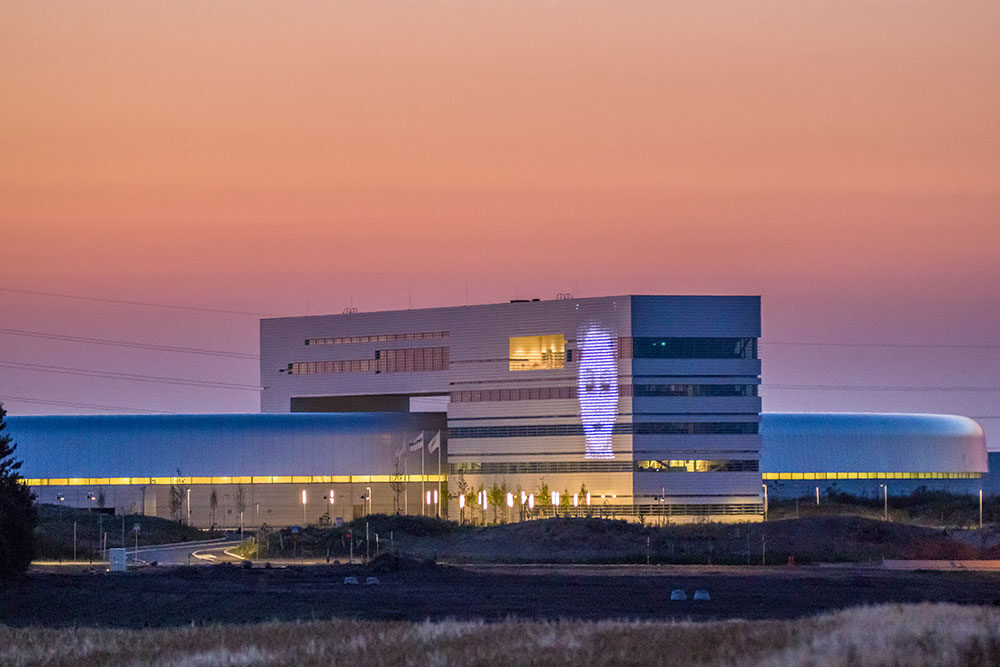
For the first time, Sweden’s MAX IV synchrotron will welcome an artist in residence.
January 29, 2026


Artist and filmmaker Jennifer Rainsford will spend six months at the Lund facility, using one of the world’s brightest X‑ray sources as a starting point for new ways of visualizing and communicating advanced science. By embedding an artist in this environment, Lund University aims to open up the often complex research for a wider public and to offer scientists a fresh lens on their own work, they state.
Rainsford is based in Stockholm and works at the interface between art, film and science. Her artistic practice includes film, installations and interdisciplinary collaborations with researchers and activists, in which she investigates the relationship between people, technology and nature.
She has previously worked closely with researchers, including biologist Michalis Averof and space physicians at the European Space Agency. At MAX IV she plans to continue exploring “the invisible threads that hold our existence together” and to experiment with new forms of storytelling around cutting‑edge science.

Words from the Editor: Science & Art
At first glance, science and art seem worlds apart. The quality of a scientific study is determined by evidence, facts, reproducibility, and accuracy, while the quality of a piece of art is determined by its viewer, not withstanding its originality and the artist’s talent to paint or sculpt. Art is subjective and is often based on emotions and opinions.
Art and Science
The initiative is supported by a donation from the Gyllenstiernska Krapperup Foundation and is part of Lund University’s broader strategy to strengthen the convergence of art and science in the region.
“The foundation saw great potential in supporting the convergence of art and science. MAX IV is a globally unique research infrastructure with strong regional roots. The facility nestles in Skåne’s rich soil and offers an exceptional milieu for an artist in residence. Contributing to projects that unite research, culture and society aligns well with the purpose of the foundation,” says Viktor Öwall, board member of the Gyllenstiernska Krapperup Foundation and pro vice-chancellor at Lund University.
For MAX IV’s leadership, the residency is also a way to reflect on the societal role of a large-scale research infrastructure. Director Olof “Charlie” Karis notes that bringing an artist into a high‑tech laboratory offers a chance to see daily activities from a new perspective, while university representatives emphasize that artistic interpretations can make complex scientific processes more accessible and meaningful beyond the research community.
Published: January 29, 2026