Wallenberg Foundations grant AI support to 11 research groups
Eleven Swedish research groups, six of them in life science, have been awarded the new Knut and Alice Wallenberg AI Consultancy Grant, giving them access to dedicated AI expertise to accelerate their projects.
September 14, 2026


The grant marks a new funding model for the Wallenberg Foundations: instead of money, recipients receive up to 700 hours of AI consultancy per research group per round, delivered through AI4S, the company that employs the foundations’ AI experts.
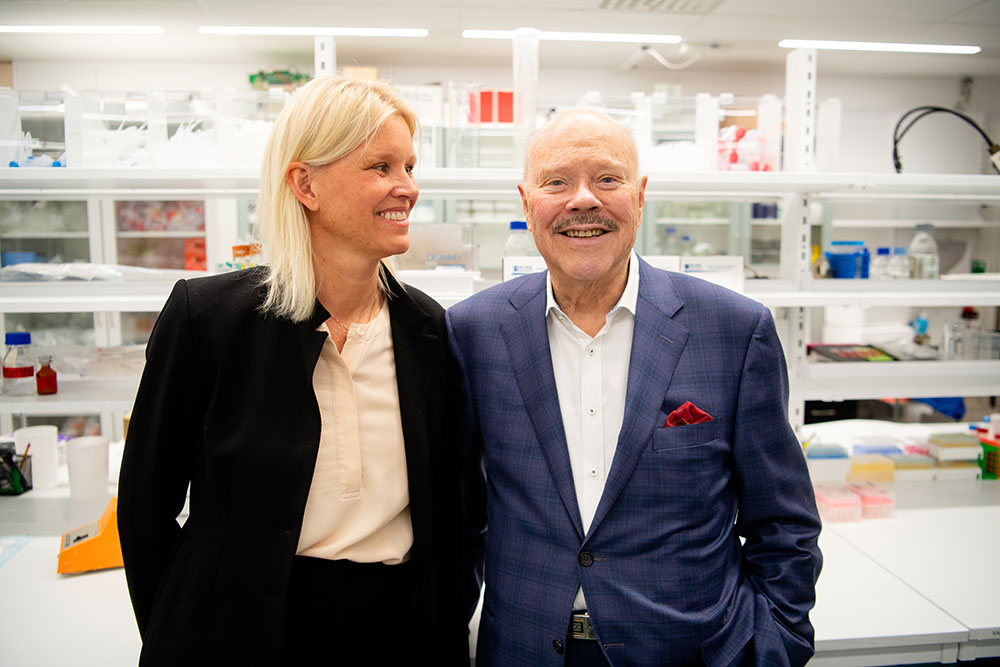
“We are in the midst of a fundamental shift in how research is conducted. AI is opening the door to entirely new ways of working across many scientific fields, but Swedish researchers need access to advanced expertise and practical support to make full use of it,” says Anders Ynnerman, vice executive director of the Knut and Alice Wallenberg Foundation.
Applications were reviewed by a scientific evaluation committee based on scientific excellence, the project’s expected benefit from AI, data access, and the research group’s engagement. Eligible applicants must hold an ongoing grant from the Knut and Alice Wallenberg Foundation, the Marianne and Marcus Wallenberg Foundation, or the Marcus and Amalia Wallenberg Memorial Fund.
AI4S currently employs eleven consultants with research backgrounds, a number expected to grow as more groups are matched with expertise.
“By placing experts in the latest AI technology within leading research groups, AI4S will catalyze research and help position Sweden as a leading knowledge and research nation,” says Salla Franzén, CEO of AI4S.
Life science projects awarded AI support:
- Vicent Pelechano, Karolinska Institutet – using AI to classify antimicrobial resistance from 5PSeq data
- Eduardo Villablanca, Karolinska Institutet – mapping spatial host-microbiota niches that control mucosal healing in inflammatory bowel disease
- Jens Carlsson, Uppsala University – machine learning to bridge DNA-encoded chemical libraries with billion-scale commercial chemical space
- Erik Benson, Karolinska Institutet – mining synthetic DNA selection data for hidden binders and targeting agents
- Johan Zelano, University of Gothenburg – optimizing epilepsy treatment using population health data
- Gonçalo Castelo-Branco, Karolinska Institutet – spatial AI to predict cell fate transitions and disease course in multiple sclerosis
The remaining five grants went to projects in physics, chemistry, materials science, and social science. The next application round for the grant is planned for mid-December.
Published: September 14, 2026