The parts are moving: the system is not

Women’s health is finally getting the attention it has long lacked. New initiatives, from the World Economic Forum to the Gates Foundation and the Milken Institute, are building momentum. But momentum is not progress. The gap between what women need and what medical innovation delivers is still striking, and advancing one part of the system is rarely enough if the others do not move with it.
November 29, 2026


The dependencies run in a circle. Limited understanding of female biology produces a weak evidence base. Without evidence, regulatory pathways stay undefined and payers hesitate to cover new treatments; the resulting commercial setbacks deter the investment that would have built the evidence in the first place. Regulators wait for evidence, investors for validated endpoints, payers for proof of value. Individually rational decisions add up to a system that holds itself back.
However hard each of us worked on our own part, this newfound momentum might not lead to better treatment options for women.
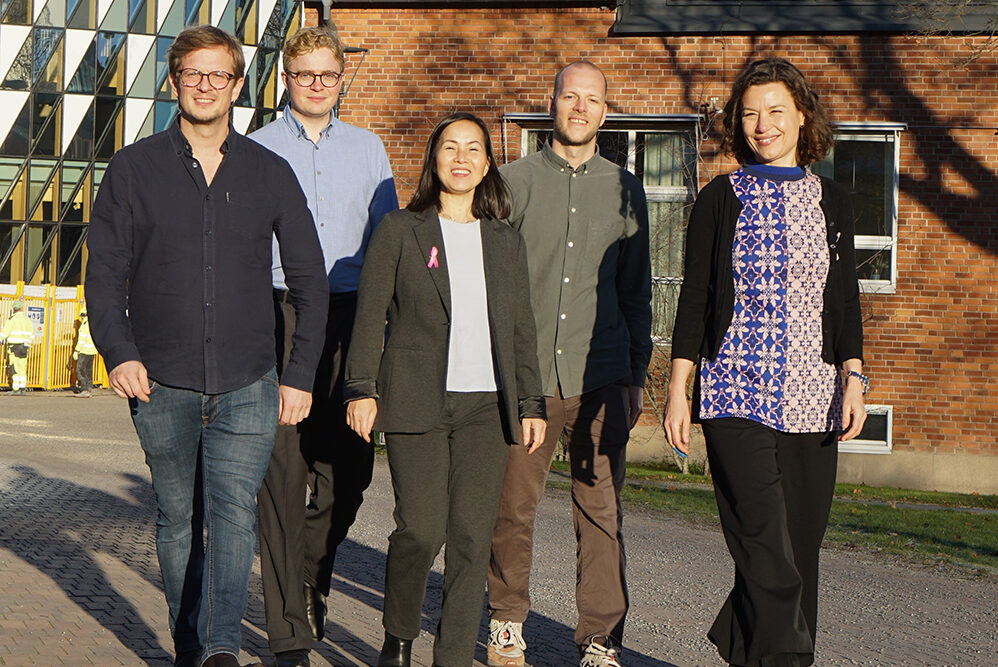
Together with three leading voices in women’s health innovation – Misti Ushio, Dorothy Chou, and Juan-Camilo Arjona Ferreira – I came to see that however hard each of us worked on our own part, this newfound momentum might not lead to better treatment options for women. That takes coordination across the system. Between us, we cover clinical medicine and drug development, technology policy, and venture investing and operations. We came together to identify the priorities that would move the field forward.
Our paper, A Global Roadmap to Transform Women’s Health Innovation, outlines ten priority actions, and the first is coordination: a formal mechanism that sets out who does what, by when, and who answers for it. The rest follow in order of dependency, from building the evidence base through longitudinal studies and pre-competitive funding, to validated endpoints and clearer regulatory pathways, to payer reform and blended finance. Funding matters throughout, but without an owner for the spaces between organizations, even well-funded actions risk duplicating each other or stalling at the handoff.
Funding matters throughout, but without an owner for the spaces between organizations, even well-funded actions risk duplicating each other or stalling at the handoff.
IgA nephropathy, a rare kidney disease, shows what can happen when the different parts of the system work in concert. For decades, innovation stalled, in part because the established endpoints required multiyear trials to show that a drug slowed the loss of kidney function. This made trials high-risk and difficult to finance. Researchers and regulators built the evidence for a surrogate endpoint, a faster biomarker of disease progression, while the Swedish pharma company Calliditas Therapeutics demonstrated the endpoint’s relevance in its clinical program. At Industrifonden, we invested in Calliditas early, with the conviction that regulators would accept the new endpoint. Researchers, clinicians, regulators, the company, and its investors each had a part to play.
Calliditas’s drug Tarpeyo received accelerated approval in 2021, bringing a new treatment to patients. The company was later acquired by Japan’s Asahi Kasei, delivering attractive returns to investors. The combined effort did more than bring one treatment to market: it helped open the field to further innovation, with around 30 assets now in development for IgA nephropathy. A success for patients, for the company and its investors, and for the field. In women’s health, that convergence still needs to be built.
If implemented, the ten actions could mean reducing diagnostic delays for conditions such as endometriosis from more than seven years to under two.
If implemented, the ten actions could mean reducing diagnostic delays for conditions such as endometriosis from more than seven years to under two; establishing regulator-accepted endpoints for five priority conditions; building longitudinal datasets covering hundreds of thousands of women; and increasing pharmaceutical R&D investment in women’s health tenfold.
Across the Nordics, a growing range of initiatives is already bringing together research, investment, policy, and industry to advance women’s health. Among them are NORA, working to turn the Nordic Charter for Women’s Health 2040 into action, and the Women’s Health Hub in Turku, Finland. We now need to build on these, connect efforts across borders, and take successful approaches to a wider European and global stage.
The parts are moving. Now the spaces between them need an owner.
About the author

Dr. Nina Rawal is a life science investor and board director. She works to close the gap between what science makes possible and who gets to benefit from it.
Published: November 29, 2026