Skape Bio launches platform for AI-designed GPCR biotherapeutics

Skape Bio and researchers at the University of Washington’s Institute for Protein Design (IPD) have announced a peer-reviewed study published in Nature demonstrating a new way to design protein-based medicines for G protein-coupled receptors, or GPCRs.
May 27, 2026


Using computational protein design, the team created molecules that could either activate GPCR signaling or block it, depending on the receptor state they were built to engage. Across the study, the researchers generated functional lead molecules against 11 GPCR targets, including both agonists and antagonists.
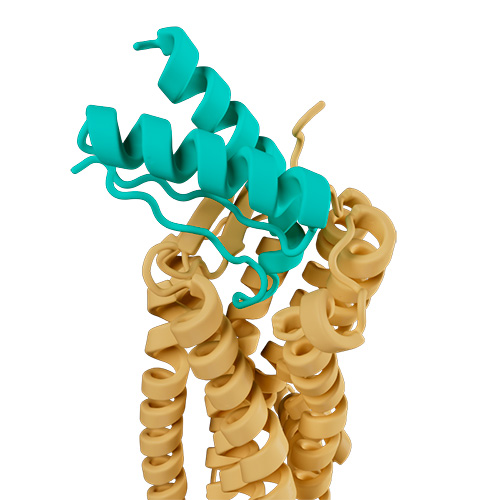
“Designing proteins that activate GPCRs requires getting the geometry of the receptor interface exactly right,” says David Baker, PhD, Nobel laureate, co-founder and board observer at Skape Bio.
“The structural data confirm that we can do that reliably across multiple receptor families, expanding the range of GPCRs that can be addressed with protein-based medicines,” he adds.

David Baker: “I’ve always been interested in big questions”
David Baker, born in Seattle in 1962, is an American professor of biochemistry and computational biology at the University of Washington, Seattle, and Howard Hughes Medical Institute. He has received the Nobel Prize in Chemistry for his pioneering research methods in protein design, and NLS asked him about his career, being a scientist, and of course, a lot about proteins.
A key part of the work was a new high-throughput screening system that tests designed proteins against full-length GPCRs in living human cells. The system can evaluate up to 100,000 designs while keeping the receptors in their natural membrane environment, where GPCRs signal. This overcomes a major limitation of traditional discovery approaches, which often require removing receptors from the cell membrane or screening at much lower throughput.
The study reports designed molecules that bind GPCRs associated with cancer, metabolic disease, migraine, itch, and pain. In preclinical in vivo studies, one designed antagonist performed comparably to an existing drug while showing fewer unwanted side effects. In another example, the team extended the half-life of a receptor antagonist by attaching a commonly used protein tag, supporting dosing properties consistent with conventional therapeutics.
For Skape Bio, this technology creates a path toward a new generation of precision protein therapeutics for clinically important GPCR targets where existing drug modalities fall short.

“Our paper marks a step change in how GPCR medicines can be discovered,” says Christoffer Norn, PhD, CEO and Co-founder of Skape Bio, as well as corresponding author and co-lead on the Nature study.
“It shows that we can custom-design protein modulators with defined function and then test them directly on full-length receptors in living human cells, where GPCRs actually signal,” he adds.
“For Skape Bio, this technology creates a path toward a new generation of precision protein therapeutics for clinically important GPCR targets where existing drug modalities fall short,” continues Norn.
A spinout of the BioInnovation Institute and the University of Washington’s Institute for Protein Design
Skape Bio was founded in 2025 as a spinout of the BioInnovation Institute and the University of Washington’s Institute for Protein Design. The company is building a platform for commercial use that combines AI-enabled protein design with high-throughput screening in living human cells to develop functional miniprotein agonists and antagonists across GPCR targets. Skape Bio is advancing an internal pipeline and partnering with pharmaceutical companies to apply the platform across disease areas.
Published: May 27, 2026