Health and life sciences in the shadow of war
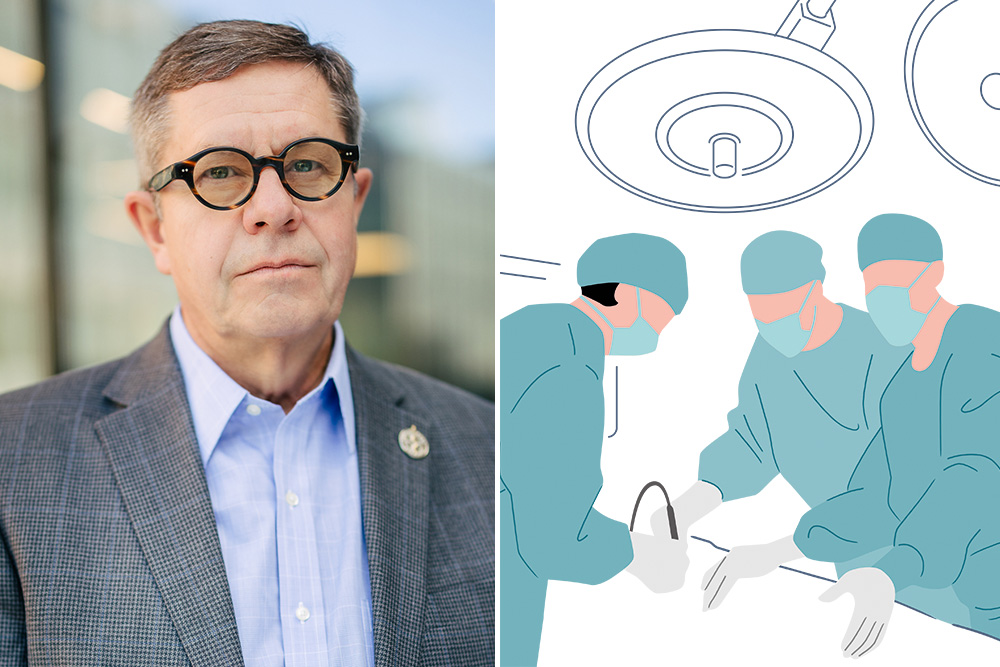
After 18 hours of traveling from Gothenburg I’m heading to the main hospital in Cherkasy, Ukraine, which is a reasonably-sized hospital with about 800 beds. Apart from their everyday business they have had an extra 30,000 or so soldiers to take care of since the war started. They are worn out. The staff members are really trying to hang in there. They’re running low on supplies but they’re not giving up.
May 11, 2026


I’m here because the need for healthcare is hard to overstate. From a clinical and surgical perspective, Sweden is ahead globally and the technology I’m bringing – an advanced osseointegration treatment for amputees with very short remaining stumps – is a true Swedish innovation that is much needed here right now.
The healthcare system in Ukraine is under enormous pressure. What I see isn’t a shortage of surgical skills, Vlad and his colleagues are very capable. It is the harder, less visible problems: keeping hygiene and infection control under wartime conditions and having enough trained staff that can follow the procedures to reduce problems with infection further. That has a direct impact on our implant work – anchoring titanium through the skin demands clean conditions and disciplined aftercare.
With the technology developed in Sweden we now have the possibility to anchor a titanium implant in the short remaining skeleton that exits through the skin and acts as a perfect anchoring point for a prosthetic device.
I’m traveling together with a colleague from Karolinska University Hospital and our mission is to train the medical director of the hospital, Vlad, to be able to perform an improved rehabilitation procedure for amputees. There are really no official figures for the number of amputees from the war, but Vlad says that it’s more than a hundred thousand who have lost arms or legs. A major problem here is that they will survive the blast injury, because they have body armor, but the blast injury will start bleeding from their arms and legs, and they activate the tourniquet so as not to bleed to death. Unfortunately, it might take hours and even days until someone can evaluate whether the tourniquet can be released or not, by which time the arm or leg is already dead.
These devastating amputations make it very difficult to supply the prosthesis since there’s really no arm or leg left to attach the prosthesis to. However, with the technology developed in Sweden, we now have the possibility to anchor a titanium implant in the short remaining skeleton that exits through the skin and acts as a perfect anchoring point for a prosthetic device.
On the first day, we treat two patients with very short remaining arm stumps of less than ten centimeters. On the second day, we treat two leg patients. The last patient has almost no femur left but by using advanced surgical principles we are able to move some bone from the iliac crest, part of the pelvic bone, to the end of the remaining femur, and thereby add length so we can anchor an implant and give him the possibility to walk again.
Given the more than a hundred thousand amputees, the enormity of what lies ahead is clear.
Vlad is a very skilled surgeon, and it’s relatively easy for him to keep up with the procedures that we are doing together. Soon he will be able to do this independently and he will also be able to train others in Ukraine, because with those more than 100,000 amputees we really need to scale up the chances of bringing people out of wheelchairs and back to a normal life again. We have treated about a hundred patients in Ukraine so far. Given the more than a hundred thousand amputees, the enormity of what lies ahead is clear.
Once we have finished with the operations I head towards Kyiv, that’s where all the important political decision makers are. This treatment is new to Ukraine, and the politicians are still discussing whether they are prepared to reimburse it. They have already decided to reimburse external prosthetic components but not the internal implants yet. In Kyiv, I meet up with influential orthopedic surgeons and politicians, I also attend seminars and a small press conference.
What still strikes me is how, despite the war, the country runs more or less business as usual – with the exception of the healthcare system, which is carrying an enormous burden of wounded soldiers.
After Kyiv, I head to Lviv. It’s about a six-hour drive on roads full of potholes. I meet up with a very interesting organization called Superhumans, a non-profit organization created originally by Ukrainians and heavily supported by the Buffett family. All patients are treated for free, and the focus is on amputees. Superhumans mainly use the traditional socket technology but they have invested in operating room capabilities and now they are interested in learning more about the implant technology we are bringing to Ukraine.
The technology exists. Ukraine needs it. The question is how quickly we can scale it up.
This is the eighth time I’ve been in Ukraine. What still strikes me is how, despite the war, the country runs more or less business as usual – with the exception of the healthcare system, which is carrying an enormous burden of wounded soldiers.
For the Nordic life science industry there is both a humanitarian need and a real business opportunity here, not only in advanced implant care for amputees but also in hygiene and infection control, where companies like Mölnlycke Healthcare should be able to make a difference. The technology exists. Ukraine needs it. The question is how quickly we can scale it up.
About the author
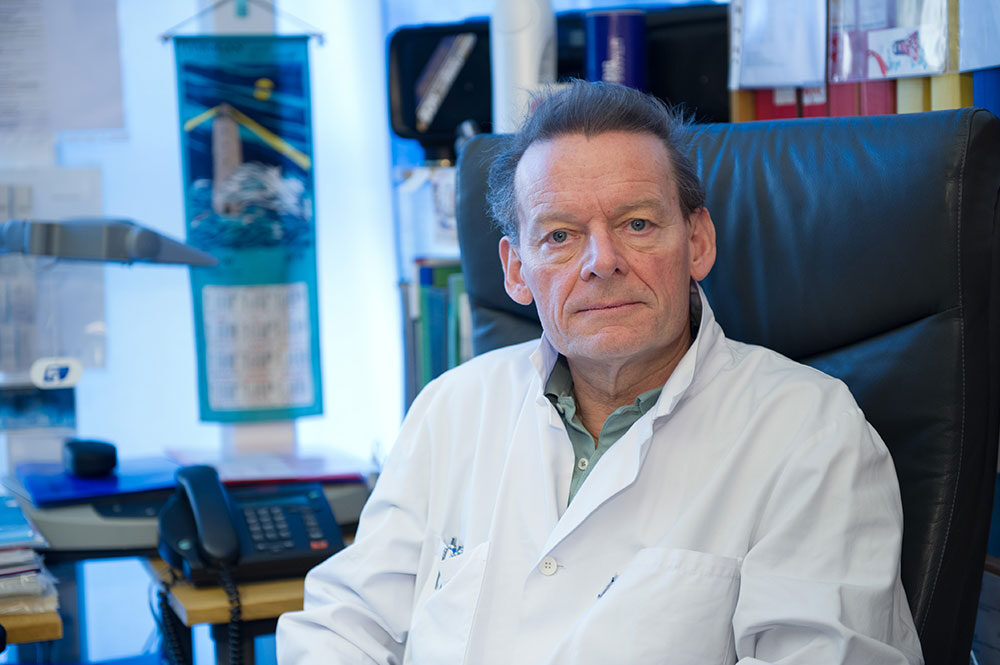
This Commentary was originally written by Rickard Brånemark, Chief Medical and Scientific Officer at Integrum, for NLS magazine No 02 2026, out May 2026.
Updated: September 3, 2026, 10:15 am
Published: May 11, 2026