BRIDGE Sweden delivers first GMP-compatible cell line
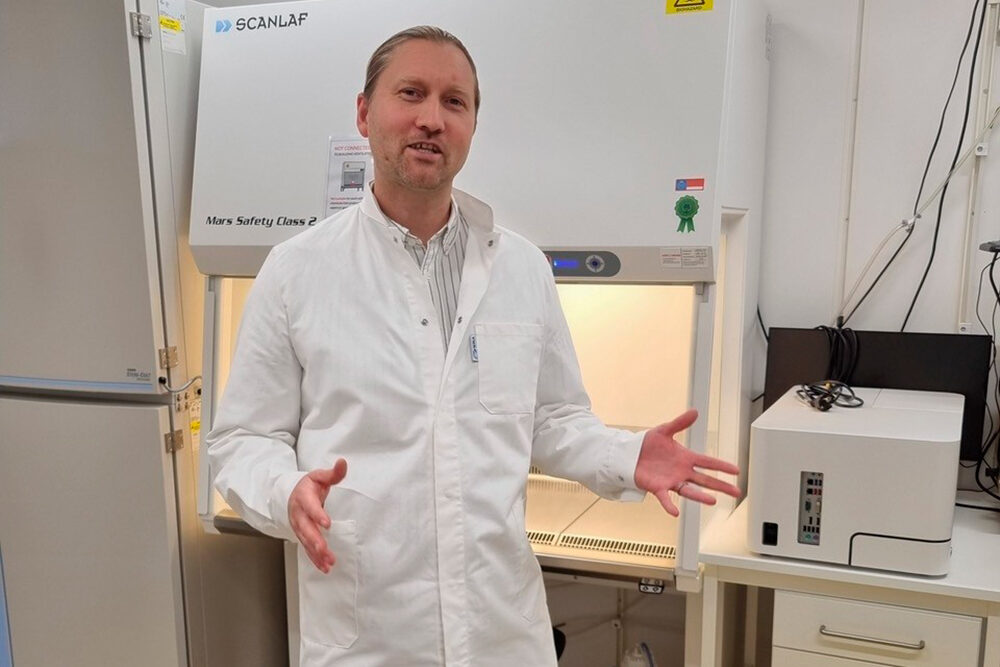
The Drug Discovery and Development (DDD) platform at SciLifeLab has completed the first GMP-compatible cell line developed within BRIDGE Sweden, a national initiative to strengthen Sweden’s capacity for biologics development. The top-performing clones produce more than seven grams of monoclonal antibody per liter.
October 13, 2026


A robust production cell line is one of the most critical and resource-intensive steps in biologics development. It forms the basis for future manufacturing and is a prerequisite for moving a project into clinical development.
The DDD team, led by Niklas Berndt Thalén, carried out an extensive screening campaign and earlier this year delivered three grams of antibody from minipool material. This allowed analytical and functional studies to proceed while the final production clone was being developed. Following single-cell cloning, ten Research Cell Bank (RCB) candidates were selected. The team also performed stability studies, delivered a comprehensive analytical package for the production clone, and documented its monoclonality, resulting in a fully characterized cell line that is ready for the next stage of development.
“This is a critical milestone. Developing a production cell line is often the first major and costly step for an early-stage company, which is why being able to offer GMP-compatible cell line development within BRIDGE Sweden is so important,” says Niklas Berndt Thalén, Research Scientist in Protein Expression & Characterisation at the DDD platform, SciLifeLab. “Our top-performing clones produce more than seven grams of monoclonal antibodies per liter without any process development, which demonstrates the high level of performance we have achieved.”
A first full-scale demonstration
The project is the first full-scale demonstration of the cell line development capability recently established at DDD through BRIDGE Sweden. It was carried out with support from Merck Life Science, which developed the cell line platform used. The completed cell line has allowed the pilot project, led by Anna Dimberg’s research group and the company Vascurie, to save significant development time and put it in a stronger position for future financing.
Next stop: Testa Center
The pilot project is now moving on to Testa Center for process development and scale-up.
“We are not only delivering a successful cell line. We are establishing a reproducible workflow that connects cell line development at DDD with process development and scale-up at Testa Center. This makes it easier for future innovations to progress toward GMP manufacturing and clinical studies,” says Berndt Thalén.
Alexandra Patriksson, Project Manager for BRIDGE Sweden and CEO of Testa Center, agrees: “By connecting cell line development at DDD with process development and scale-up at Testa Center, we are building a framework that will benefit not only today’s BRIDGE Sweden projects, but also future innovations that need support on their journey toward manufacturing and clinical development.”
BRIDGE Sweden is funded by Vinnova and Swelife.
Published: October 13, 2026