First Swedish patient treated with Leqembi

BioArctic’s Alzheimer’s drug Leqembi is now available at a private clinic in Stockholm, where the first patient in Sweden to receive the drug outside a clinical trial started treatment on September 22. This comes five months after the NT Council advised Sweden’s regions against using it.
September 23, 2026


“I am very happy that we are now starting to help people diagnosed with early Alzheimer’s disease in Sweden as well. There is a significant unmet need for new treatment options that slow the progression of Alzheimer’s disease from its early stages and reduce the overall burden for patients affected by the disease, their care partners, healthcare providers, and society,” says Gunilla Osswald, CEO of BioArctic. “It is great to see that this innovation, based on Professor Lars Lannfelt’s research at Uppsala University, is finally, after more than 20 years of research and development, beginning to help patients in Sweden, where it all started.”
Leqembi was approved in the EU in April 2025 as the first treatment that targets an underlying cause of Alzheimer’s disease. It is approved for adults with mild cognitive impairment or mild dementia due to Alzheimer’s disease, together referred to as early Alzheimer’s disease. Patients must have confirmed amyloid pathology and carry no more than one copy of the ApoE ε4 gene, because these patients are less likely to experience ARIA, a known side effect involving swelling and potential bleeding in the brain.

First patient treated with BioArctic’s Leqembi in the Nordics
Leqembi has now been made available at a private clinic in Finland and that the first patient has started treatment.
Since the EU approval, Eisai and BioArctic have worked to give Swedish patients access to the treatment. In April 2026, however, the NT Council (the Swedish regional cooperation body for new therapies) advised the regions against using Leqembi. Since then, Executive Health in Stockholm, where the first patient was treated, has been working to offer the treatment privately to patients with early Alzheimer’s disease.

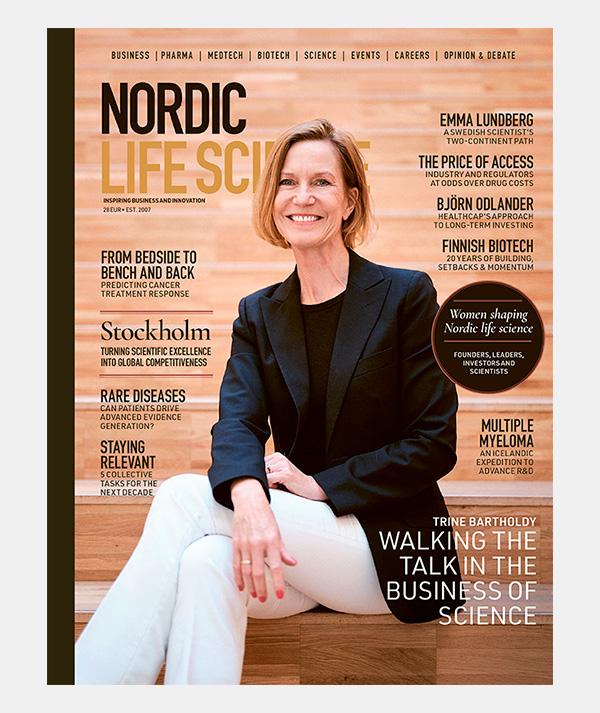
The price of access: Industry and regulators are at odds over Nordic drug costs
The ongoing struggle in the Nordic countries to keep prescription drug prices affordable without shutting out innovative, more expensive therapies continues to frustrate pharmaceutical companies as the introduction of new drugs to the region slows.
The antibody was originally developed by BioArctic, based on Lannfelt’s discovery of the Arctic mutation in Alzheimer’s disease. Eisai is responsible for clinical development, regulatory filings, and global commercialization, while BioArctic has the right to commercialize Leqembi in the Nordics together with Eisai. Leqembi is currently approved in 53 countries.
Published: September 23, 2026