Uncategorized - December 23, 2015
Twin study estimates familial risks of 23 different cancers
A new study of twins has found that having a twin sibling diagnosed with cancer poses an excess risk for the other twin to develop any form of cancer. Among the 23 different types of cancer studied, an excess familial risk was seen for almost all of the cancers, including common cancers such as breast […]
Uncategorized - December 10, 2015
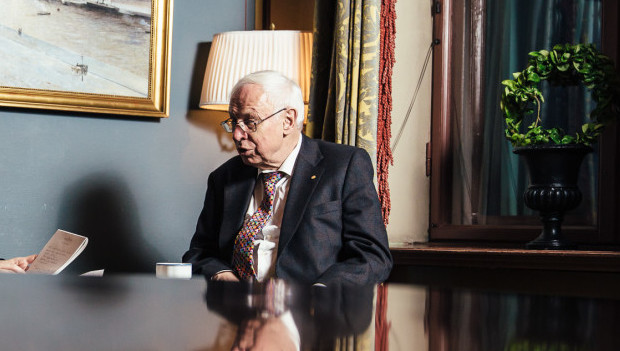
NLS met Tomas Lindahl
On Tuesday December 8th, after his Nobel Lecture, Nordic Life Science met the Nobel Laureate in Chemistry, Professor Tomas Lindahl, for an interview at the Grand Hotel. Professor Lindahl shared his thoughts about basic research, what fascinates him about science and chemistry and his hopes for the medical applications of his and the other Laureates […]

Uncategorized - October 20, 2015
New findings about heart muscle cells
A new study from Karolinska Institutet shows that new heart muscle cells in mice are mainly formed directly after birth. After the neonatal period the number of heart muscle cells does not change, and heart growth occurs only by cell size increase, similar to the human heart. Cardiovascular disease is one of the main causes […]

Uncategorized - September 15, 2015
New study about type 2 diabetes management
Results presented today at the European Association for the Study of Diabetes (EASD) showed that increased awareness about how patients’ and physicians’ perceptions of control differ, could benefit physician-patient communication and improve diabetes management. New findings from the Perceptions of Control (POC) study showed adults with type 2 diabetes uncontrolled on basal insulin had a […]

Uncategorized - August 24, 2015
New study about the immunsystem
A study by researchers at Sweden’s Karolinska Institutet is the first to suggest that cells in the tumour blood vessels contribute to a local environment that protects the cancer cells from tumour-killing immune cells. The results, which are being published in the Journal of the National Cancer Institute , can contribute to the development of […]

Uncategorized - August 3, 2015
Mechanism behind infant epilepsy discovered
Scientists at Karolinska Institutet have discovered a new mechanism behind severe early infant epilepsy. Through large-scale genetic analyses of a family with two affected children at SciLifeLab mutations were identified in the gene encoding the transport protein KCC2. In a collaboration with scientists at the University College London, another family with children carrying mutations in […]