Vitroscope raises USD 7 million to scale up live-tissue platform
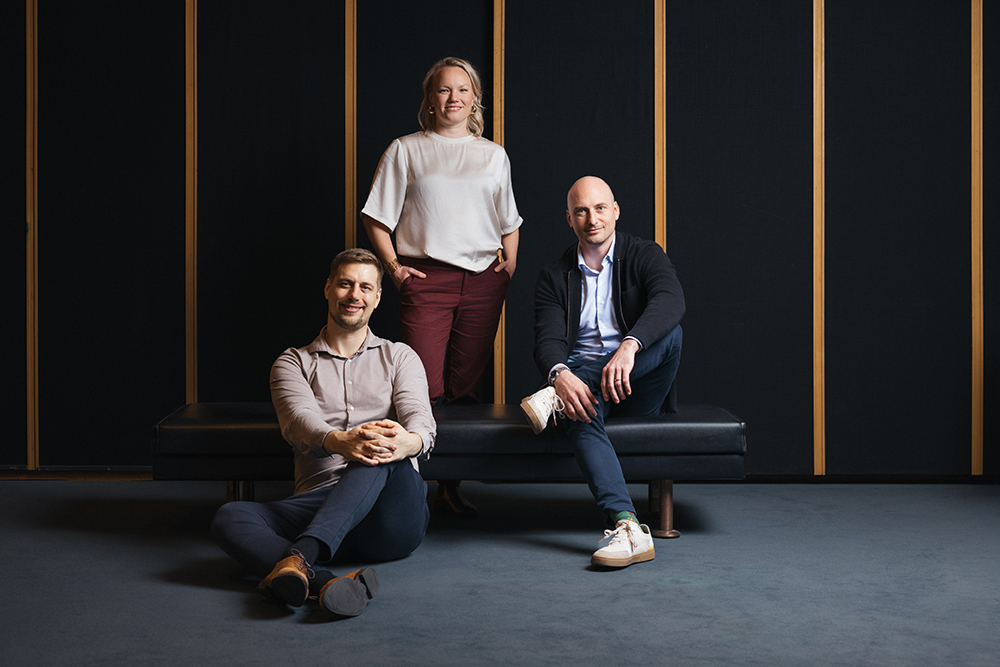
Trondheim-based Vitroscope has raised USD 7 million, made up of a USD 5 million seed round co-led by Cerberus Ventures and YZR Capital and USD 2 million in non-dilutive funding from the Research Council of Norway.
November 3, 2026


The Norwegian company develops perfusion platforms that let researchers study immune activity, treatment responses, and disease mechanisms in living tissue in real time. The funding will support the commercial rollout of its benchtop platform, vitro.alive, and the validation of vitro.scale, a higher-throughput version. Customer testing of vitro.scale is expected to begin in 2027, ahead of a planned launch in 2028.
Arcas Ventures, Golden Egg Check, Devico Invest, and several angel investors also took part in the seed round. Vitroscope has raised USD 8.8 million to date.
Researchers increasingly rely on sophisticated models such as organoids and fresh human tissue. However, static well plates cannot replicate the flow and oxygen conditions these models need, which limits how long the tissue stays viable and how much data can be collected. Vitroscope’s vitro.alive keeps tissue alive for days under controlled flow. It combines programmable perfusion, real-time control of oxygen, pH, and temperature, and live-cell imaging. The platform runs six parallel experiments on standard inverted microscopes, while vitro.scale will support 96. In one study, Vitroscope and Instant Bio kept vascularized human brain organoids alive under perfusion for seven days.
“We started Vitroscope because living tissue cannot be reduced to a snapshot. Its behavior depends on what is happening around it over time. With vitro.alive, researchers set those conditions themselves and follow how the tissue responds for days. This funding lets us bring this capability to more labs and extend it to higher-throughput experiments with vitro.scale,” says Carlo Kriesi, Co-founder and CEO, Vitroscope.
“Biology isn’t static, but much of the way we study it still is. Vitroscope is changing that by enabling researchers to observe living tissue over time, generating the rich, longitudinal data that will become increasingly valuable in an AI-driven world,” says Chenny Zhang, Managing Director, Cerberus Ventures.
The financing comes as regulators move toward human-relevant research models. In September 2026, the US Food and Drug Administration clarified that non-animal methods can support safety testing of drugs and biological products where appropriate.
Published: November 3, 2026