What the Pipeline Report reveals about strengths and weaknesses of Swedish life science

SwedenBIO recently released our new Swedish Drug Discovery and Development Pipeline Report 2026 at NLSDays in Gothenburg. This fourteenth edition once again shows that Swedish drug development remains on a stable trajectory. Fluctuations in the number of drug-developing companies and in the number or type of projects are minimal compared to our report from three years ago.
December 10, 2025


While this is reassuring and demonstrates the industry’s resilience in an increasingly unpredictable geopolitical landscape, the report also highlights persistent weaknesses. Given the complexity of the industry, and the fact that to be a successful life science nation all parts of the ecosystem must be, if not equally strong, at least strong enough, issues around clinical trials and production must be addressed.
According to the report, investments in infrastructure for advanced manufacturing would give Sweden a clear competitive advantage.
The report notes that several Swedish companies still carry out the majority of their manufacturing abroad, often due to cost factors or a lack of advanced infrastructure domestically. At the same time, it emphasizes that Sweden has both the expertise and the potential to build up larger domestic production, particularly within biologics, cell and gene therapies, and small-scale clinical batches. According to the report, investments in infrastructure for advanced manufacturing would give Sweden a clear competitive advantage.
Sweden’s production shortcomings have long been recognized. An article in Dagens Industri in June this year revealed that Skåne, in southern Sweden, has not been able to attract a single new production investment, in sharp contrast with the SEK 165 billion invested in Denmark’s Sjælland region over the past five years. And while the updated Swedish national life science strategy, adopted last year, highlights the need for increased production capacity, the concrete measures being taken to achieve this remain unclear. As noted in the Pipeline Report, Sweden has several clear advantages that should make it an attractive country for companies looking to invest in production.
Sweden does appear to be increasingly ready to tackle another major challenge facing the industry: clinical trials.
Although it is difficult to pinpoint what exactly is being done to increase investments in production, Sweden does appear to be increasingly ready to tackle another major challenge facing the industry: clinical trials. Just as production is essential to maintaining a strong ecosystem, clinical trials play a vital, and perhaps somewhat overlooked, role in the complex web that sustains the life science sector.
Data from the Pipeline Report shows that Swedish drug-developing companies mainly choose European sites for clinical trials. Sweden is included as a trial country in 41% of studies – but more often in single-country trials than in multinational ones, and accounts for 27% of reported sites. These numbers must improve significantly to strengthen this part of the ecosystem.
Countries such as Denmark, Belgium, and the Netherlands attract studies through shorter lead times and more flexible regulations.
In this regard, Sweden already has several advantages, including high quality in research, strong patient follow-up, and access to health data through national registers. However, competition for clinical trials is fierce. Countries such as Denmark, Belgium, and the Netherlands attract studies through shorter lead times and more flexible regulations.
To increase the number of clinical trials in Sweden, coordinated action across the clinical trial ecosystem is essential. This includes improving collaboration between academia, healthcare, and industry, establishing clear incentives, streamlining regulatory processes, and enhancing patient recruitment and data system interoperability. However, the real change must take place within the Swedish healthcare system, where care and clinical research need to coexist. Sweden has consistently strong figures in drug development despite weaknesses in other parts of the ecosystem. The question is: how long can this be maintained and how much more progress could Sweden unlock in drug research and development with stronger performance in clinical trials and manufacturing?
How long can this be maintained and how much more progress could Sweden unlock in drug research and development with stronger performance in clinical trials and manufacturing?
While we can only speculate about these dynamics, one thing is certain, drug development does not exist in a vacuum. It depends on, and is indirectly sustained by, many other segments of the ecosystem. Only by strengthening these interconnected components can we ensure that Swedish drug development not only continues on its current trajectory but also propels Sweden ahead as a leading life science nation.
About the author

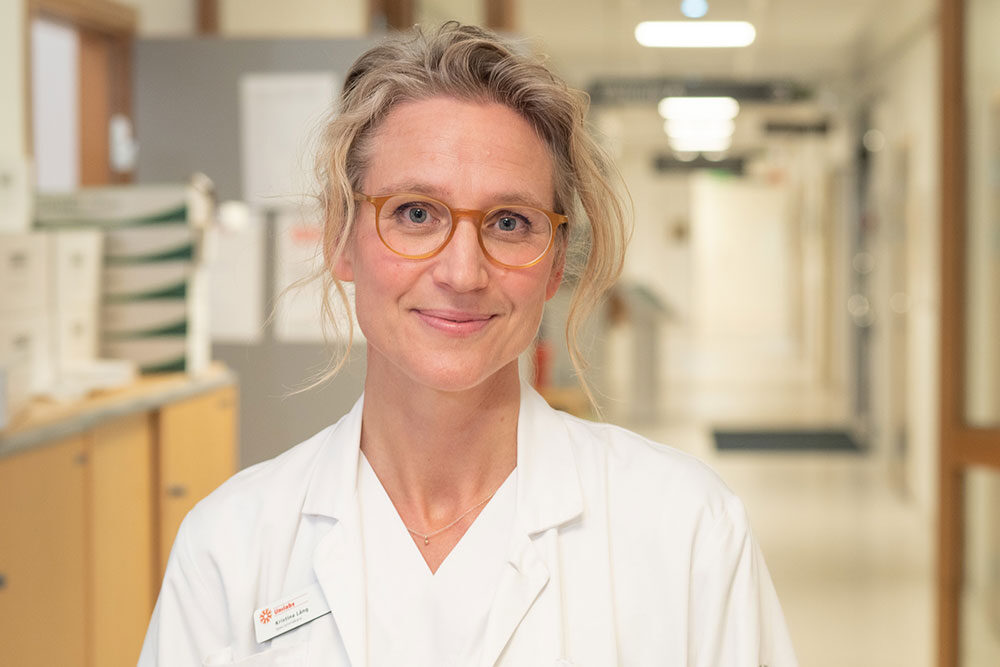
This Column was originally written by Joanna Daffy Tiitus, National Director, SwedenBIO, for NLS magazine No 04 2025, out November, 2025. Photo: Eva Garmendia
Updated: January 13, 2026, 10:15 am
Published: December 10, 2025