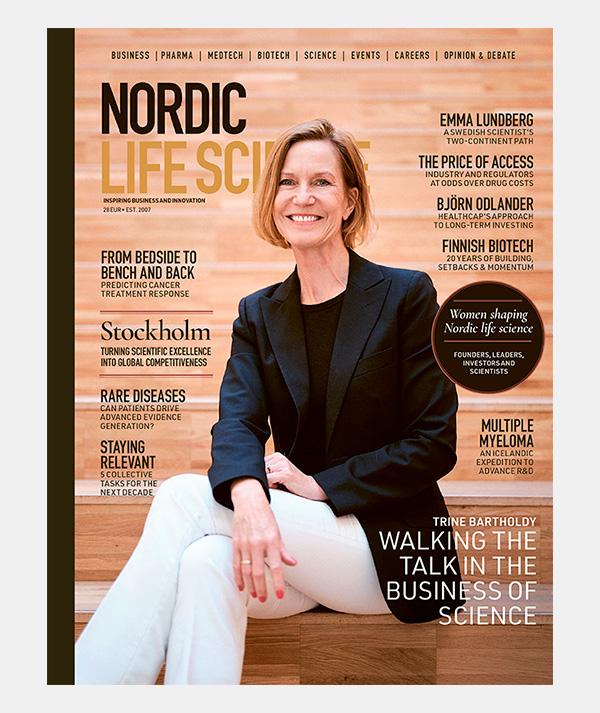
20 years of Finnish biotechnology: Building, setbacks, and new momentum

The story of Finnish biotechnology is not a straightforward success story. It is a story of an ambitious start, of setbacks, and of stubborn rebuilding – and of what happens when a field that demands patience meets short-term expectations. As Finnish Bioindustries turns 20, it is a good moment to look back.
September 2, 2026


When the field found a voice
In the 1990s, Finland was producing strong research grounded in biotechnology, but the players worked in isolation from one another. Drug development, industrial biotechnology, and the food sector each looked in their own direction, and there was no shared voice. Once EuropaBio, the European umbrella organization for biotechnology companies, had been established, Finland needed a counterpart of its own. The initiative came from Hannele Kuusi, who set up a biotechnology division within the Chemical Industry Federation of Finland and brought the food and pharmaceutical industries into it as well.
When Kuusi left the Federation, her work was continued by Saara Hassinen, under whose leadership the division was turned into an independent, registered association – Suomen Bioteollisuus ry, Finnish Bioindustries (FIB), founded 20 years ago this year. Hassinen remembers the starting point well: “There was no actor in Finland that represented the field in that way.” Her tenure also saw the birth of ChemBio, the sector’s own annual event, which has since established itself as an important meeting place for the field.
The base that was built then is still entirely relevant to industrial biotechnology today.
The foundations, however, had been laid earlier. Academician Merja Penttilä, who has built her career at VTT in industrial biotechnology, recalls the 1980s: “Backed by its substantial funding, Sitra got the whole field of genetic engineering started in the early 1980s. The Finnish biotechnology companies that already existed adopted the new techniques quickly. Finnish industrial biotechnology grew into a frontrunner – enzymes, protein production, even modern biotechnology in brewing.” VTT, Suomen Sokeri (later Cultor), and Alko built world-class expertise together, and out of it grew, among others, Roal – today Ab Enzymes Finland Oy – a producer of industrial enzymes still operating in Finland. “The base that was built then is still entirely relevant to industrial biotechnology today,” Penttilä says.
Timo Veromaa, long-time CEO of Biotie Therapies and chair of the association from 2010 to 2018, remembers the same: “Suomen Sokeri and Alko were very active in the 1970s and ’80s, and absolutely world-class.”
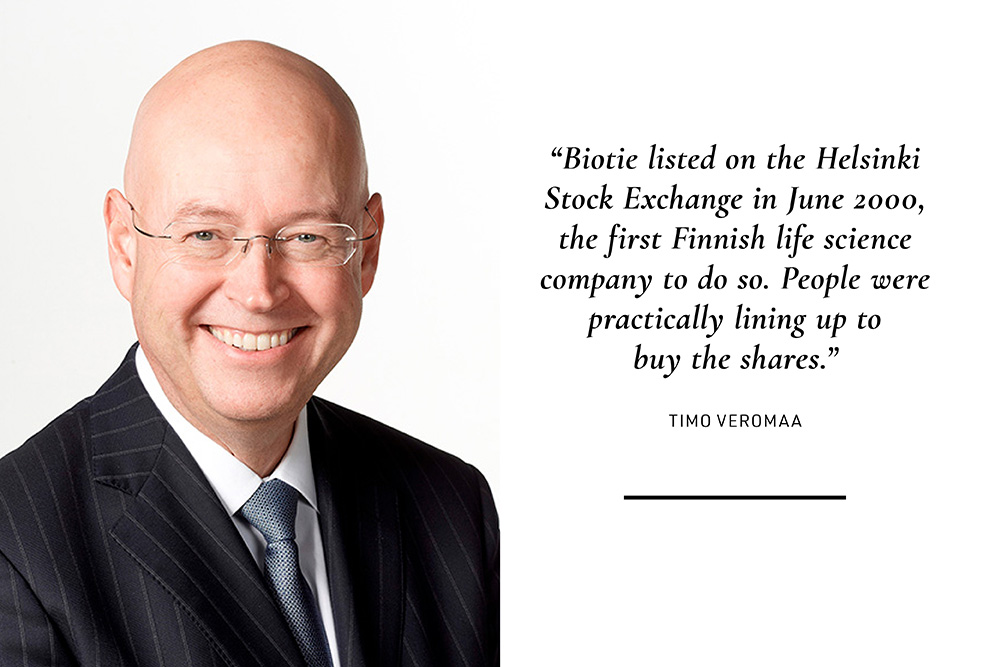
In the 1990s, biotechnology was compared in Finland to Nokia: a new industry that could carry exports and growth. The business model, however, was of an unfamiliar kind. Capital had to be tied up for years before the first product, and investors were asked to think in terms of 10 to 15 years. Sitra (the Finnish state innovation fund) and BioFund began funding companies in the field, and promising newcomers emerged. Biotie listed on the Helsinki Stock Exchange in June 2000, the first Finnish life science company to do so. Veromaa, then the company’s research director, remembers the enthusiasm: people were practically lining up to buy the shares.
The downturn
The good start did not last. Expectations had risen high, but results did not arrive at the pace public debate demanded. This was felt above all in the medical applications of biotechnology, which were of interest to the wider public. The tone of media coverage turned sharply critical, and Hassinen describes the change bluntly: “When I started at Finnish Bioindustries, the field looked optimistic and really quite splendid – and then it collapsed.”
The decisive blow came in 2004, when the Finnish innovation fund Sitra withdrew from biotechnology as Finland’s former prime minister Esko Aho took over as its President – just before long-term investments should have begun to pay off. Carmela Kantor-Aaltonen, who led the association from 2009 to 2023, sums it up in a single word: the withdrawal was a “death blow.”
Sitra had sprinkled money across thirty or forty startups without clear focus and without expertise in the field of its own; the investments were too small and too scattered.
According to Veromaa, the problem was not the exit itself but the way it had been done. Sitra had sprinkled money across thirty or forty startups without clear focus and without expertise in the field of its own; the investments were too small and too scattered. Veromaa recalls Jorma Ollila, former CEO of Nokia, remarking afterward that the only mistake in the government’s biotechnology-investment numbers was that there should have been at least one more zero after them. Many promising companies eventually ended up in foreign ownership – someone else captured the value.
A fresh start on difficult terrain
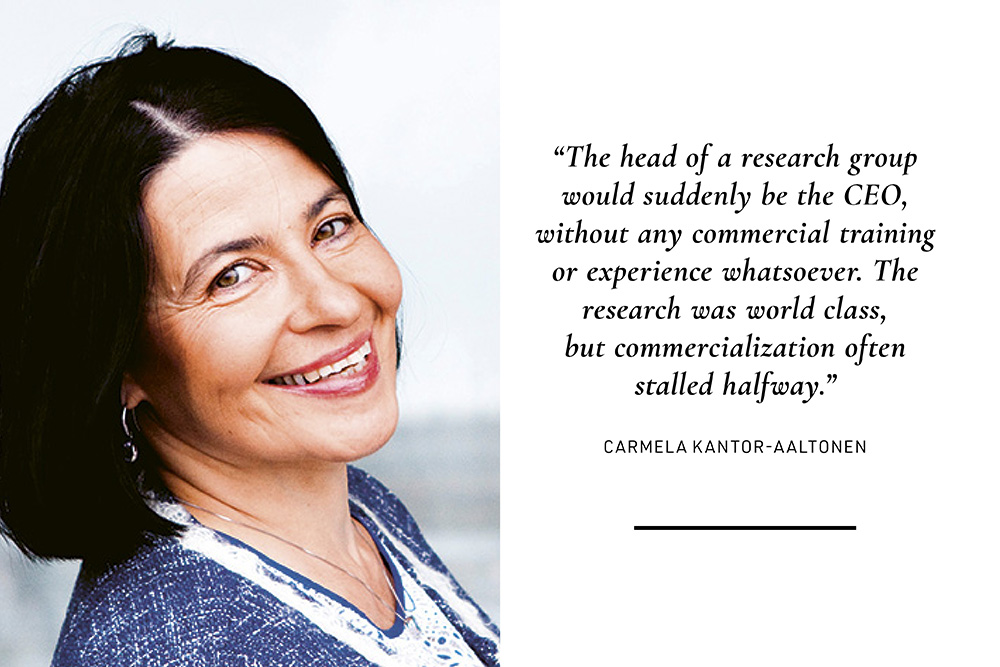
When Kantor-Aaltonen started in 2009, biotechnology no longer looked like a rising field but an uncertain one. “The atmosphere back then was fairly negative,” she recalls. The hardest problem, though, was not money but business skills. Funding conditions had encouraged research groups to set up companies they were not always equipped to run: “The head of a research group would suddenly be the CEO, without any commercial training or experience whatsoever.” The research was world class, but commercialization often stalled halfway. University culture offered little encouragement, as entrepreneurship was long viewed with skepticism.
Veromaa recognizes the same structural gap. Finland has lacked the reserve of experienced executives that Sweden and Denmark have built up over decades. “We have a couple of handfuls of CEO-level people who have been through one cycle,” he says. Biotie made it all the way to Nasdaq in New York in its day – the first Finnish life science company to reach it – and both funding and expertise had to be sought abroad.
Gradually the terrain began to shift. Kantor-Aaltonen saw a different attitude in the new generation of entrepreneurs – “They had a different kind of drive” – and a belief in what they were doing, with internationality as a starting point rather than a goal. Her tenure saw the launch of a biotechnology theme week, held every other year as part of EuropaBio’s European Biotech Week. The week offered biotechnology events together with universities, VTT, companies, and other actors in the field, including the BioBio Society and the Advisory Board on Biotechnology; the first theme week’s main event was held at Finlandia Hall. As part of it, the BioFinland pitching competition was established for higher-education students, intended to encourage the commercialization of research and entrepreneurship. The competition gives young people feedback from industry experts and, through cooperation with Nasdaq, even visibility on the Nasdaq Tower in Times Square. The competition has yielded many success stories, such as StemSight, which is working to restore sight in people with corneal blindness using regenerative cell therapies.
Invisible success
One feature recurs throughout biotechnology’s development: the field succeeds, but the success is not always visible under the category of biotechnology. When a company grows, it becomes a pharmaceutical company or some other industrial player that is not classified as a biotechnology company, which makes it hard to detect in the statistics. Hassinen sums it up: results “get labeled as diagnostics companies or enzyme companies, while the biotechnology behind them stays in the shadows.” The same is true of research results more broadly. Finnish biotechnology expertise has not primarily emerged as startups but has been commercialized inside established companies – and then the credit disappears from view. Both Veromaa and Penttilä recognize the phenomenon.
This was probably one of the first new applications of industrial biotechnology in the world to reach industrial production.
In the absence of domestic funding, VTT, among others, had to seek partnerships with foreign companies that valued Finnish expertise. Collaboration was pursued with American frontrunners in the field, including Genencor, DuPont, Cargill, and Dow. In this way the expertise was retained, and continued to accumulate, in Finland as well.
Penttilä describes a concrete example: in the 2010s, VTT, together with Cargill and Dow, developed a way of producing lactic acid with yeast instead of the traditional bacteria. The yeast tolerated low acidity, which made the whole process simpler and cheaper. “This was probably one of the first new applications of industrial biotechnology in the world to reach industrial production.” Today Cargill and NatureWorks make PLA bioplastic from lactic acid, which can be used in a wide range of applications from packaging materials to medical implants. Finnish expertise has transformed the field, yet few have even heard of it. One of the few moments when biotechnology has been given credit was the COVID-19 pandemic: without biotechnology there would have been no vaccines.
A second coming
By the time Alexandra Peth (Managing Director 2023 to 2026) took over, the wind had changed. Biotechnology had begun to rise again in Europe – CRISPR and other methods had opened up possibilities that could not even have been dreamed of in the 1990s, and the EU had designated the field a strategic technology. “Suddenly it was everywhere,” Peth says. Ursula von der Leyen mentioned biotechnology in her speech, and work was going on behind the scenes to secure concrete funding instruments and strategies. At the same time, economic figures for the sector in Finland were compiled so that its significance would also become visible to decision-makers. The Made by Cells event was established to strengthen the sector’s international visibility.
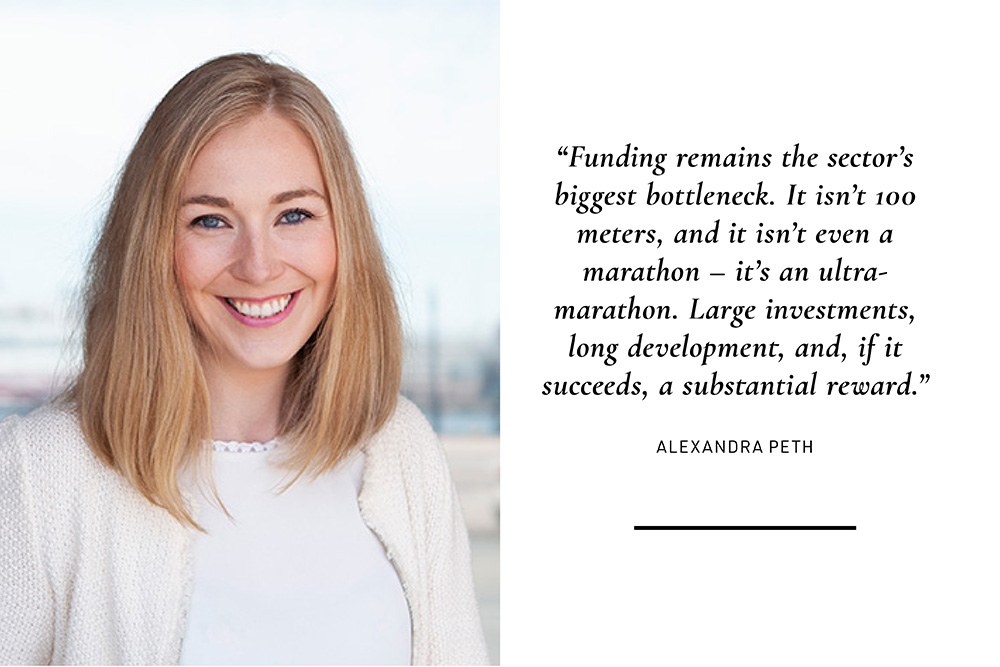
Optimism does not mean there are no problems. Funding remains the sector’s biggest bottleneck, and Peth captures its nature aptly: “It isn’t 100 meters, and it isn’t even a marathon – it’s an ultramarathon.” Large investments, long development, and, if it succeeds, a substantial reward. Veromaa points out that Medicon Valley in Denmark and southern Sweden grew into the strongest cluster in the Nordics precisely because of sustained public investment. In Finland, by contrast, public discussion often confuses “the bio sector” with the forest industry, and biotechnology is in practice absent from Finland’s bioeconomy strategies. This, according to Veromaa, is “completely exceptional on a global scale.” He illustrates the difference: the pharmaceutical sector typically invests around a fifth of its turnover in research and development, which is in an altogether different league from the forest industry.
Another obstacle is attitude. In the 1980s, with the possibilities opened up by genetic engineering, the level of ambition was high. More recently, according to Peth, in Finland “there is no wish to be the first”; the safe path is preferred. The foundation is good – the bioeconomy and molecular biology, together with chemistry, offer an excellent platform – but an entrepreneurial attitude ought to be strengthened as early as higher education. Veromaa adds a human perspective: someone aiming to become an entrepreneur in the field is typically in their thirties, already with a family and a mortgage, so the leap, and the risk that comes with it, is a large one.
When it comes to the future, Penttilä and Peth speak the same language. Biotechnology is on the rise again worldwide, with China and the United States ahead and the EU following – and the question is whether Finland dares to take part boldly. Peth puts it as an image: the field has “windows into the future,” and looking through them gives her a flutter in the pit of her stomach. If the world’s largest countries and its smaller ones alike are investing in biotechnology, the opportunities are hardly small.
The expertise built up in laboratories over decades is at last beginning to bear fruit in a new wave of entrepreneurship as well.
Signs of better times are already visible. Many of Finnish Bioindustries’ member companies operate internationally. In drug development, Finnish companies are working on new cancer drugs and treatments for neurodegenerative diseases, among other things. At the same time, food biotechnology in particular has seen a wave of promising startups in recent years, developing alternative methods for producing food proteins from carbon dioxide or from industrial side streams. The expertise built up in laboratories over decades is at last beginning to bear fruit in a new wave of entrepreneurship as well.
A knowledge-intensive field like this is exactly what a small country should invest in.
Finland has what it takes: high-quality research, biotechnology expertise, and a strong foundation in chemistry and the bioeconomy. According to Veromaa, a knowledge-intensive field like this is exactly what a small country should invest in. The question is not whether Finland can – but whether, this time, it dares to play the game to the end.
A word from the new Managing Director
Johanna Pentjärvi, who took up the post of FIB Managing Director in June, is enthusiastic about the sector and sees a genuinely fascinating future ahead. At EU level, the Biotech Act I and II are keeping the discussion around biotechnology active, and the legislation will hopefully give momentum to its development. Finnish innovators and their growth companies have a key role to play in solving the world’s most intractable problems, and at the same time biotechnology is becoming more widespread and taking on a role in the business of established industrial players too.
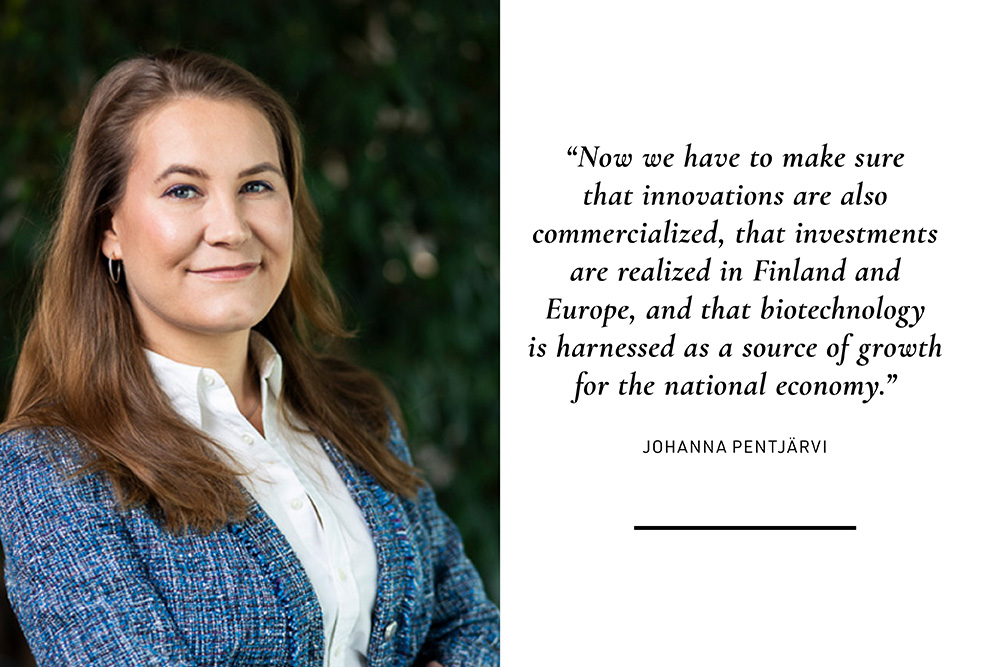
The conditions for growth, in both exports and employment, are compelling, and the EU legislative work now under way can genuinely remove obstacles, speed up the move from research to production, and direct funding toward precisely these companies and technologies. “Now we have to make sure that innovations are also commercialized, that investments are realized in Finland and Europe, and that biotechnology is harnessed as a source of growth for the national economy,” Pentjärvi concludes.
Interviewed for this article
- Saara Hassinen continued the work begun by Hannele Kuusi and led Finnish Bioindustries until 2009. She built the sector’s early ecosystem: bringing actors together, helping to launch the ChemBio event, and creating links to Tekes and to the European umbrella organization EuropaBio. She now works in health technology.
- Carmela Kantor-Aaltonen succeeded Hassinen and led the association from 2009 to 2023. She steered the sector through the difficult period that followed Sitra’s withdrawal and launched, among other things, the BioFinland pitching competition to boost the visibility of young biotechnology companies.
- Alexandra Peth served as the association’s Managing Director from 2023 to 2026. During her tenure the emphasis was on EU-level advocacy and on making the significance of biotechnology visible to decision-makers and financiers alike.
- Johanna Pentjärvi has been the association’s Managing Director since June 2026. She brings an international perspective to FIB, as well as a strategic approach to stakeholder work and advocacy.
- Timo Veromaa led Biotie Therapies, one of Finland’s best-known drug development companies — first as research director and from 2005 as CEO — and took it all the way to a Nasdaq listing. He was also chair of Finnish Bioindustries from 2010 to 2018.
- Merja Penttilä has been research professor of biotechnology at VTT and professor of synthetic biology at Aalto University. She is one of the central experts in Finnish industrial biotechnology and synthetic biology, and has coordinated the Tekes-funded Living Factories program, led the Academy of Finland’s center of excellence program in biotechnology, founded the Center for Young Synbio Scientists program with support from the Jenny and Antti Wihuri Foundation, and promoted the Synbio Powerhouse ecosystem.
about the author

Nina Pulkkis is CEO at Photino Science Communications and Founder at SynBio Powerlabs. She is also Science Communicator at Finnish Bioindustries and wrote this Commentary, originally published in NLS magazine No 03 2026.
Published: September 2, 2026