A closer look at the 2026 Brain Prize: The cellular blueprint of touch and pain
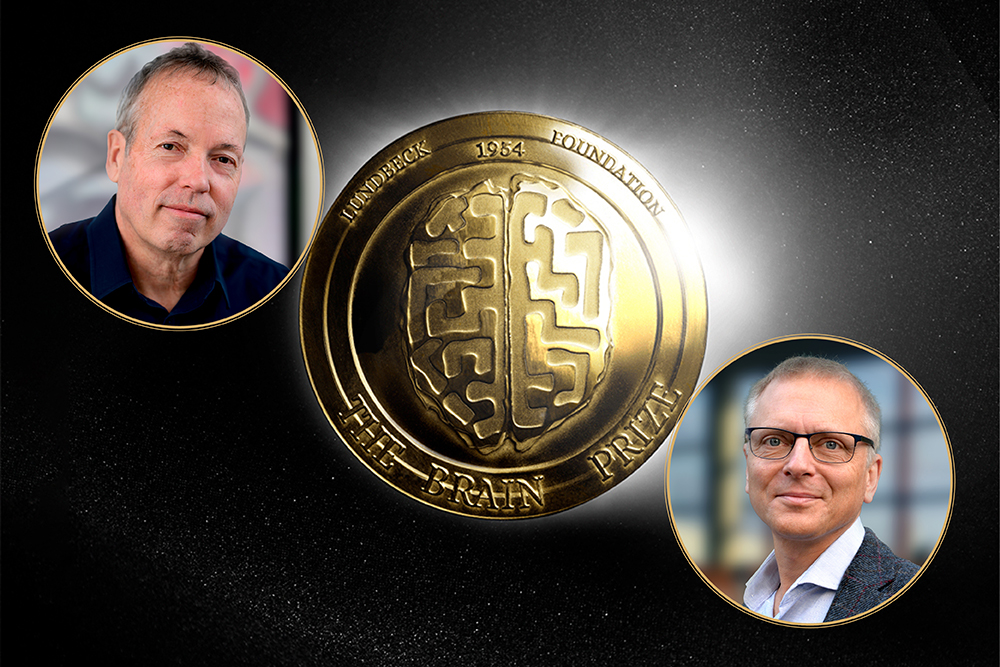
David Ginty (Harvard Medical School/Howard Hughes Medical Institute) and Patrik Ernfors (Karolinska Institutet) have been awarded The Brain Prize 2026, the world’s largest research prize in neuroscience, for work that has redrawn the cellular map of how the nervous system senses touch and pain.
September 23, 2026


The prize, worth EUR 1.3 million and shared between the two winners, is awarded by Denmark’s Lundbeck Foundation and was presented at a ceremony in Copenhagen earlier this year. The selection committee, chaired by Professor Andreas Meyer-Lindenberg, credited the two researchers with revealing the diversity of sensory neuron types, their end organs, and their spinal circuits – work the committee said has created a blueprint for understanding normal touch and for pinpointing where things go wrong in disorders such as chronic pain.
For decades, researchers knew broadly that “touch” and “pain” signals traveled to the brain along different nerve fibers, but lacked a systematic account of how many distinct sensory neuron types exist, how they connect to the skin, and how their signals are organized once they reach the spinal cord. Ginty and Ernfors, working independently but in a largely complementary fashion, spent the past two decades supplying that missing architecture.
Mapping the wiring of touch
Ginty’s laboratory built a genetic toolkit that let researchers label and manipulate specific classes of mechanoreceptor neurons – the cells that detect gentle touch, vibration, and hair movement – and trace them from the skin, through defined columns in the spinal cord, into lamina-specific circuits of excitatory and inhibitory interneurons. His group went on to show how these circuits extend into the brainstem, where touch and pain signals converge, and even demonstrated that high-frequency vibration signals are routed through the auditory midbrain.
Cataloging the cells of pain
At Karolinska Institutet, Ernfors took a parallel route into the biology of pain. His team discovered a population of specialized “terminal Schwann cells” wrapped around pain-sensing nerve endings in the skin, showing that these glial cells are themselves necessary for detecting painful mechanical stimuli – evidence that pain sensing is a neuron-glia partnership rather than a purely neuronal event. Ernfors was also among the first to apply large-scale single-cell RNA sequencing to sensory neurons, producing in 2015 what became a standard molecular classification of dorsal root ganglion neuron types, later extended to primate and human tissue.
By mapping human genetic risk factors for chronic pain onto these cell-type atlases, his group showed that seemingly unrelated pain conditions converge on just a handful of nociceptor subtypes – and, in more recent work, identified a specific neuron population in the brainstem that is required for morphine’s pain-relieving effect, which could point to more targeted alternatives to opioids.
Complementary work
The two bodies of work are frequently described as complementary rather than overlapping: Ginty’s contributions center on the circuit-level wiring of touch from skin to brainstem, while Ernfors’s center on the molecular identity of sensory neurons and the neuron-glia and spinal mechanisms underlying pain. Together, they replace what used to be a coarse division into “touch fibers” and “pain fibers” with a detailed, cell-type-resolved map – one that the field is now using as a foundation for developing more precisely targeted treatments for chronic pain, itch, and sensory dysfunction such as touch hypersensitivity.
Sources: The Brain Prize 2026 announcement, Lundbeck Foundation; Fan Wang (MIT), “Cellular architectures of touch and pain: the twin contributions of David Ginty and Patrik Ernfors,” The Brain Prize.
Published: September 23, 2026