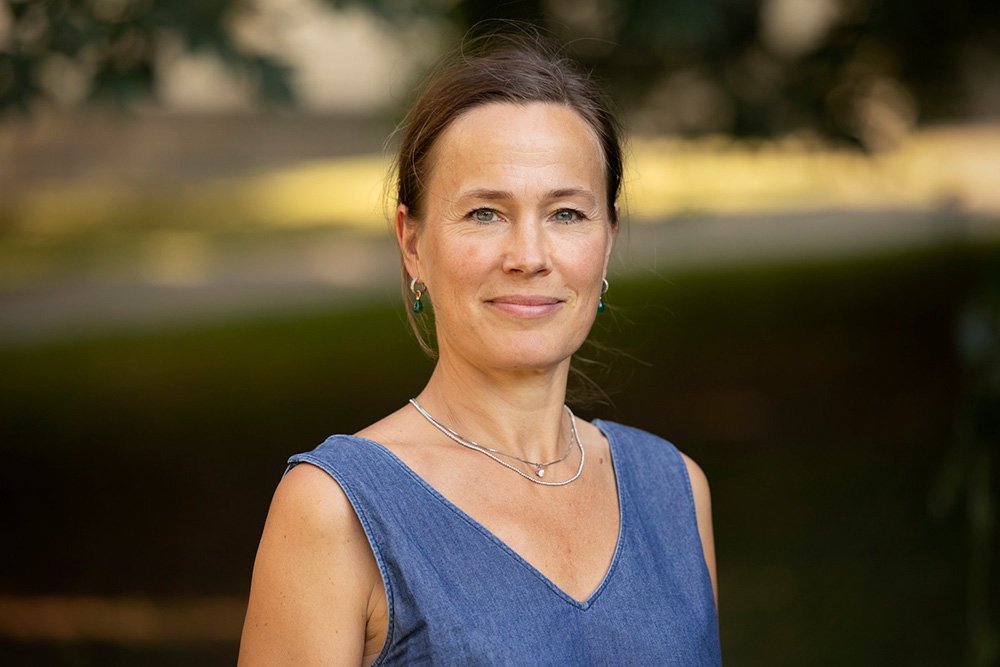
Pioneering mitochondrial research earns Dr. Joanna Rorbach the Göran Gustafsson Prize

Dr. Joanna Rorbach, principal researcher at the Department of Medical Biochemistry and Biophysics at Karolinska Institutet, has been awarded the prestigious Göran Gustafsson Prize by the Royal Swedish Academy of Sciences (Kungliga Vetenskapsakademien).
March 23, 2026


Joanna Rorbach, who leads her own research group, was given the prize in molecular biology for her pioneering work on how mitochondrial ribosomes are built and regulated – research that is advancing our understanding of human health and disease.
Now I have a research group of more than ten people and every day I am exposed to some new, exciting things. You can never be bored with that.
With nearly twenty years of mitochondrial research behind her, Rorbach’s scientific curiosity motivates her to continue pushing the needle in her field.
“I sometimes feel that we have such a great job as scientists, because you have some nice theories, some hypotheses, but the experiments will always prove you wrong and you find something completely unexpected. Now I have a research group of more than ten people and every day I am exposed to some new, exciting things. You can never be bored with that,” she says.
The inner workings of mitochondria
Rorbach’s group is dedicated to investigating the inner workings of mitochondria – the cell’s own energy-producing organelles. Their research furthers our understanding of how errors in the mitochondrial ribosomes – where protein is synthesized – contribute to both rare mitochondrial disorders and more common diseases such as cancer, diabetes, and central nervous system illnesses like Parkinson’s and Alzheimer’s Disease.
For example, we see how antibiotics are binding to the mitochondrial translation system, and that’s really important because you can use this knowledge to modulate antibiotics.
Her group’s discoveries have provided novel insight into the composition and dynamics of these ribosomes during protein synthesis. This fundamental knowledge is now seen as having significant medical potential.
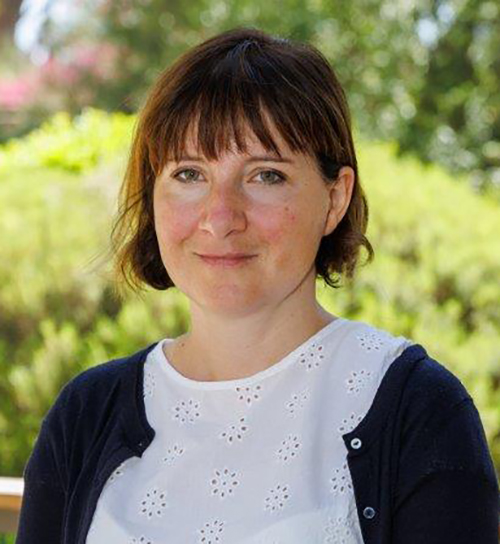
“We are very much focused on basic research, and our discoveries won’t go into the clinic immediately tomorrow, but we’re starting to see more possible clinical applications,” Rorbach explains.
“For example, we see how antibiotics are binding to the mitochondrial translation system, and that’s really important because you can use this knowledge to modulate antibiotics. Beyond antibiotics, this approach could be extended to other small molecules, enabling the design of compounds that selectively target specific translational systems.”
The Göran Gustafsson Prize
The Göran Gustafsson Prize is granted to five outstanding researchers under the age of 45 and recognizes exactly this kind of frontier-defining science. Each laureate receives SEK 8.1 million, including a personal award and substantial research funding.
Every grant is designed for very specific projects, I’m really happy that this award gives us the flexibility to explore a broader range of ideas.
With the additional funding, Rorbach sees an opportunity for her group to explore and test new ideas and different hypotheses.
“Every grant is designed for very specific projects, I’m really happy that this award gives us the flexibility to explore a broader range of ideas. Among these is the potential to translate our research into practical applications, as well as to pursue collaborations aimed at designing novel, specific small molecules,” she muses.
This year’s Göran Gustavsson Prize awardees also include Emma R. Andersson, senior researcher in developmental biology at Karolinska Institutet, who received the prize in medicine; Simone Fabiano, professor of materials science at Linköping University, who received the prize in chemistry; Josefin Larsson, professor of astrophysics at KTH Royal Institute of Technology, who received the prize in physics; and Dan Petersen, professor of mathematics at Stockholm University, who received the prize in mathematics.
Published: March 23, 2026