“Faith in and commitment to solving problems and research must be restored”

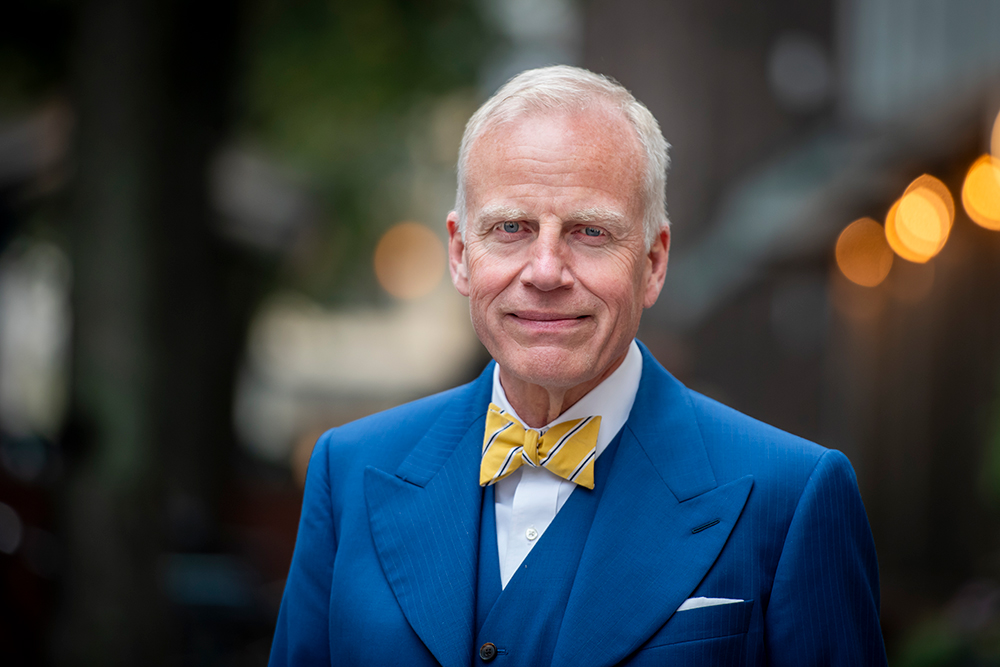
The only thing Frederick J. Ramsdell does better than scientific research is drop off the grid.
November 21, 2025


When the Nobel Prize Committee tried to call Frederick “Fred” Ramsdell to tell him that he had won the 2025 Nobel Prize in Physiology or Medicine, they could not reach him. Actually, no one knew exactly where he and his wife Laura were since they had gone on a three-week long backpacking trip east of Yellowstone National Park and he had no cell phone service. By the time he and his wife were back in range, he had missed about 150 texts and messages, he says to NLS.

Not surprisingly, Ramsdell says that besides science and the immune system, he is most passionate about being outdoors. Both he and his wife enjoy spending time in the mountains and woodland areas. “All my friends had called,” Ramsdell says. “I was shocked. I had known this discovery was important for a long time, but after winning the Crafoord Prize in Polyarthritis in 2017, I was not expecting the Nobel Prize.”
The discoveries
Ramsdell shares the prize with fellow American Mary E. Brunkow, and Japanese scientist Shimon Sakaguchi (who also won the Crafoord Prize in 2017) for identifying cells that keep the body’s immune system from attacking healthy organs about 25 years ago. Known as peripheral immune tolerance, understanding how the immune system sorts out threats has led to new experimental treatments for cancer, autoimmune diseases, and other illnesses.

Ramsdell and Brunkow both worked at the company Darwin Molecular in Seattle, US, when they made their discovery. Brunkow was a scientist in the molecular biology/genomics group and Ramsdell led the company’s immunology section. During their studies, Brunkow and Ramsdell found that certain mice were prone to autoimmune diseases and that they had a mutation in a gene that became known as FoxP3. They also discovered that an autoimmune disease in humans was caused by mutations in the human equivalent of FoxP3.
Through his work, Ramsdell’s and Sakaguchi’s groups determined that the FoxP3 gene regulates the development of cells that Sakaguchi had identified earlier, called regulatory T cells, which prevent the immune system from turning on healthy organs.
Challenges and treating patients
While noting that science is always challenging, one frustrating aspect of their research was the delay in getting the findings published, according to Ramsdell. It took two years because reviewers kept asking for an additional experiment that he was unable to do. He began talking about the research publicly, which led to it being published.
Now a senior advisor at Sonoma Biotherapeutics, a company he helped start five years ago, Ramsdell says the technology they discovered is being applied in cell therapy by using the cells to fix dysfunctions in the immune system and “reset” the immune system so the flaw no longer exists.
“We’re treating patients as we speak,” Ramsdell says. “Now we’re figuring out how effective the treatment will be and how to make it more effective. The goal is to get the treatment as close as possible to a cure.”
Tools to understand the human immune system
The decision to take a class in immunology while a student at the University of California in San Diego majoring in biochemistry and cell biology set Ramsdell on his career path, he says. At the time, methods were becoming available that allowed immunology research to become more sophisticated.
The tools to understand the human immune system began to evolve in the 1980s and 1990s.
“People understood things were happening in the immune system, but they didn’t know how certain things were done,” Ramsdell explains. “But now we could start asking questions about various types of blood cells. The tools to understand the human immune system began to evolve in the 1980s and 1990s.”
That one class changed the way Ramsdell thought about systems in the human body. “I used to think that the whole immune system was responsible for all diseases, and, after what I learned, I wanted to study it even more.” He went on to earn his doctorate in immunology from the University of California in Los Angeles.
“There is a fear that the US has a lack of faith and trust in science”
While US scientists continue to make breakthroughs, the cancelling of many research grants has generated an atmosphere of uncertainty within the scientific community about individual careers and the position of the US globally.

“So much funding has come and gone, but what’s unusual is how it’s happened,” says Ramsdell, noting that the cuts seem arbitrary.
“There is a fear that the US has a lack of faith and trust in science, and if that’s the case, why would we give it money? Until that trust is regained, people are not going to support funding. The US has led in medical innovations over the past five decades, I’m afraid if we lose that it will be bad for us and bad for the world.”
In the past, funding for biomedical research was consistent because the country’s leaders wanted to cure diseases and that strategy worked. “Twenty to thirty percent of melanoma patients now die of something else,” according to Ramsdell. “But without that long-term vision and support, we’re not going to have those successes anymore.”
Why go into the field if you are not going to have support? Faith in and commitment to solving problems and research must be restored.
The fact that the funding outlook is so unsettled also sends the wrong message to upcoming scientists. “If you are a young scientist, the uncertainty of that is very challenging. Why go into the field if you are not going to have support? Faith in and commitment to solving problems and research must be restored.”
For those just starting out their careers, Ramsdell says he would remind them to stay in the present. “Pay attention, be in the moment whatever you are doing, whether it is dinner with a spouse or sitting in a class, be present. Don’t spend much time thinking about the past and the future.”
Frederick J. Ramsdell

Updated: November 27, 2025, 08:12 am
Published: November 21, 2025