An NMT for health?

If you know what an NMT phone is, or, even more so, if you’ve ever used one, it’s likely that you are formerly young. Slightly less so in Iceland, where well into the 2000s lots of the cool kids still had NMT phones in their jeeps. Your trusty Nokia 3310 could go several days on a charge, but drive away from a town or up a valley and the coverage quickly got spotty. With an NMT, though, you could head up toward the highlands or the upper reaches of a river and never be out of touch.
October 20, 2026


Beyond the retro cool of the car-mounted handsets themselves, Nordic Mobile Telephony (NMT) is an important regional success story. It was a Nordic solution to a wider problem: how to bring the benefits of modern communication to all members of society, including those scattered up valleys and fjords or across Arctic herding and fishing stations, without the need to lay cable. National authorities cooperated to develop the technology, along the way deliberately spurring a private telecoms industry building on public standards and infrastructure.
Today there are rumblings of applying some of the same regional thinking and strengths to transforming healthcare. In a brief Comment article in Nature in August (you need a subscription), leading figures from across the Nordic research and health ecosystem lay out a roadmap for how to develop a region-wide and world-leading infrastructure for AI-driven health.
But as even the big global AI companies lament, the scarce resource is the ability to bring together all the ingredients needed to create large, reliable general foundation models for health.
The logic is compelling. On several continents, AI is already transforming pathology, scribing, and many aspects of routine healthcare administration. But as even the big global AI companies lament, the scarce resource is the ability to bring together all the ingredients needed to create large, reliable general foundation models for health. These include high-quality, comprehensive, multimodal data; at-scale benchmarking and clinical validation; and proven governance and data protection to underpin public and medical trust.
AI promises to be a new element on both sides of that equation, and the region can build directly on a long and substantial record of national projects in genomics.
As the authors emphasize, these are precisely what the Nordic countries have in common, along with the existing institutional means to collaborate. So, too, the opportunity addresses the abiding commitment across the Nordic world to provide cutting-edge healthcare to everyone, including new medicines and technologies, even in an era of stretched budgets. AI promises to be a new element on both sides of that equation, and the region can build directly on a long and substantial record of national projects in genomics.
In a nutshell, the island has what the region has, but in spades: denser, deeper multimodal data, majority participation in advanced research, and the agility of simply being small.
As we have discussed previously in these pages, Iceland is already advancing plans for AI in the healthcare system. In a nutshell, the island has what the region has, but in spades: denser, deeper multimodal data, majority participation in advanced research, and the agility of simply being small. And if that makes it an ideal place for developing foundation models, regional collaboration could provide a uniquely efficient means to validate and refine those models in a population of some 30 million. Putting that model into gear would be a win-win for the country and the entire region – a juggernaut driving big impact for patients and industry alike.
A few months back, Iceland’s Ministry of Health also published a working group paper on its strategy for telehealth. In many ways, it is a component of the broader AI and digital health thinking, outlining how telehealth services can streamline and improve many aspects of healthcare, particularly for people far from towns and services. The emphasis is very much on ensuring the same quality and clinical standards in digital delivery modalities. This, too, sounds something like an NMT for health.
about the author
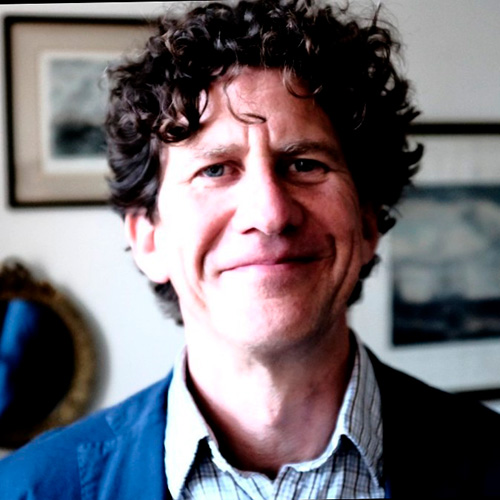
Edward Farmer is a Reykjavik-based communications and strategy consultant. He led communications for deCODE genetics and WuXi NextCODE, and as principal at Plug ehf and partner at Notenda his major engagements have included Genomics England, Owkin and Alvotech.
Published: October 20, 2026