CaixaResearch Institute – A key player in Barcelona’s life science hub
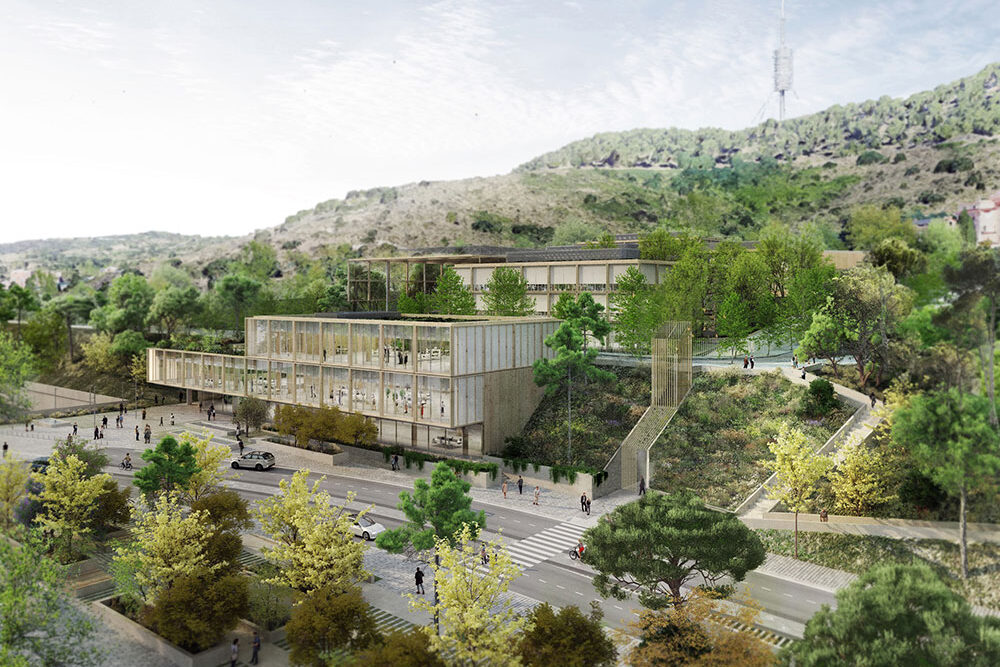
Investment in science drives societal progress. Barcelona has been doing its part for more than two decades and is now demonstrating its commitment with the construction of the CaixaResearch Institute – a center that aspires to become a benchmark in immunological diseases.
October 3, 2025


Barcelona has become one of the most significant biomedical hubs in Europe and internationally, on a par with regions such as London, Cambridge, Munich, northern Italy, and Switzerland. This leading position has been achieved thanks to sustained efforts from the scientific community, the healthcare sector, and public sector administrations. The concentration of top-level hospitals and research centers – such as Vall d’Hebron, Hospital Clínic, Bellvitge, and Sant Joan de Déu – has also been key in making the city a reference in the biomedical sector.
Barcelona also has one of the highest number of clinical trials amongst European cites, and this is something that must continue to be consolidated.
Barcelona also has one of the highest number of clinical trials amongst European cites, and this is something that must continue to be consolidated. Pharmaceutical companies trust the city because of its solid healthcare system and its ability to recruit the necessary patients to test the latest advances in medicines. Currently, health-related start-ups are mainly supported by large pharmaceutical companies or international funds, as local capital remains limited.
“Barcelona needs to invest more in research talent, improve salaries and resources, foster public-private collaboration, attract and retain international talent, and streamline bureaucracy without compromising scientific safety”, says Mercè Conesa, CEO of BarcelonaGlobal.
We want this project to be a lever for Barcelona, Catalonia, and Spain to gain visibility and appeal.
In the coming years, the city will see an expansion in science parks, hospitals, biopharmaceutical companies, and research institutes such as the CaixaResearch Institute – a center driven by ‘la Caixa’ Foundation.

This will be the first institute in Spain dedicated to immunology and one of the few in Europe with this specialization.
“We are attracting talent, mostly international. All the researchers are greatly enthusiastic, as are we. We want this project to be a lever for Barcelona, Catalonia, and Spain to gain visibility and appeal. And that is exciting,” says Dr. Àngel Font, Executive Director of the CaixaResearch Institute.
A clear translational vocation
‘La Caixa’ Foundation is a Spanish philanthropic entity founded in the early 20th century to support the working class. For more than a hundred years, it has promoted health initiatives, starting with a maternity and child institute and measures to combat tuberculosis – a disease that severely affected the working classes at the time. In 1932, it created the Antituberculosis Institute.
Since the 1990s, ‘la Caixa’ Foundation has promoted centers such as IrsiCaixa, dedicated to AIDS research, and ISGlobal, focused on global health and development. It has also supported other centers such as VHIO in the field of oncology, the Barcelonaβeta Brain Research Center, focused on Alzheimer’s, the Sant Joan de Déu Research Institute, specialized in rare pediatric diseases, and the Gulbenkian Institute for Molecular Medicine (GIMM) in Lisbon.
“La Caixa Foundation wanted to take a step further and create a new center. On the advice of the scientific directors of the centers it already supports, the foundation identified immunology as the next great frontier of knowledge,” explains Font.
“Immunology is key in areas such as cancer, where immunotherapies are advancing rapidly, and in infectious diseases such as AIDS or malaria. It is also gaining relevance in neurodegenerative diseases like Alzheimer’s or Parkinson’s, where the most promising research focuses on regulating the immune system at the brain level. And, of course, the COVID-19 pandemic reinforced our decision to move forward with the CaixaResearch Institute project,” he adds.
Font relays two key ideas from Isidre Fainé, President of the ‘la Caixa’ Foundation and one of the center’s main driving forces. “First, it must be a center of excellence, producing science that is internationally recognized. We cannot aim for ‘second division’, science only makes sense if it is top quality and cutting-edge. Second, as a foundation with a social mission, ‘la Caixa’ is committed to research aimed at improving patients’ lives. This goal, shared with other centers, is especially strong in regards to the translational spirit.”
Our goal is to ensure that discoveries translate into fresh understandings of diseases, improved diagnoses, new treatments, and tangible improvements for patients.
Dr. Josep Tabernero, Director of the center’s Internal Scientific Committee, stresses that the CaixaResearch Institute has been designed with a clear translational mission.
“Publishing high-impact research will not be enough. Our goal is to ensure that discoveries translate into fresh understandings of diseases, improved diagnoses, new treatments, and tangible improvements for patients. While in biomedicine translation can take years and is complex for multiple reasons – including regulatory hurdles – this commitment to practical transfer is intended to be the center’s hallmark.”
On the one hand, we want to raise public awareness of the importance of prevention and encourage people to take an active role in their own health. On the other, we want to inspire scientific vocations, and make the laboratory feel like an accessible space.
Science should reach beyond patients and into society itself, through scientific outreach. On this matter, Mireia Castanys, Director of the Research Center’s Department at the ‘la Caixa’ Foundation, has plenty to say.
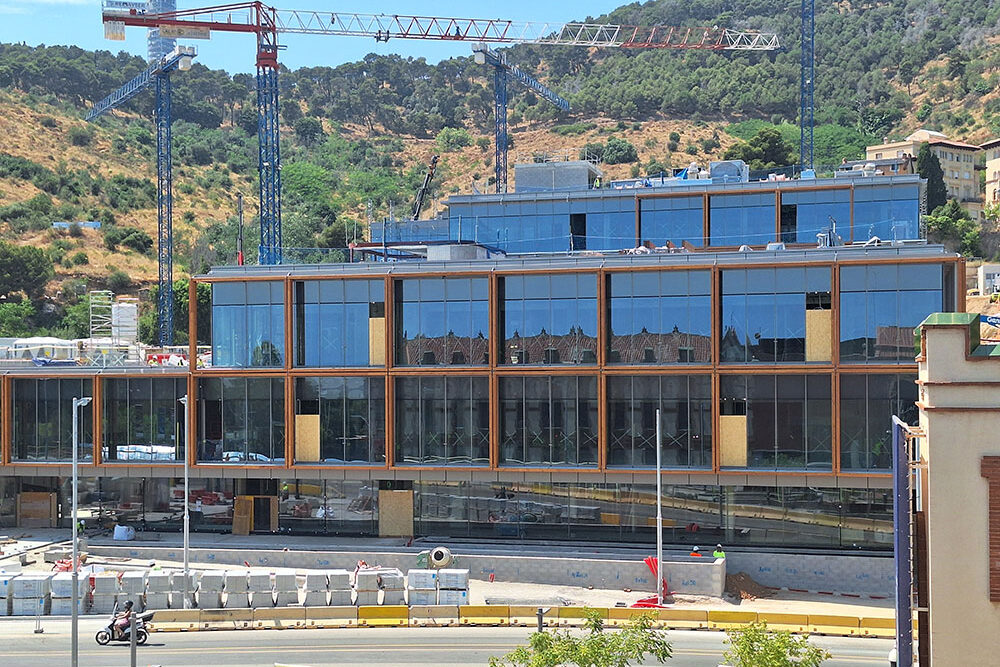
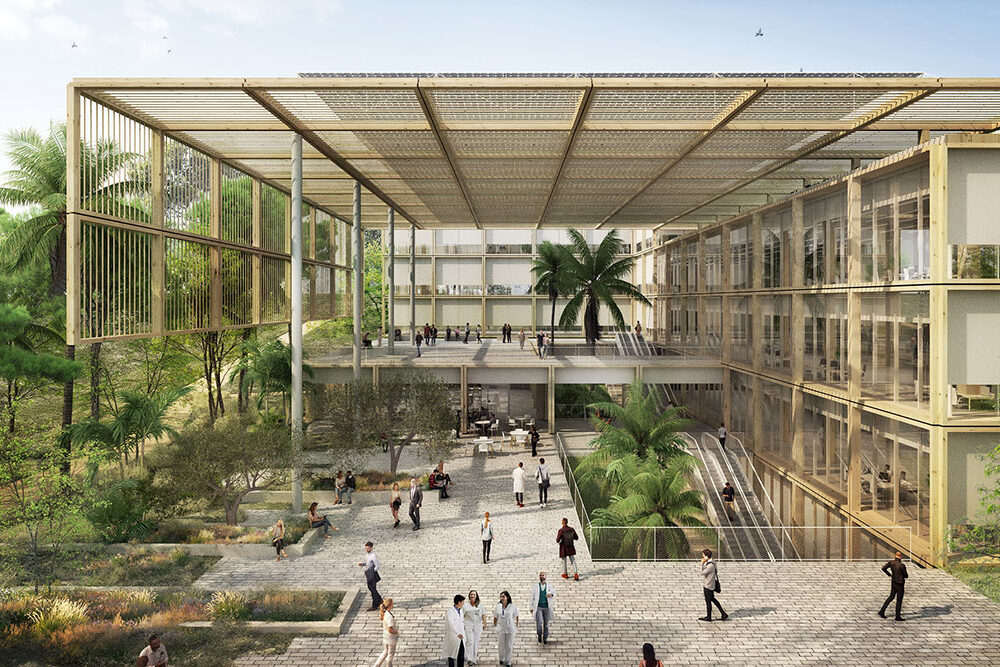
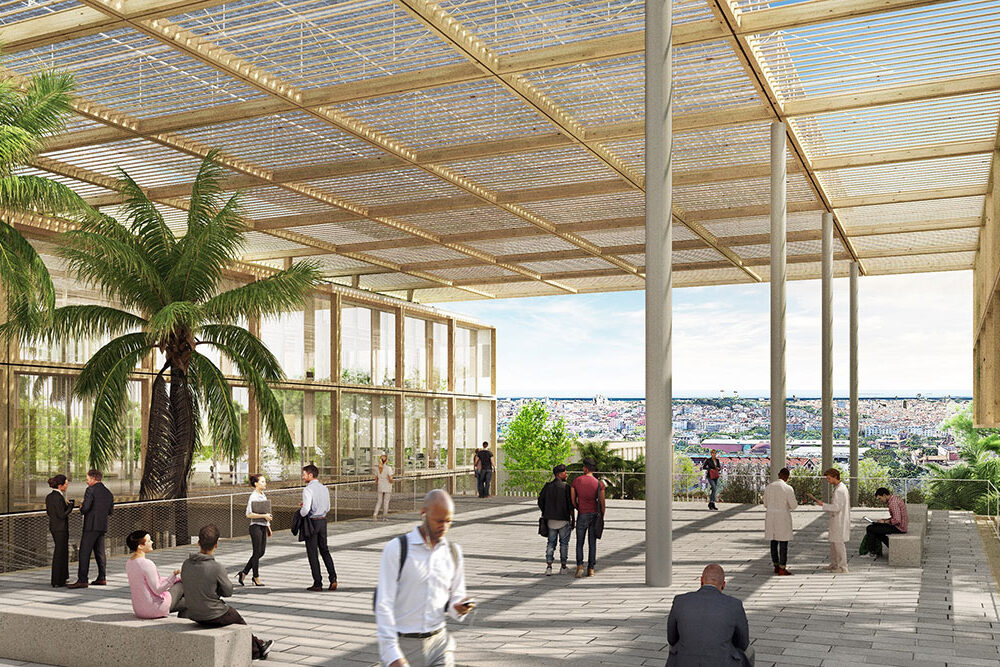
“On the one hand, we want to raise public awareness of the importance of prevention and encourage people to take an active role in their own health. On the other, we want to inspire scientific vocations, and make the laboratory feel like an accessible space. That’s why we have built a glass building. If passers-by can see the work being done inside, we convey transparency and make the value of the research visible,” he says.
“CosmoCaixa, Barcelona’s science museum and a European benchmark for scientific outreach run by the Foundation, can greatly help us in this mission of bringing knowledge closer to people.”
The immune system as the protagonist
If we better understand the fundamentals of immunology, we can understand why so many different diseases are linked to it, describes Font.
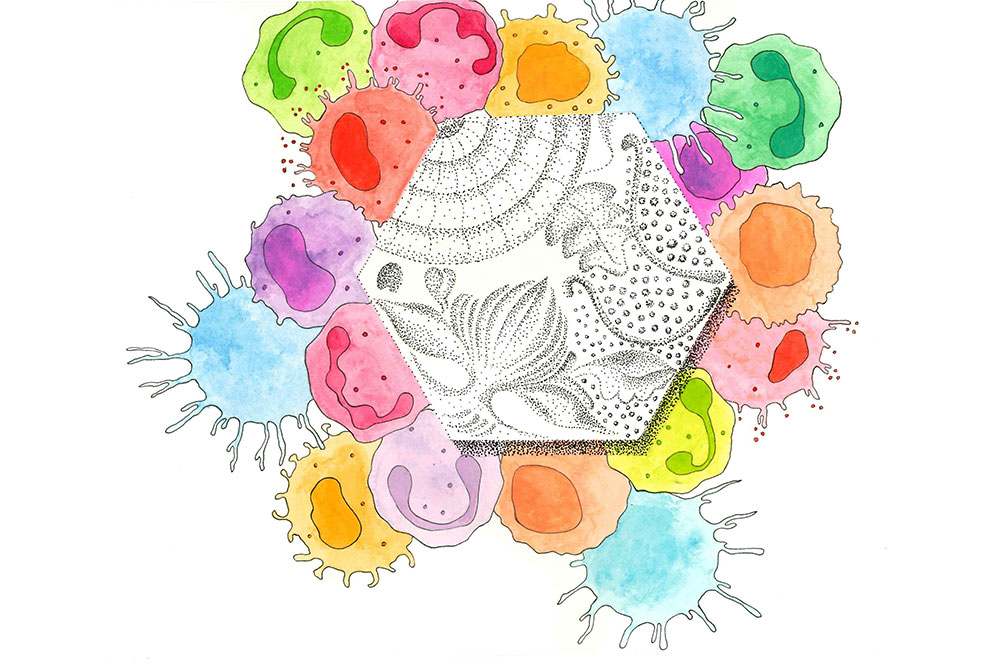
“Immune diseases are part of a complex world. Autoimmune diseases, for example, are diverse and often not very visible. Some disease, like Multiple Sclerosis (MS) or Amyotrophic Lateral Sclerosis (ALS), are better known, but what they all have in common is a malfunction of the immune system. Possible treatments, such as vaccines, are being explored in these areas,” says Font.
Immune diseases are part of a complex world. Autoimmune diseases, for example, are diverse and often not very visible.
“We must make significant progress in understanding how the factors we are exposed to throughout life – both external and internal, what we call the exposome – interact with the human immune system and can contribute to its malfunction, leading to disease,” says Dr. Tabernero.
He adds that “research will also look at how environmental factors, in the context of the environmental crisis we are experiencing, can affect the immune system. So far, there is little evidence of this impact, and more research is needed to understand how it may influence human health.”
Collaboration is key
Science must be rooted locally, but it has no borders, emphasizes Font.
“Researchers need to exchange ideas. We must establish predoctoral and postdoctoral exchange programs with other institutions. We are building networks. We aim to establish these connections not only within Europe but also with other parts of the world,” he says.
Catalonia’s health ecosystem is concentrated mainly in Barcelona. In this sense, the CaixaResearch Institute will collaborate within the ecosystem by exchanging scientists and sharing technological platforms with other centers. It will install state-of-the-art equipment for calculations and measurements that other institutes do not have.
“We are analyzing how other centers use technologies such as flow cytometry, which is key in immunology, to install a reference facility. We want to offer the best possible platform, open to the entire scientific community thanks to agreements with other institutes. Furthermore, we are promoting agreements with the Spanish government so that the CaixaResearch Institute complements the existing network of public institutes,” says Font.
It is essential to show that Barcelona can be a window of opportunity for European research and scientific progress. If we can attract technological hubs, clinical trial centers, or specialized divisions of major companies, we will have a strategic opportunity to differentiate.
Mercè Conesa points out that international collaboration is key in the health sciences sector, and that “the pharmaceutical industries leading the global market are mainly located in the United States. So it is essential to show that Barcelona can be a window of opportunity for European research and scientific progress. If we can attract technological hubs, clinical trial centers, or specialized divisions of major companies, we will have a strategic opportunity to differentiate.”
“One such example is the creation of AstraZeneca’s hub in Barcelona, which will be operational by the end of this year and will develop treatments for cancer and rare diseases, among others. Sanofi has also located its technology hub in the city. This shows that such positioning is both possible and relevant to compete at the highest level in the global pharmaceutical sector,” she says.
“Barcelona is competitive in attracting European research funding and is now positioning itself as an attractive destination for health investment. This will make it possible to consolidate more impactful research projects that will translate into companies, products, social well-being, and progress,” concludes Conesa.
Facts

- The CaixaResearch Institute is being developed with a total investment of EUR 110 million, primarily funded by the “la Caixa” Foundation, with a significant portion of the construction costs (EUR 80 million) financed through a loan from the European Investment Bank.
- The building will span 20,000 m², housing advanced laboratories, technical services, innovation spaces, offices, and visitor areas, with a flexible layout accommodating up to 700 people.
- The long-term plan has four phases: Incubation (2023–2024), Launch (2025), Growth (2026–2033), and Full Capacity (from 2034)—aiming to host 45 research groups and over 500 professionals, including 425 scientists.
- Sustainability: The CaixaResearch Institute features renewable energy sources, consumption monitoring, and rainwater collection, aiming for 38% energy savings and 40% water savings.
About the author

Paula Pérez González-Anguiano, M.Sc. in Scientific, Medical and Environmental Communication, is a Biotechnologist, Science Journalist and Illustrator based in Barcelona, Spain.
Updated: June 25, 2026, 05:55 pm
Published: October 3, 2025