Flanders punches above its weight in European biotech
The Belgian region of Flanders has long been one of Europe’s most industrially dynamic regions. Its economy is anchored by advanced manufacturing, logistics, and a life science sector that consistently performs far above the region’s size.
April 6, 2026


“Belgium is a small country at the heart of Europe, with only 11.8 million people in it. But it punches above its weight on the world stage,” says Amy LeBlanc, a spokesperson at Biovia – the industry health innovation cluster in Flanders, with about 400 members active in human and planetary health.
Belgium as a whole is ranked among Europe’s strongest innovators, performing at 122.6% of the EU average, according to the European Innovation Scoreboard 2025. Citing statistics from 2024, the industry group pharma.be states that while Belgium only accounts for 2.7% of the European population, it accounts for 12.8% of European biopharma exports and 17.2% of R&D expenditure in the biopharmaceutical sector. It is the third biggest exporter of pharmaceuticals in the EU, after Germany and Ireland, according to the European Commission’s Eurostat.
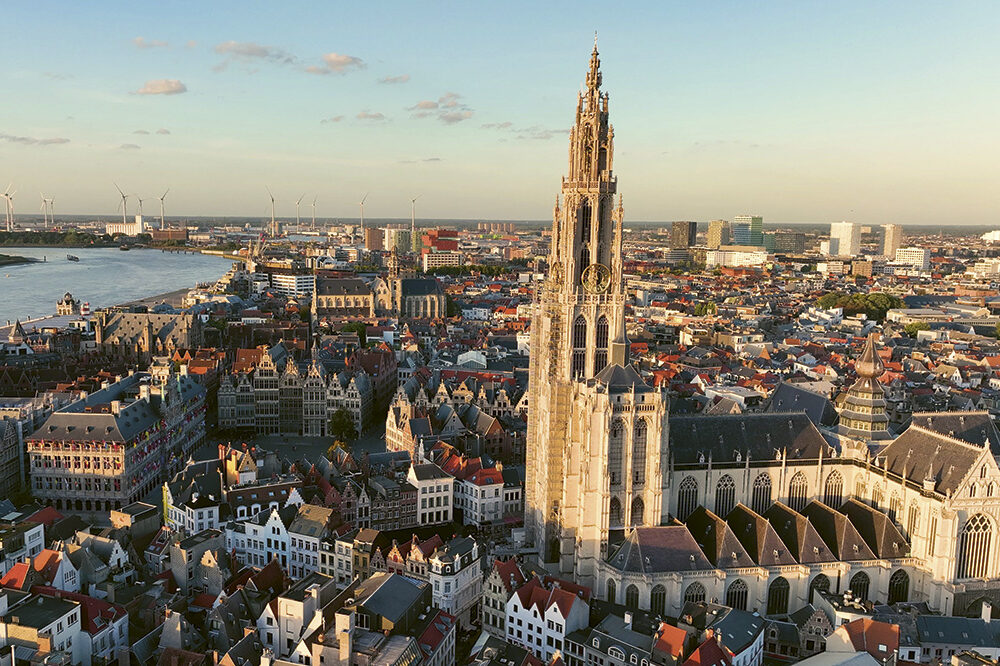
If Belgium provides the national foundation, Flanders is the engine room of its life science success. With just 6.8 million inhabitants, Flanders forms the northern, Dutch‑speaking part of Belgium – yet it contributes significantly to the country’s innovation output and pharmaceutical manufacturing.
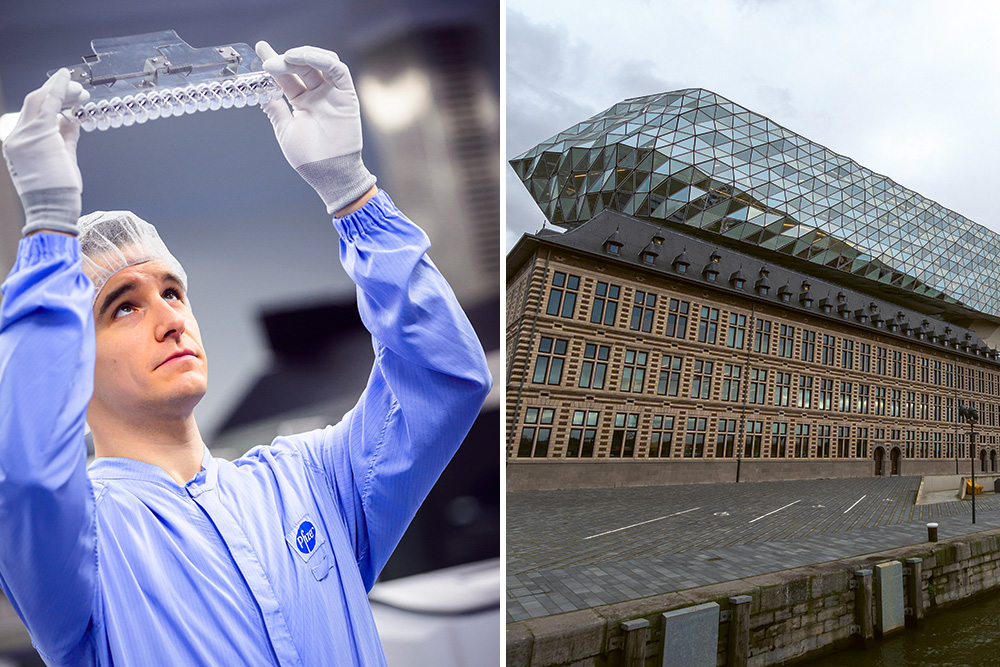
The region houses Pfizer’s largest European manufacturing site, as well as other pharmaceutical heavy-hitters like Johnson & Johnson and Sanofi. It has a strong academic footprint with five universities, four university hospitals, and eight science parks. The ecosystem is further strengthened by research institutes like the VIB (Flemish Institute for Biotechnology) and the nanoelectronics R&D hub imec, a slew of incubators and industry organizations, and a vibrant start-up scene.
It is an extremely densely populated region, with around 500 inhabitants per square kilometer. That translates to a lot of science activity which is very interconnected, contributing to the prolific, diverse, and rich health innovation ecosystem we have here.
When asked what it is that makes the region so strong in biotech, LeBlanc points towards an unexpected factor: population density.
“Flanders’ strengths are concentrations and connectivity. It is an extremely densely populated region, with around 500 inhabitants per square kilometer. That translates to a lot of science activity which is very interconnected, contributing to the prolific, diverse, and rich health innovation ecosystem we have here,” LeBlanc says.
In this “small region with a postage stamp of a footprint”, the presence of so many academic, public, and industry actors has built up a strong culture of translating research into companies, according to LeBlanc.

“Our basic academic research is very strong, but so is our tech transfer. Next door to our world-class universities and research institutes are top-tier hospitals, ready to implement clinical trials and test these new innovations,” says LeBlanc.
“And right next door to them are the big companies that can actually manufacture these products and roll them out to the rest of the world. The concentration of these actors facilitates quicker and better innovation,” she adds.
International appeal
For Nordic and international companies, Flanders’ appeal is rooted in a combination of industrial maturity, strategic location, and highly competitive financial incentives. Mikael Larsson, the Foreign Investment Advisor for Scandinavia at Flanders Investment & Trade, highlights the region’s long industrial history and its evolution into a European logistics hub.
Almost all major global companies in life science have operations in Belgium, and many of them have built their European headquarters here.

“Flanders is very industrialized, historically the region has focused more on building ports and infrastructure. Today, together with the Netherlands, it is a major international logistics hub. Several of the biggest ports are located in Flanders,” he says.
“On top of that, the life science industry there is very well developed – almost all major global companies in life science have operations in Belgium, and many of them have built their European headquarters here,” he adds.
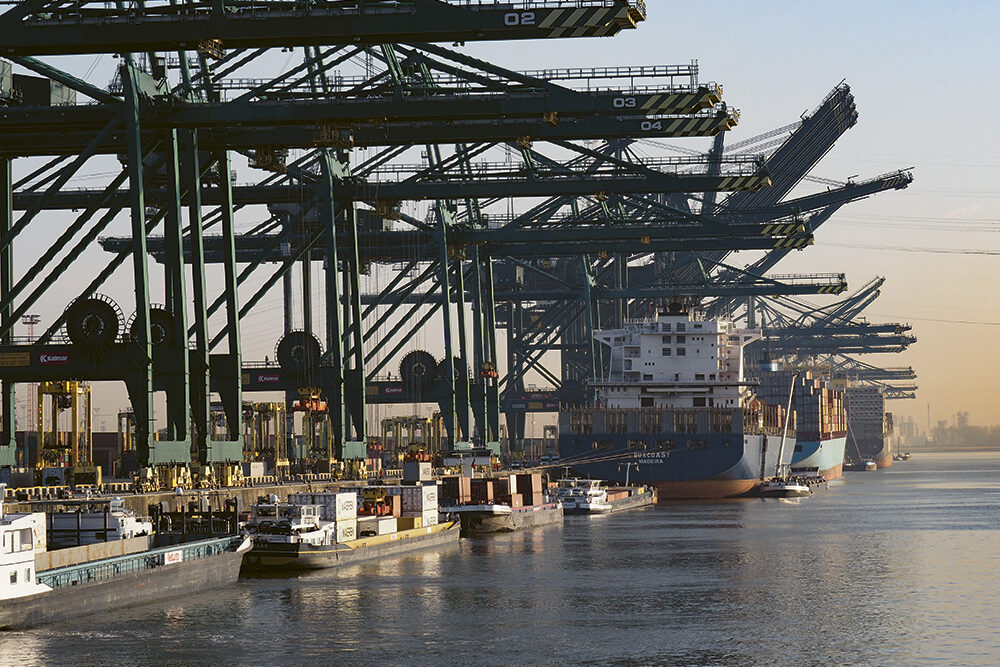
Today, the ports of Antwerp‑Bruges – the second largest port in Europe – and Ghent form one of Europe’s most important gateways for pharmaceutical and biotech supply chains. Larsson refers to DSV, the global transport and logistics company, as an example of how interconnected the logistics capabilities are with life science manufacturing in Flanders. Last year DSV announced that they’re planning a new storage facility in Ghent for 2027 – it will provide 100,000 sqm of storage specially tailored to life science companies, with temperature zones ranging from ambient to -40°C and loading docks directly connected to cold rooms.
Another benefit to growing or doing business in Flanders is Belgium’s innovation‑friendly tax environment, according to Larsson. One of the most significant mechanisms is the Innovation Income Deduction, which can significantly reduce taxation on qualifying IP income.
If your patent is with a company in Belgium and you fulfill certain criteria, you can deduct up to 85% of the income for all R&D costs relating to the IP – and then only pay tax on the remaining 15%.
“If you have a patent and sell a license on that patent, you’d need to pay the regular corporate tax in Sweden, for example, which is typically around 20%. But if your patent is with a company in Belgium and you fulfill certain criteria, you can deduct up to 85% of the income for all R&D costs relating to the IP – and then only pay tax on the remaining 15%. This makes a huge difference for companies,” he says.
Combined with generous R&D incentives and payroll tax reductions for researchers, the system has helped attract both the global pharma giants and fast‑growing biotech firms.
Updated: April 27, 2026, 01:31 pm
Published: April 6, 2026