PhD Interview: “I enjoy bringing structure to complexity”
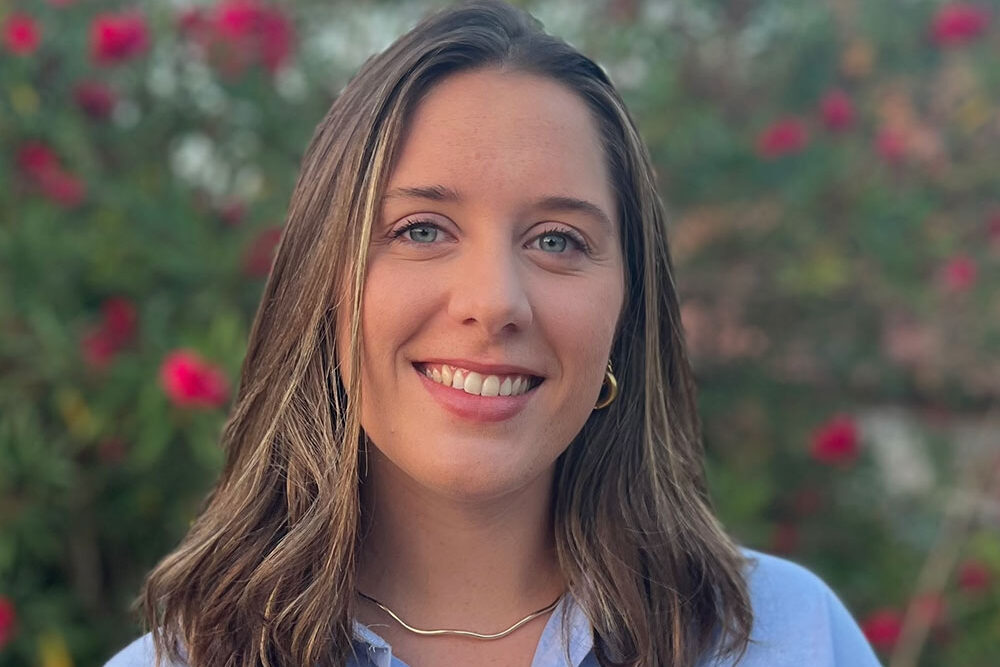
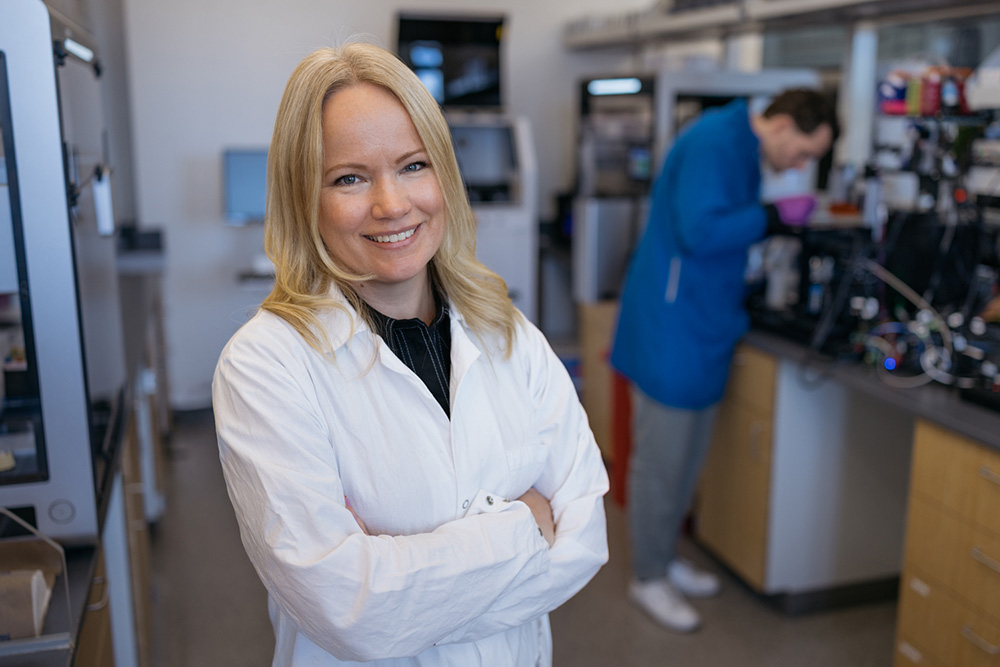
María Bueno Álvez is a final-year PhD student at SciLifeLab and the KTH Royal Institute of Technology. She works in the Human Protein Atlas under the supervision of Professor Mathias Uhlén.
February 16, 2026


Her research explores how blood protein profiles reflect health and disease, with the goal of identifying biomarkers that can advance precision medicine.
What sparked your interest in science and in your specific field?
“I have always been drawn to scientific thinking: breaking down complex issues and designing creative ways to answer them. The turning point for me was joining the Human Protein Atlas where I experienced science as a truly collaborative effort, with different groups studying proteins from complementary perspectives across tissues, cells, plasma, and disease contexts.”
This environment sparked my lasting interest in plasma proteomics and in connecting molecular data to real-world health questions.
“Later on, working with large-scale plasma proteomics data alongside experimentalists and clinicians made me realize how much biological information is encoded in the blood. It also showed me how essential cross-disciplinary dialogue is for meaningful interpretation. This environment sparked my lasting interest in plasma proteomics and in connecting molecular data to real-world health issues.”
Describe your current research project?
“I am currently investigating how the plasma proteome changes across health and disease using two complementary affinity-based proteomics platforms. The aim of this research is twofold: to understand how different diseases shape circulating protein profiles, and to evaluate how consistently these biological signals are captured across technologies.”
“By analyzing thousands of samples, we have observed that the plasma proteome reflects not only disease states but also physiological processes such as development, pregnancy, and aging. One of the most exciting aspects of this work is comparing platforms to understand where they converge, where they differ, and what that means for biomarker discovery.”
Describe your career path and your career choices so far?
“Before starting my PhD, I worked as a bioinformatician at the Human Protein Atlas. Over time, we realized that the questions we were tackling had the depth and scope to evolve into a doctoral project with a strong narrative. Choosing to pursue a PhD felt like a natural progression. Beyond technical skills, I developed resilience, adaptability, and the ability to manage long-term projects. Something that has mattered most for my career path has been connecting with the scientific community: attending conferences, building collaborations, and learning to communicate my work to different audiences.”
One thing I wish I had known earlier is how non-linear research can be. Each project unfolds differently, and unpredictability is part of the process.
“One thing I wish I had known earlier is how non-linear research can be. Each project unfolds differently, and unpredictability is part of the process. Embracing that uncertainty (rather than resisting it) has made me more flexible and ultimately more confident as a scientist.”
Do you have any advice for someone exploring a career in science today: students, career switchers, or early-career researchers?
“I would encourage anyone considering life science to explore broadly before narrowing down. Trying different fields, research questions, and environments can help you discover what genuinely resonates with you and where you perform at your best. Talking to people in labs that interest you is invaluable. Scientific careers are often shaped by mentorship and environment as much as by topic.”
In my case, exploring widely before focusing deeply during my PhD helped me build both versatility and direction.
“It can also be beneficial to pursue projects that simply sound exciting, even if they do not perfectly align with your previous experience. While specialization is important, finding your intellectual curiosity first can make the journey more meaningful. In my case, exploring widely before focusing deeply during my PhD helped me build both versatility and direction.”
How would you describe the job market within your field of expertise? What skills are most in demand, and what one practical tip would you give to help someone stand out?
“The academic job market is competitive, but plasma proteomics and precision medicine are rapidly expanding fields. Large-scale initiatives worldwide are investing in profiling the human plasma proteome and are creating opportunities in both academia and industry.”
The ability to manage large datasets, ensure reproducibility, and extract biologically meaningful insights is highly valued. At the same time, I believe communication skills are just as important.
“Computational skills are particularly in demand. The ability to manage large datasets, ensure reproducibility, and extract biologically meaningful insights is highly valued. At the same time, I believe communication skills are just as important: being able to present complex results clearly to collaborators, clinicians, or stakeholders can set you apart. One practical way to stand out is to cultivate a scientific identity and develop a recognizable strength: that could be reproducibility practices, data visualization, or any skill that you are particularly good at.”
One practical way to stand out is to cultivate a scientific identity and develop a recognizable strength.
Pick a lab tool, instrument, or piece of equipment that matches your personality or work style and explain why.
“I would probably be a centrifuge. It adapts its speed to what the experiment requires – sometimes operating at high intensity, sometimes spinning more gently – but always with purpose. My work follows a similar rhythm. Periods of intense activity, such as major data releases at the Human Protein Atlas or manuscript deadlines, require focus and momentum. Other times allow for reflection, analysis, and strategic planning.”
Like a centrifuge, I enjoy bringing structure to complexity: separating signals, identifying patterns, and helping different components settle into clarity!
“Learning to adjust my pace and make the most of both high-pressure and quieter periods has been essential during my PhD. Like a centrifuge, I enjoy bringing structure to complexity: separating signals, identifying patterns, and helping different components settle into clarity!”
Published: February 16, 2026