Why Iceland is well placed to answer the challenges confronting the healthtech and AI transformation
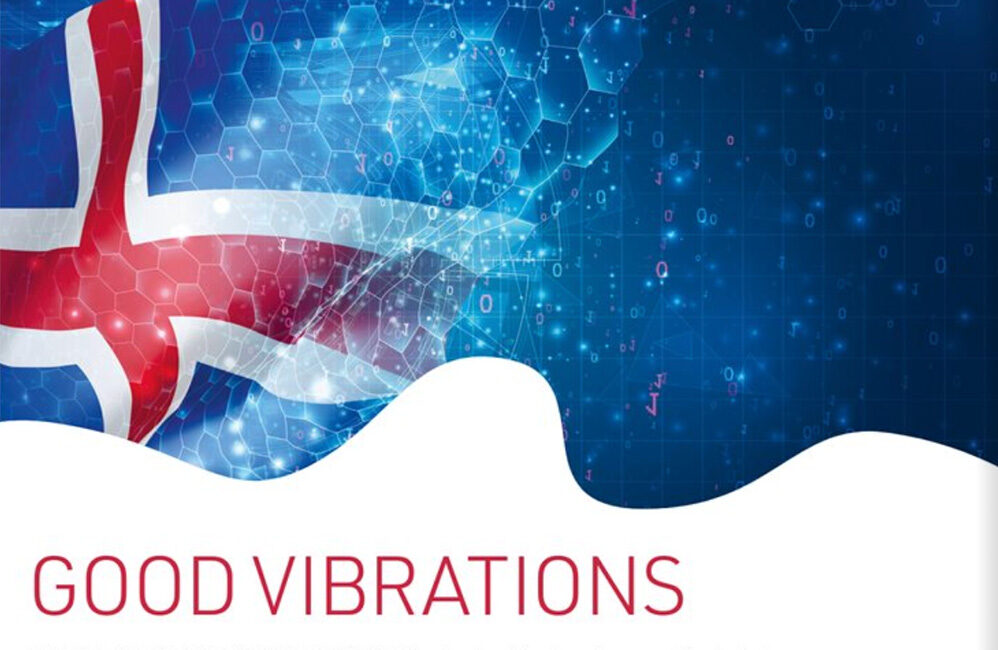
There isn’t enough high-quality and deep multimodal data, on enough people, in benchmarkable structures that participants and practitioners trust, to build the large general healthcare models required. And that’s where Iceland comes in.
March 23, 2026


In the darkest days of January, plenty of Icelanders are likely to be California dreaming. It is less common for the thoughts of people in California – save perhaps the aurora borealis fanatics – to drift to the far north Atlantic.
Yet, however unwittingly, much of the talk at this year’s JP Morgan Health Conference was directly relevant to events taking shape on the 64th parallel north. Instead of the usual mega deal news, the San Francisco conclave that kicks off the biopharma year was instead buzzing with the potential of AI and technology across the gamut of healthcare.
Elephant in the server room
OpenAI set the stage with the unveiling of ChatGPT Health, following on from Claude for Health’s debut last year. But in the small print to that launch itself, and in multiple panel discussions and presentations, the scale and nature of the challenges and the opportunities were plain. AI-driven pathology, ambient scribes, and medical intelligence are already transforming those fields, with almost everyone noting their usefulness. The demand for AI tools to answer general questions is also off the charts, with ChatGPT alone receiving tens of millions of health queries every day from doctors and patients alike.
But ChatGPT, like Claude and others, is up front about the fact that it is not meant for clinical use nor for informing diagnosis or treatment. The reason, of course, is that primary clinical and outcomes data – and much less deeper, connected and connectable data on large numbers of individuals – is not readily available online to build their models. You can upload your health data to these and many other systems in a personal sandbox. But the answers you receive to queries are largely drawn from the digital you being bounced off the scientific literature. This can be useful, but it is informed anecdote, not the clinical grade, joined-up, validated information needed to transform healthcare.
There isn’t enough high-quality and deep multimodal data, on enough people, in benchmarkable structures that participants and practitioners trust, to build the large general healthcare models required.
In other words, while the technology is there the field still has a people and data problem. There isn’t enough high-quality and deep multimodal data, on enough people, in benchmarkable structures that participants and practitioners trust, to build the large general healthcare models required.
Look north
And that’s where Iceland – and the Nordics more broadly – comes in. In October, the health and innovation ministries jointly hosted a one-day conference on Innovation in the Health System. The conference was all meat and no fluff from beginning to end. It laid out why the country is well placed to answer the challenges confronting the healthtech and AI transformation; how the government plans to enable entrepreneurs and the health system to advance solutions; and how this can serve Iceland and the world beyond. The presentations by a cast of enthusiastic and ambitious civil servants hit the key topics:
Urgency. A detailed stakeholder survey revealed a consensus for the prioritization and acceleration of solutions with clinical impact in the near term, under authoritative digital health leadership with a single streamlined development and approval process.
Data. Viewed as the basis of care delivery rather than a by-product of the healthcare system, the government is transforming the old, overly protective data paradigm. Data is now seen as a resource that must be used; that can be stored in the cloud and queried by different stakeholders; and that can be protected as it should be, balancing known risk against the benefits to patients and society.
Trust. Iceland, like other Nordic countries and unlike most of the anglosphere, has a universal digital ID system built on the national ID number and multi factor identification. It simultaneously enables the effective protection of sensitive data and privacy; individual access to and consent for use of personal data; and simple mechanisms for anonymizing such data at scale in fields like healthcare and research. The national Data Protection Authority wants innovators to work with it to leverage the strengths of these systems to develop new models and tools that are trusted, successful and durable.
Business. The Financial Management Authority aims to help drive innovation through procurement – helping startups to become better businesses by first serving the state as a benevolent but demanding customer. This is a refreshing and compelling argument for maximizing both the market and social value of healthtech enterprises. The purpose is to grow them first at home, then across the Nordic regions where translation is easiest, and finally out into the world when the most value has been created both for the health system and companies and investors.
Iceland has the ability to overcome big issues dragging on the potential of AI and tech in healthcare, and the government is showing the ambition, strategy and competence to do so.
Health Minister Alma Mõller, who is driving much of this push for Iceland to take advantage of its diminutive size and unique data resources, summarized her goals in a three-point manifesto. “We want Iceland’s health system to use data and AI improve quality of care and equity; we want a unified digital health data system to serve as a springboard for innovation; [and] we want partnerships that can turn innovations into solutions for everyday care.”
Iceland has the ability to overcome big issues dragging on the potential of AI and tech in healthcare, and the government is showing the ambition, strategy and competence to do so. Progress in the coming months will be exciting to watch.
About the author

Edward Farmer is a Reykjavik-based communications and strategy consultant. He led communications for deCODE genetics and WuXi Nextcode, and as principal at Plug ehf and partner at Notenda his major engagements have included Genomics England, Owkin and Alvotech.
Published: March 23, 2026