AI in Nordic life sciences: Less about deals, more about ecosystems

AI-related news from the Nordic life science industry has been less about single blockbuster deals and more about ecosystem-level moves, new initiatives, and investments.
March 25, 2026


Examples include the new Nordics AI initiative, which secured DKK 30 million from the Nordic Council of Ministers, and NordForsk and co-funders decisions to fund NOK 300 million for 17 projects on the responsible use and implementation of AI. In addition, Novo Holdings announced a EUR 188 million initiative to back quantum technologies converging with AI and life sciences.
AI Factories
Sweden and Finland have also been selected to host AI Factories within the European High Performance Computing Joint Undertaking, aiming to lead the way in European supercomputing and providing startups and SMEs access to world-class computing infrastructure, AI expertise and business support.

Sweden’s AI Factory Mimer is located in Linköping and hosted by Linköping University, NAISS and RISE. The factory will for example focus on generative models in structural biology and drug design and large-scale training in personalized medicine.
The LUMI AI Factory in Finland is hosted by CSC-IT Center for Science and has its main hub at Aalto University in Espoo and its infrastructure site in Kajaani. A core part of the LUMI AI Factory community are the AI Factory Hubs, spaces where students, researchers, and companies learn, connect and turn ideas into real solutions.
Buzz word

TechBio: Companies that integrate AI, big data, and automation with biology. A rapidly growing segment exemplified by Neko Health, co-founded by Spotify’s Daniel Ek (offering AI-driven, full-body health scans for early disease detection).
Investments
Last year, a major Swedish investment in AI infrastructure was presented by a newly formed consortium, Sferical AI, consisting of AstraZeneca, Ericsson, Saab, SEB, and Wallenberg Investments. Together with tech company Nvidia the joint venture will build an AI factory, also located in Linköping, among other things. For AstraZeneca, the technology enables large-scale AI-driven analysis and the building and fine-tuning of fundamental models in chemistry, biology, safety and clinical data.

New AI hub launched in Gothenburg
The initiative comes from a group of private entrepreneurs in close collaboration with Business Region Gothenburg, Business Sweden, Swedish industries and NVIDIA as a technology partner.
“AI is now moving from being a tool to becoming a partner in drug development,” said Anna Sandström, Senior Director Science Policy & Relations in Europe, AstraZeneca, in an interview with Invest in Gothenburg.
6 x Nordic AI companies within life sciences
1. Pixl Bio: Formed from the merger of Swedish Phenaros and UK DefiniGEN. The company offers AI-powered analysis of complex biological and imaging data to accelerate preclinical and translational research, helping life science companies extract quantitative insights from high-content experiments. By automating pattern recognition and feature extraction, its tool support biomarker discovery, mechanism-of-action studies, and data-driven decision-making in drug development.
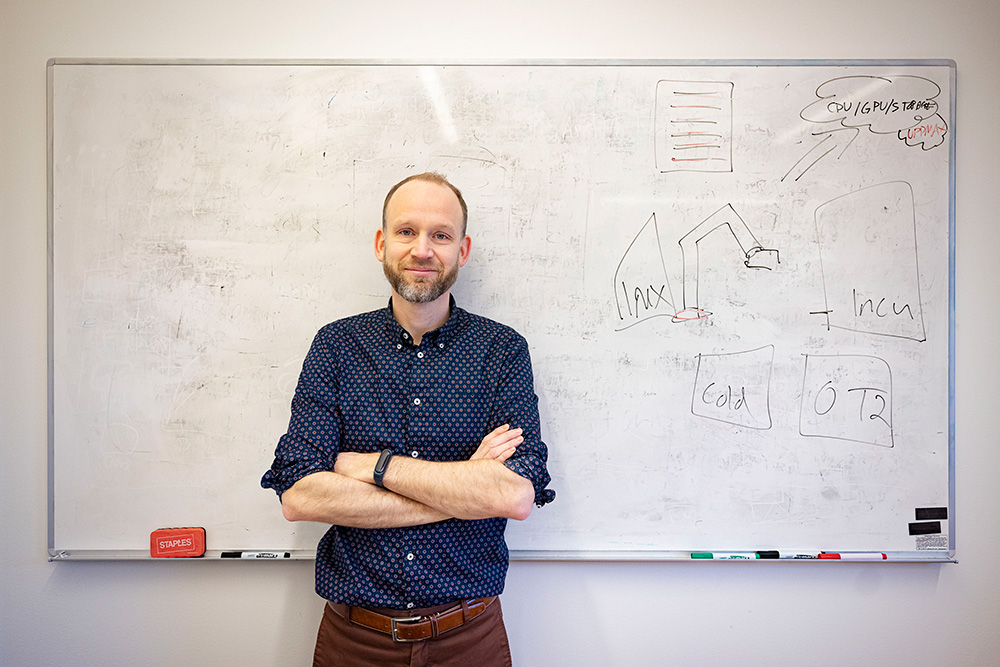

2. Abzu: This Danish company develops the QLattice, an explainable AI platform that helps pharma and biotech organizations model biological relationships, identify new drug targets, and predict treatment outcomes while maintaining interpretability for scientists and regulators.
Abzu’s technology is applied across drug discovery and precision medicine projects, from biomarker identification and patient stratification to optimization of complex R&D workflows.
3. 2cureX: Their AI-based tool IndiTreat test family creates thousands of 3D tumor replicas, tumoroids, from a patient’s biopsy to identify which chemotherapy or targeted drugs that are most effective for that specific tumor. The tests are currently offered as a service (samples arriving from hospitals all over Europe are tested in the company’s laboratory in Copenhagen), and the goal is to develop a system of instruments and reagents that will allow in-house testing at hospitals.


4. Nightingale Health: This Finnish company provides high-throughput blood biomarker profiling combined with AI models to predict disease risk, treatment response, and population-level health trajectories for pharma and public health partners.
Nightingale Health’s platform is used in clinical trials and large cohort studies to enable more precise patient stratification endpoint discovery and RWE generation. The company have customers in more that 25 countries.
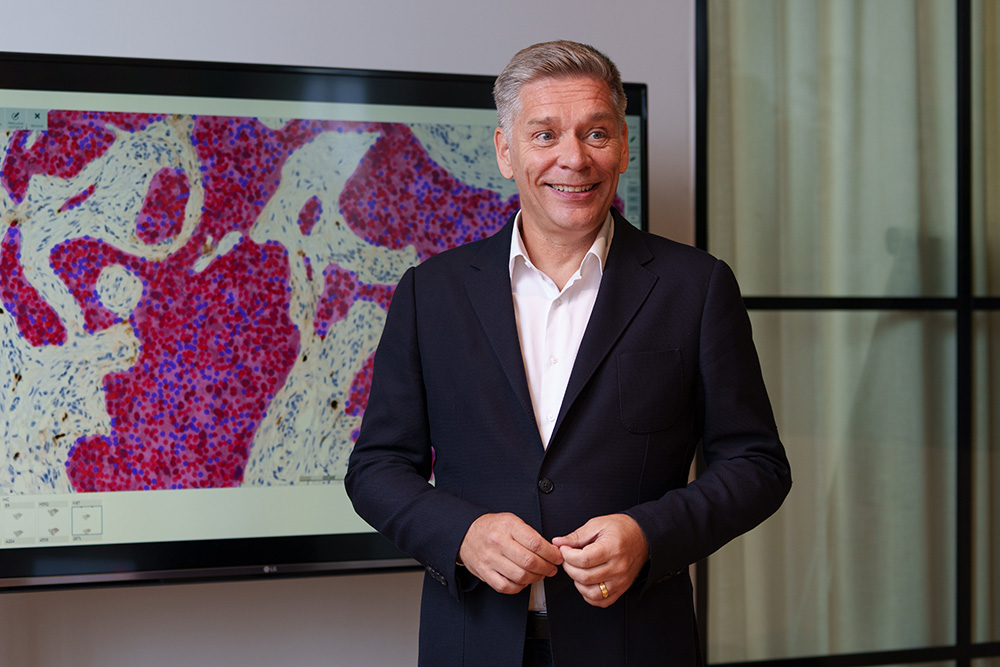
5. Aiforia: This Finnish company applies AI to analyze pathology images, speeding up diagnosis and improving accuracy in identifying cancer types and biomarkers. Aiforia’s mission is to transform pathology image analysis with AI, enabling better care for each patient. Its deep learning AI solutions are used in over 50 countries, more than 1 million images have been analyzed with their platform, and more than 5,000 pathologist and medical scientists are using the platform today.
6. IFLAI: This Swedish company trains AI to achieve high peformance with less data, time and energy. Last year, IFLAI became a part of AstraZeneca BioVentureHub. IFLAI is collaborating with AstraZeneca on molecule development, IT and manufacturing.

“Large AI models can solve complex problems in drug development, but training an AI to full industrial scale is extremely expensive. But with our method it can be done much more cheaply,” says Henrik Klein Moberg, CTO of IFLAI.
2 x AI buzz words
- Agentic AI: AI systems that are designed to autonomously make decisions and act, with the ability to pursue complex goals with limited supervision. It brings together the flexible characteristics of large language models (LLMs) with the accuracy of traditional programming. This type of AI acts autonomously to achieve a goal by using technologies like natural language processing (NLPs), machine learning, reinforcement learning and knowledge representation. It’s a proactive AI-powered approach. Agentic AI can adapt to different or changing situations and has “agency” to make decisions based on context. It is used in various applications that can benefit from independent operation, such as robotics, complex analysis and virtual assistants. Key features of agentic AI are decision-making, problem-solving, autonomy, interactivity, and planning.
- GenAI: Generative AI (GenAI) is AI that can create original content – such as text, images, video, audio or software code – in response to a user’s prompt or request. GenAI relies on using machine learning models called deep learning models – algorithms that simulate the learning and decision-making processes of the human brain – and other technologies like robotic process automation (RPA). These models work by identifying and encoding the patterns and relationships in huge amounts of data, and then using that information to understand users’ natural language requests or questions. These models can then generate high-quality text, images, and other content based on the data they were trained on in real-time. Key features of generative AI are content creation, data analysis, adaptability, and personalization.
Source: IBM
Updated: March 27, 2026, 11:55 am
Published: March 25, 2026