Ukraine’s healthcare – Turning shared pain into shared learning
After more than four years of full-scale war waged by Russia in Ukraine, Ukrainians’ physical and mental health – and the entire healthcare system – are under extreme pressure. Today, relief efforts focus on knowledge transfer, new ways of managing and operating healthcare, and long-term partnerships, while also drawing lessons from Ukraine’s own resilience, crisis responses, and rehabilitation solutions.
June 22, 2026


Anastasia Flanagan and Kateryna Pavelko are project managers for the Swedish Support for Sustainable Healthcare in Ukraine project at the Swecare Foundation, a semi-governmental non-profit organization. One of their key priorities has been to build long-term partnerships between Swedish and Ukrainian healthcare stakeholders.
“The Ukrainian healthcare system is currently functioning under extraordinary pressure and at the same time it is undergoing one of the fastest transformations in Ukraine’s history,” says Flanagan. “Since the full-scale invasion, the system has had to simultaneously respond to wartime emergencies, continue healthcare reform, and the transition from the old soviet hierarchical model, maintain essential services for civilians, and prepare for long-term recovery and European integration.”
Resilience and adaptability
One of the biggest changes has been priorities, says Flanagan. “Before 2022, much of the discussion in healthcare focused on reform implementation, financing mechanisms, and modernization. Today, resilience has become the key focus. Hospitals have had to adapt to missile attacks, energy instability, mass trauma care, displacement of healthcare workers and patients, and enormous psychological pressure on medical staff. They have learned to make decisions under pressure that many people in peaceful systems never have to face.”
There is now a much stronger understanding that healthcare infrastructure is not only about buildings and equipment, but also about management, sustainability, infection control, digital systems, mental health, rehabilitation, and long-term operational resilience.
“On a positive note, Ukrainian healthcare leaders have become much more adaptive, pragmatic, and open to international cooperation. There is now a much stronger understanding that healthcare infrastructure is not only about buildings and equipment, but also about management, sustainability, infection control, digital systems, mental health, rehabilitation, and long-term operational resilience. It is first of all about individuals – patients, doctors, and nurses,” says Pavelko.
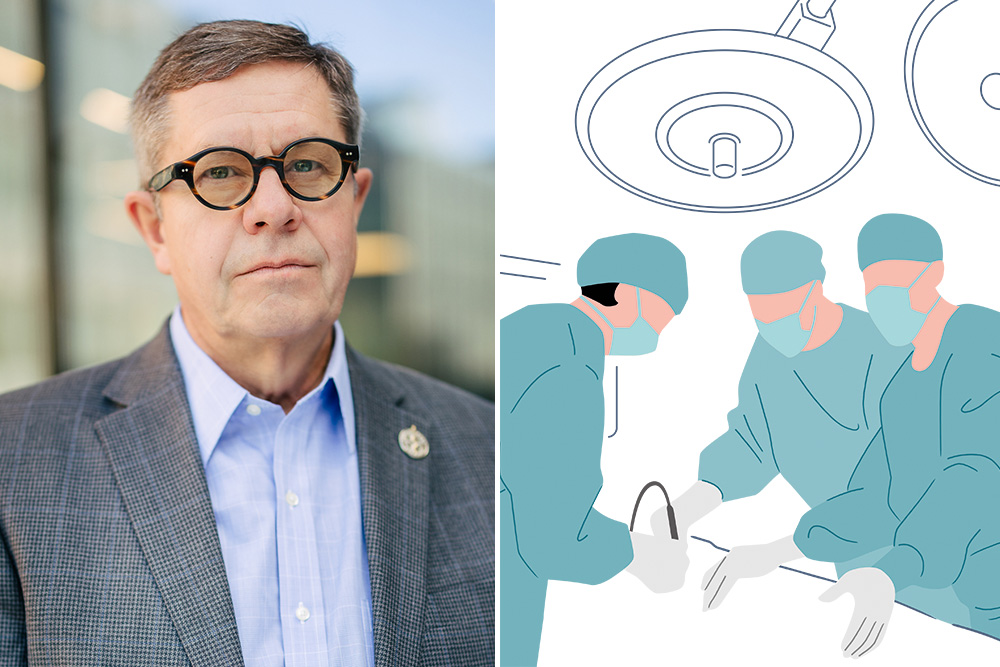
Health and life sciences in the shadow of war
After 18 hours of traveling from Gothenburg I’m heading to the main hospital in Cherkasy, Ukraine, which is a reasonably-sized hospital with about 800 beds. Apart from their everyday business they have had an extra 30,000 or so soldiers to take care of since the war started. They are worn out. The staff members are really trying to hang in there. They’re running low on supplies but they’re not giving up.
Mental health
One thing that is sometimes difficult to explain from the outside is that the consequences of war on health are much broader than physical injuries, continues Pavelko.
“War changes the entire environment in which people live and healthcare systems operate. Chronic stress, uncertainty, displacement, interrupted treatment, exhaustion, loss of family members, destroyed infrastructure, and constant psychological pressure affect almost every aspect of public health,” she says.
“Mental health is becoming one of the largest long-term challenges for Ukraine – not only for soldiers, but also for civilians, children, healthcare workers, and people who have lived under prolonged stress for years.”
Partnerships and practical solutions
Before the war, Ukraine had many medical professionals and strong scientific potential, but the life science ecosystem often lacked international visibility, investment, and structured cooperation with European partners. The war has changed this dramatically, according to Pavelko.
“At the same time, the war has created an urgent demand for innovation – from rehabilitation and trauma care to digital health, prosthetics, infection prevention, and mental health services,” she says.
The war has created an urgent demand for innovation – from rehabilitation and trauma care to digital health, prosthetics, infection prevention, and mental health services.
Ukrainian healthcare providers and companies have become much more open to partnerships and practical solutions to help institutions survive and modernize.
“There is also a growing understanding that rebuilding healthcare should not mean recreating old systems, but building more resilient, sustainable, and patient-centered models aligned with European standards. I also think there is increasing recognition internationally that Ukraine should not only be viewed as a recipient of support, but as a future contributor to European healthcare innovation,” adds Flanagan.
A strong business case
During the past two to three years, Swecare’s role has often been to act as a bridge and a door-opener between the needs of the Ukrainian healthcare system and the expertise, innovations, and solutions available within the Swedish healthcare and life science sectors.
“The private sector plays a central role in all our activities. We strongly believe that Ukraine is not a charity case, but a strong long-term business case,” says Pavelko.
She and her colleagues work with hospitals, public authorities, NGOs, companies, and international partners. The needs are also very diverse, ranging from rehabilitation and cancer care to primary healthcare in rural areas, hospital management, infection prevention, and digitalization.
Knowledge transfer
One important area of Pavelko’s and Flanagan’s work has been facilitating professional exchange and knowledge transfer.
“Many Ukrainian healthcare leaders are managing institutions under extremely difficult wartime conditions while also trying to continue healthcare reform and prepare for EU integration. There is a strong need not only for equipment, but also for modern management knowledge and sustainable operational models. Together with various partners, we are working hard to help make this vision for Ukraine a reality,” says Flanagan.
There is a strong need not only for equipment, but also for modern management knowledge and sustainable operational models. Together with various partners, we are working hard to help make this vision for Ukraine a reality.
One good example is a collaboration in cancer care. Swecare coordinates a large educational project in radiation oncology in Ukraine, running over two years in close collaboration with two international educational partners, Rayos Contra Cancer and Help Ukraine Group.
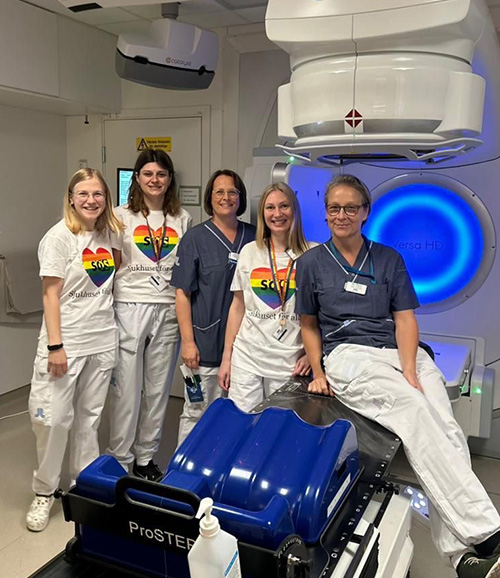
“By providing both online and onsite training in Ukraine, we have reached more than 500 professionals who are now working with modern Elekta linear accelerators,” says Flanagan.
“This education was critical not only because of knowledge gaps related to operating the equipment itself but also because of broader gaps in radiation oncology practices and modern treatment approaches,” she adds.
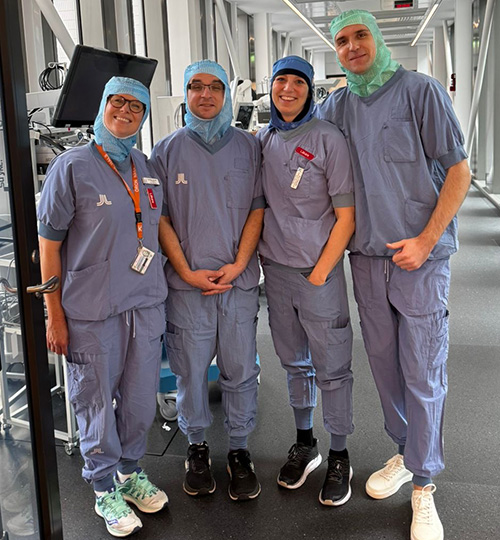
As this article goes to print, two Ukrainian teams consisting of radiation oncologists, medical physicists, and radiotherapy technicians are participating in observerships at Södersjukhuset and Akademiska University Hospital.
“This and many other collaborative projects initiated or supported by Swecare are valuable because they create long-term professional relationships and institutional trust between our countries,” says Flanagan.
The next phase and equal partnerships
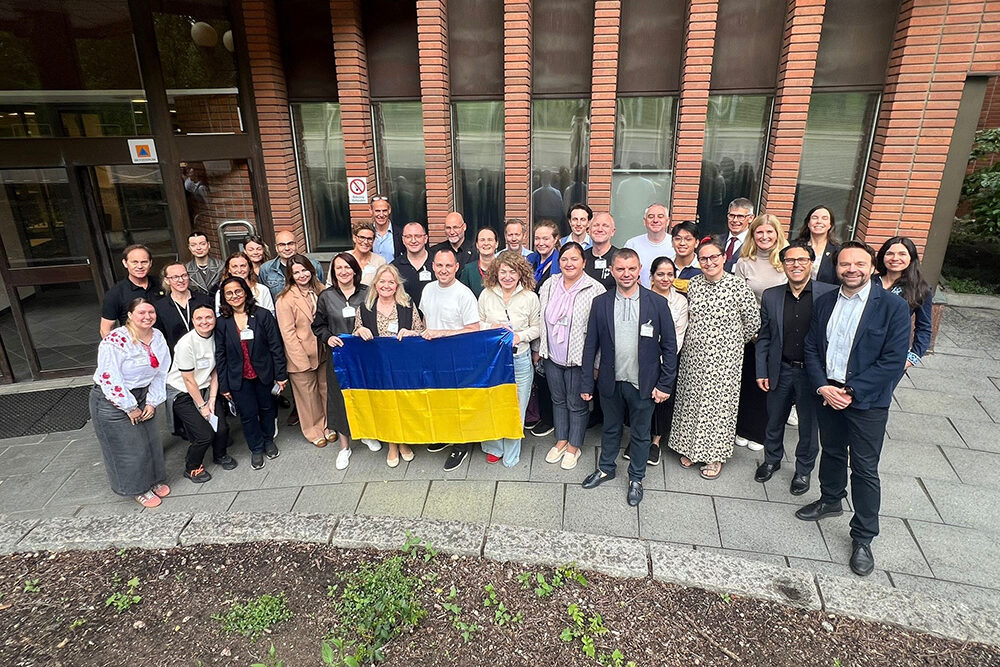
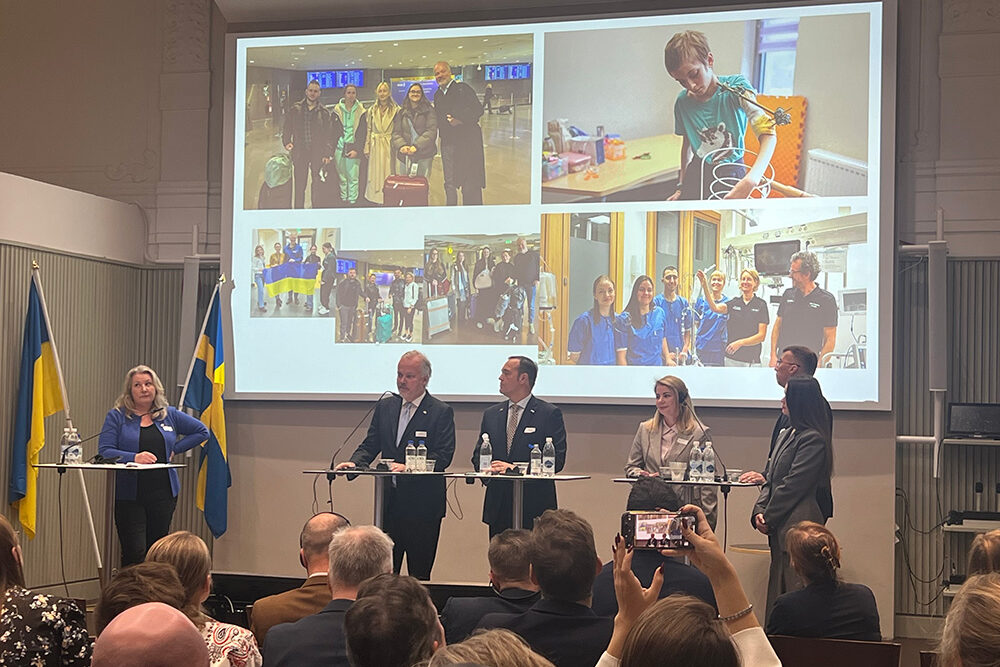
At the end of last year, Sweden and Ukraine deepened their cooperation within healthcare at a conference on Swedish support for the reconstruction and development of healthcare in Ukraine organized jointly by Swecare and the Ministry of Health and Social Affairs.
“I believe the next phase will be more strategic, long-term, and system-oriented. The initial years after the full-scale invasion were understandably focused on emergency response and urgent support. Now we increasingly hear discussions about sustainable rebuilding, institutional partnerships, healthcare modernization, alignment with European standards, and crisis and war preparedness. Our Ukrainian connections are invaluable in this context,” says Flanagan and adds that several priorities are becoming particularly important: “One is rehabilitation and long-term recovery. Another is healthcare leadership and management capacity. This is an area where Swedish experience can be highly valuable.”
“We also see growing interest in sustainable healthcare infrastructure where Swedish healthcare has strong expertise,” adds Pavelko. “Digital health and healthcare innovation will likely become another major area of cooperation, especially as Ukraine continues its rapid digital transformation.”
Ukrainian institutions are not only asking for support, they also bring unique experience in resilience, adaptability, crisis response, and healthcare delivery under extreme conditions.
She adds that many more educational initiatives, and perhaps even shifts in worldview, are needed.
“This is so that Ukrainian patients take some responsibility for their health and realize that telemedicine and remote monitoring of chronic conditions are precisely the flexible and free forms of interaction through which they can better control their health. The healthcare system will then be able to take a breather from endless appointments and focus on critical cases.”
Most importantly, Pavelko and Flanagan believe that the future of cooperation will increasingly be based on equal partnership. Ukrainian institutions are not only asking for support, they also bring unique experience in resilience, adaptability, crisis response, and healthcare delivery under extreme conditions.
Personal experiences
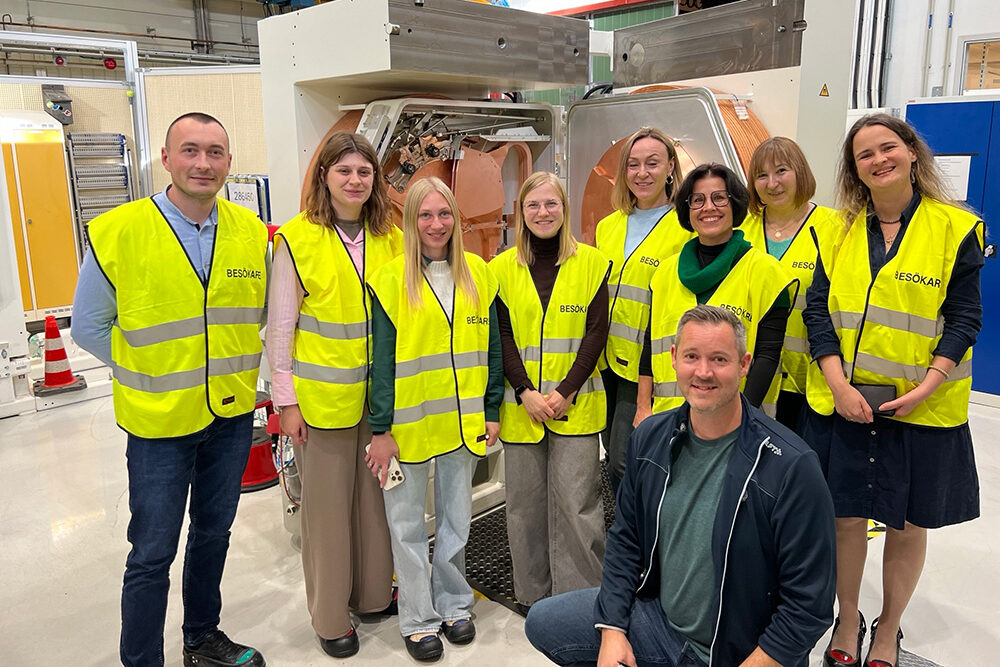
Anastasia Flanagan and Kateryna Pavelko are also both from Ukraine and have personal experiences of the war, with loved ones still there and scars of their own. Pavelko and her three children (the youngest was only two months old) came to Sweden as a refugee family in March 2022.
“The life of my family, my friends and my nation has irrevocably changed,” she says. “My younger brother lives in Dnipro, a city not far from the front line, and he suffers daily from Russian bombs. So I was of course happy to help the Dnipro hospital find partners in Sweden and develop their capacity to help patients.”
When I talk about all this, I get goosebumps and I cannot hold back tears. Supporting the Ukrainian healthcare system now is a way to restore the faith of Ukrainians that mankind has not yet lost its humanity.
The healthcare system became even more significant during the war, recalls Pavelko. “After all, this is a place where, despite all the uncertainty, people receive care, their wounds are treated with medicine, painkillers are sought for their pain, they are operated on even during blackouts and give birth in bomb shelters. When I talk about all this, I get goosebumps and I cannot hold back tears. Supporting the Ukrainian healthcare system now is a way to restore the faith of Ukrainians that mankind has not yet lost its humanity.”
“What strikes me most is both the exhaustion and the resilience of the healthcare system and the people working within it,” adds Flanagan. “Many healthcare professionals continue working after years of constant pressure, air alarms, staff shortages, emotional trauma, and uncertainty. I think one of the most urgent issues today is human capacity.”
Healthcare rebuilding in Ukraine is becoming a shared European challenge regarding resilience, sustainability, and the future of healthcare systems in crisis conditions.
“Personally, one of the strongest impressions for me has been seeing how much responsibility healthcare leaders carry today. They are not only administrators. Very often they are crisis managers, communicators, negotiators, psychologists for their teams, and people responsible for keeping entire institutions functioning under wartime conditions. This is why we believe international cooperation matters so much right now. Not only because Ukraine needs support, but because healthcare rebuilding in Ukraine is also becoming a shared European challenge regarding resilience, sustainability, and the future of healthcare systems in crisis conditions,” concludes Flanagan.
Updated: June 29, 2026, 07:10 am
Published: June 22, 2026