Q&A: Simon Fredriksson, CEO and Co-founder, Pixelgen

NLS asked the CEO and co-founder of Pixelgen about entrepreneurship in Sweden, the company’s global commercialization strategy and the most exciting clinical applications of the company’s Proxiome kit.
August 25, 2026


Pixelgen Technologies has just closed a USD 15.5 million Series B financing round, led by Flat Capital and with continued participation from existing investors Industrifonden and Navigare Ventures. How will Pixelgen use the financing to accelerate global commercialization?
“This financing gives us the resources to expand globally as demand grows for our Proxiome Kit and our data analysis and visualization software. We’re proud to have Flat Capital join us and to have the continued confidence of Navigare and Industrifonden. Their support will help accelerate our commercial reach, grow our team and product portfolio, and bring molecular cell architecture to more researchers and new applications.”
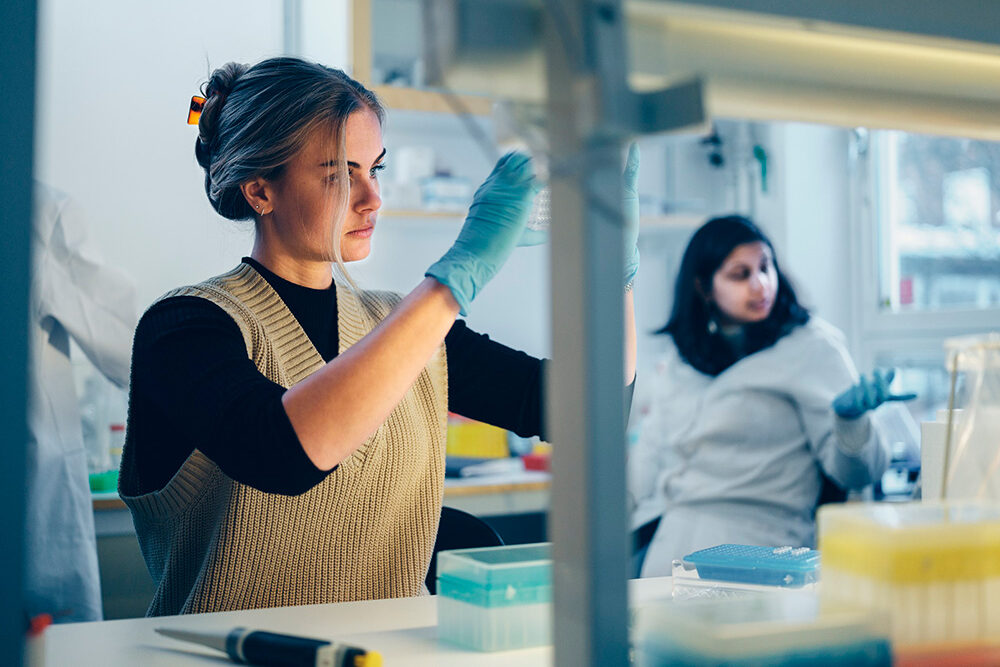
Pixelgen Technologies raises USD 15.5 million
Pixelgen Technologies has closed an oversubscribed USD 15.5 million Series B financing to accelerate global commercialization of its Proxiome Kit and expand the company’s presence in key markets.
The company’s Proximity Network Assay is a technology that enables high-dimensional analysis of cell surface architecture in single cells. Which research and clinical applications offer the greatest growth potential for Pixelgen over the next few years?
“Diseases are caused by faulty cell functions. Protein organization and cell architecture forms the molecular machinery required to carry out these functions, representing a new, highly important, but previously unstudied dimension. Pixelgen’s Proxiome products uniquely enable our customers to reveal this uncharted territory in health and disease, fueling the ongoing AI-driven life science revolution with essential data, to create the next generation of research, diagnostics, and therapeutics.”
Molecular diagnostics of autoimmune diseases has a large unmet need where our product and its novel data dimension of molecular cell architecture is expected to make a difference.
“Autoimmunity and inflammatory diseases along with hematological oncology are the first application areas in basic research and drug development. Molecular diagnostics of autoimmune diseases has a large unmet need where our product and its novel data dimension of molecular cell architecture is expected to make a difference.”
What lessons from your experience of co-founding Olink are shaping Pixelgen’s transition from technology development to global commercialization?
“To work closely with customers and partners and deeply understand their evolving needs, we’ll continue to build and enhance the total product offering to reach the majority market.”
What current advantages and challenges does Sweden offer life science startups competing internationally?
“The early adopter market is strong both in Sweden and the US, but is of course largest in the US. There is also a very good local talent pool. The local academic market is an excellent starting point for gaining traction and testing the market.”
Building a technology platform that scales with NGS readout, computational power and AI-enabled data analysis tools is an exciting future.
What are your hopes, expectations, and strategy for Pixelgen’s future?
“Just like we built at Olink, scalability in plasma proteomics, we have now built at Pixelgen for localized proteins. Building a technology platform that scales with NGS readout, computational power and AI-enabled data analysis tools is an exciting future. We hope to impact research and drug development by delivering this essential dimension of cells that has not been studied before in clinical research.”
Published: August 25, 2026