Simon Mølgaard, Denmark’s rising star in biotech: “We’re not chasing a crowded target”
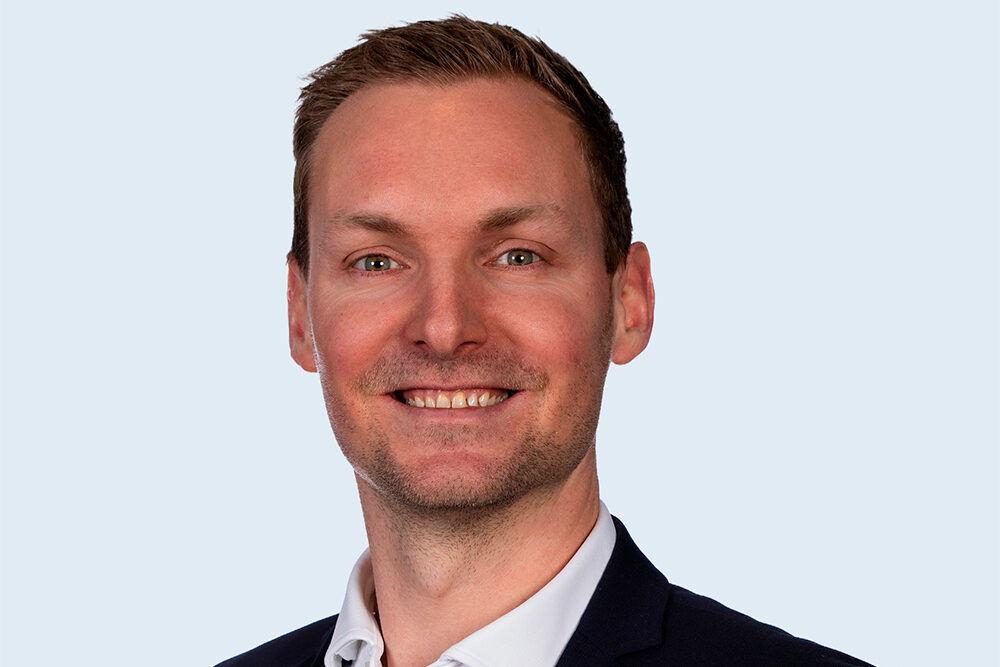
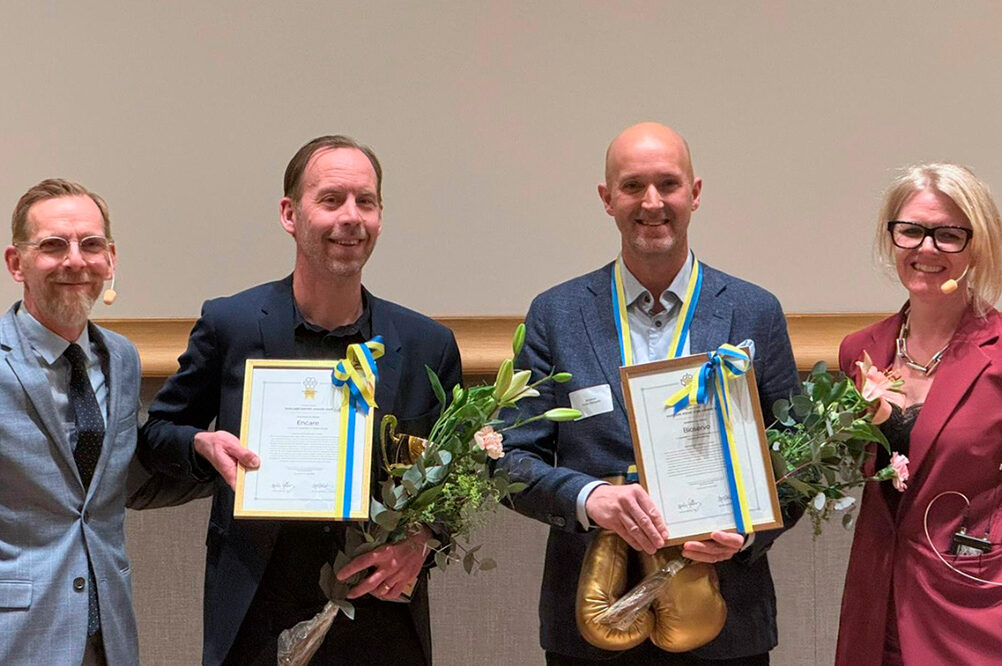
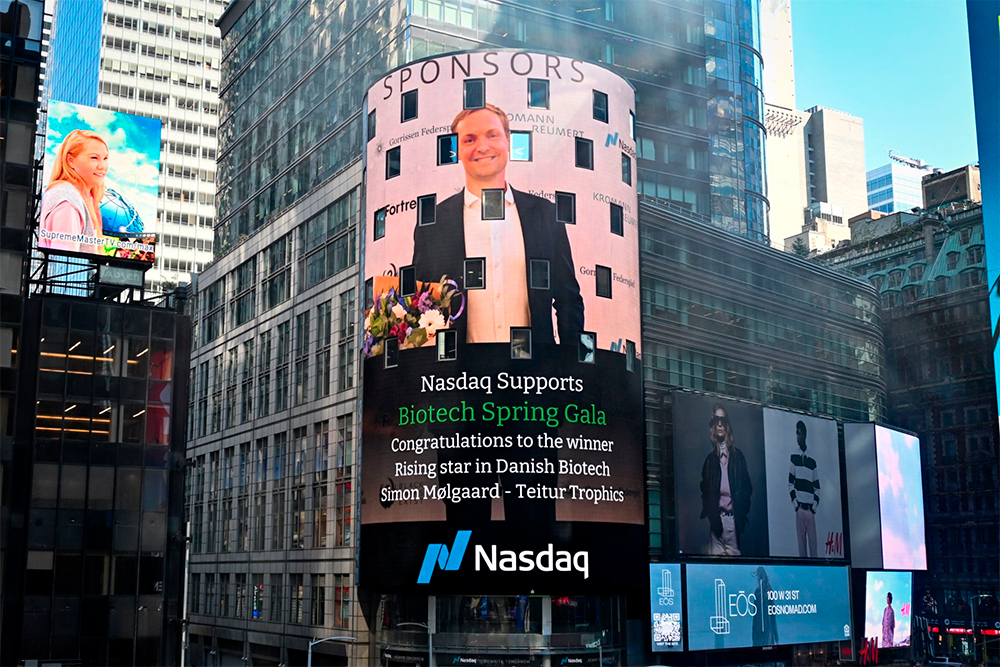
Teitur Trophics’ co-founder and CEO Simon Mølgaard was named Rising Star in Danish Biotech at the DANISH BIO – Dansk Biotek Spring Gala in April 2026. Nordic Life Science asked him about the transition from science to business, building a company from Aarhus, and the opportunities ahead in treating neurodegenerative disease.
September 18, 2026


Simon Mølgaard holds a PhD in neuroscience from Aarhus University and spent time as a visiting researcher at the Mayo Clinic before returning to Denmark in 2015 for a postdoctoral position at his alma mater. There, together with Anders Dalby, Mathias Ollendorff, and Simon Glerup, he helped identify a previously unknown mechanism for promoting neuronal survival – research that became the basis for Teitur Trophics, spun out of Aarhus University’s Department of Biomedicine in 2020.
Leaving it as an academic project would have meant leaving that question unanswered.
What made you decide to leave the lab and your scientific career to become a co-founder and CEO?
“I studied neuroscience in the first place because I wanted to make a difference for patients. So, when my work led to a discovery with real potential to benefit people living with neurodegenerative disease, the only honest path forward was to test whether that potential was real. Leaving it as an academic project would have meant leaving that question unanswered. Founding the company was how I could actually pursue it.”
How different is running the company from doing the science that led to it, and which parts of the scientist in you still show up in how you lead?
“It’s a clear transition, and I’d be the first to say the two roles are fundamentally different. What I hold onto is a conviction that keeping development grounded in the science is critical – that’s the discipline I don’t want to lose as we grow. Just as important is bringing in experienced people who know things I don’t, and then actually listening to them and learning from them. Good leadership here is as much about that as about any single decision I make.”
Teitur Trophics’ lead candidate, the cyclic peptide TT-P34, is designed to address three pillars of neurodegeneration: loss of pro-survival signaling, mitochondrial failure, and lysosomal dysfunction, with lead indications in Parkinson’s and Huntington’s disease.
Progress in the fields of Parkinson’s, Huntington’s, and ALS is exciting, but many drug candidates fail. What do you find most promising and realistic when it comes to new treatments in these areas, and where does TT-P34 fit in?
“Parkinson’s and neurodegenerative disease more broadly are genuinely complex, something underscored by the recent failures of programs built around a single genetic target. What is well established is that several pathways drive the disease, including lysosomal and mitochondrial dysfunction, and a future treatment aiming for disease modification will likely need to address all of them. That could happen through a combination of compounds, but the unique opportunity with TT-P34 is that it is able to cover all of these on its own. Clinically, that gives us a truly exciting opportunity to test for disease modification, initially in Parkinson’s, though we believe the potential extends beyond it, into FTD and other indications.”
The unique opportunity with TT-P34 is that it is able to cover all of these on its own. Clinically, that gives us a truly exciting opportunity to test for disease modification.
In 2023, Teitur raised a EUR 28 million Series A co-led by Sunstone Life Science Ventures and Sound Bioventures, with Industrifonden, Innovestor’s Life Science Fund, and P53 Invest also participating, funding TT-P34 into Phase 1b clinical development.
You raised EUR 28 million for a company built around a novel biological mechanism, in a funding environment that’s been tough for early-stage neuro assets. What do you believe convinced the investors to bet on your company and your findings?
“Neuro is hard, and most bets are on incremental mechanisms. I think what resonated was that we’re not chasing a crowded target; we’re building on a distinct biological mechanism with a peptide platform behind it, not a single shot. Beyond the science, investors back people and plans: a credible team, honest de-risking, and clear-eyed answers about what could go wrong. Showing we understood the risks as well as the promise mattered as much as the data itself.”
I think what resonated was that we’re not chasing a crowded target; we’re building on a distinct biological mechanism with a peptide platform behind it, not a single shot.
You dosed your first Parkinson’s patients in January 2026 at the Centre for Human Drug Research in Leiden, and on September 10, 2026, you announced that Phase 1 data showed TT-P34 to be safe and well tolerated, with pharmacokinetics confirming robust CNS exposure. What’s next?
“We’re excited that Phase 1 has ticked all the boxes for advancing to Phase 2, where the aim is to understand whether TT-P34 truly has potential for disease modification. We’re fundraising to make that study possible and hope to initiate it next year.”
What’s it like building a life science company from Aarhus rather than Copenhagen?
“Aarhus has a real advantage: it’s where the science was born, at Aarhus University, and we sit close to that talent and research base at Incuba Skejby. There’s a growing life science ecosystem here, and with it a deep pool of talent: the people, the research, and the momentum are increasingly in place. Denmark is small enough that the wider ecosystem is genuinely national, so being outside the capital costs you very little while giving you real proximity to where the science is made.”
There’s a growing life science ecosystem here, and with it a deep pool of talent.
Where do you want Teitur, and yourself, to be in five to ten years?
“Honestly, speculating ten years ahead in biotech doesn’t make much sense – the field moves too much. What I can say is that we hope our lead and pipeline programs will have reached patients and be making a real difference to their daily lives. We also have an exciting pipeline where we see a great deal of further potential at work.”
Published: September 18, 2026