From promising science to decisive progress
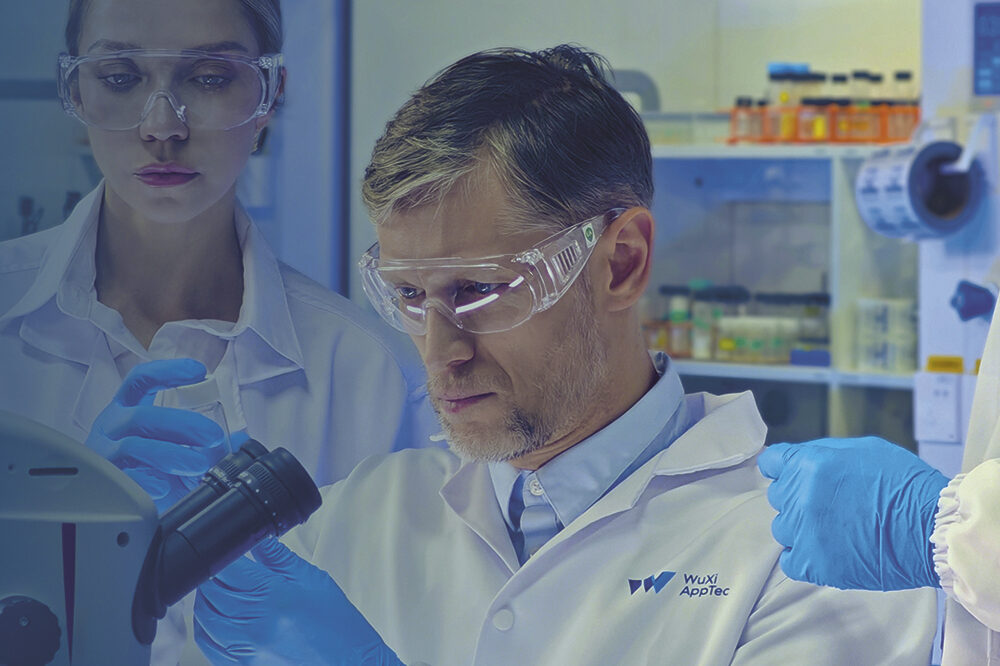
How CRDMO partnerships can help early-stage biotech companies turn strong science into focused, capital-efficient drug discovery programs.
October 4, 2026
A small biotech can begin with an elegant scientific idea, a compelling paper and a founder who understands biology better than almost anyone. Then the questions multiply. Which experiments really matter? What is the right screening strategy? Which hit should move into chemistry? Which model will generate a decision rather than simply more data?
For an early-stage company, those questions are scientific, but also financial. Seed and Series A funding often comes with milestones and a limited runway. Building laboratories, buying specialized equipment and recruiting expertise across every discipline can consume capital before the program has generated the evidence needed to progress.
“The Nordic region has no shortage of excellent science or innovative ideas,” says Tao He, Ph.D., Director of Business Development, Discovery Services at WuXi AppTec. “The bigger challenge is translating that science into a coherent drug discovery program.”
The Nordic translation gap
He works with biotech and pharmaceutical companies across the Nordic region, connecting their programs with capabilities spanning discovery biology, chemistry, screening, hit finding, DMPK and in vivo pharmacology.
In her experience, early-stage companies often have deep expertise around their core discovery but gaps elsewhere in the development chain. A team may need robust assays, a suitable chemical starting point, specialist pharmacology, medicinal chemistry or infrastructure-heavy platforms that would be difficult to build and maintain internally.
“No one is really an expert in every single aspect,” she says. “You need either your own collaborators or external expertise to fill the knowledge gaps.”
The value really comes from bringing different scientific disciplines together. You need chemistry, biology, Drug Metabolism and Pharmacokinetics (DMPK), pharmacology, toxicology and project management.
That is where she sees a contract research, development and manufacturing organization (CRDMO) partnership differing from traditional outsourcing. A conventional outsourcing relationship can work well when a company knows exactly which experiment it wants performed. The work is completed, the data are returned and the company makes the next decision.
A CRDMO model can instead connect multiple disciplines around the same program.
“The value really comes from bringing different scientific disciplines together,” He says. “You need chemistry, biology, Drug Metabolism and Pharmacokinetics (DMPK), pharmacology, toxicology and project management.”
Because information generated in one part of the program can directly influence another, integrated teams can troubleshoot together and maintain continuity. For a small biotech, He argues, this can reduce handovers, delays and information loss.
It also brings something beyond access to technology: accumulated experience. WuXi AppTec scientists have worked across many types of drug discovery programs, allowing them to recognize potential failure modes and suggest alternative approaches. He is careful to distinguish that experience from customer data: client data and intellectual property remain confidential and are not shared between projects.
Keep the founder close to the science
The Nordic ecosystem also has characteristics that shape how companies emerge. In Sweden, He points to the teacher’s exemption, lärarundantaget, which can allow the scientist behind an academic discovery to retain rights to the intellectual property.
That can create a challenge when a highly specialized researcher suddenly has to navigate drug development and commercialization. But He also sees an important advantage in keeping the original scientific founder involved as the company evolves.
“The founder or the owner of the idea knows the science behind it best,” she says. “That is definitely helpful.”
Her message is not that early biotechs should outsource their core. The biological rationale, scientific strategy and key decisions should remain within the company. External partners can add specialist expertise, execution capacity and infrastructure around it.
Start before the brief is perfect
For He, one of the biggest misconceptions is that a large CRDMO is only relevant to established or well-funded companies.
She has heard university laboratories and very small biotechs hesitate to make contact because they assume they are too early or too small. Her response is straightforward: reach out anyway. “Even an academic laboratory or university research group is totally welcome. We are very happy to collaborate at any stage.”
Even an academic laboratory or university research group is totally welcome. We are very happy to collaborate at any stage.
That can mean beginning with a discussion rather than a large contract. He describes an academic-origin program that initially had little more than a promising published idea, a very small team and limited funding. WuXi AppTec scientists joined discussions to explore possible routes forward. Once the company secured financing, the collaboration moved into a first defined stage and later progressed further.
The same principle applies to budgets. WuXi AppTec can help companies map a broader route from early discovery toward preclinical development while dividing the work into phases that reflect current financing and scientific risk.
For founders, that can turn fundraising from a request for an abstract amount of capital into a sequence of defined scientific milestones.
“Focus on the critical decisions rather than simply how many experiments you can run,” He says. “Be very clear about what you need to prove, what would make you stop and what data you need for the next decision.”
Tao He’s three tips for early-stage biotech companies
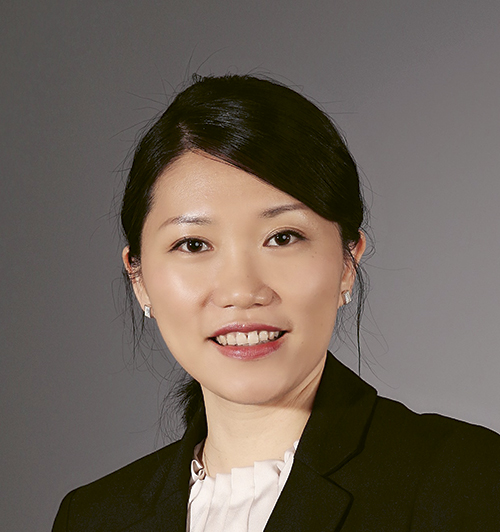
1. Begin with the decision
Define what the program needs to prove, what data will unlock the next milestone and what result would make you stop or change direction.
2. Keep the core, access the breadth
Retain ownership of the science, biological rationale and key decisions, but use external partners for specialist expertise, technology and infrastructure that are difficult to build in a small company.
3. Engage early
Do not wait until every detail of the program or funding plan is finalized. Start the conversation early, map the larger development path and build the work in phases that match your evidence, risk and available capital.
Please visit: wuxiapptec.com
Published: October 4, 2026