NLS Profile Abroad: Thomas Karikari

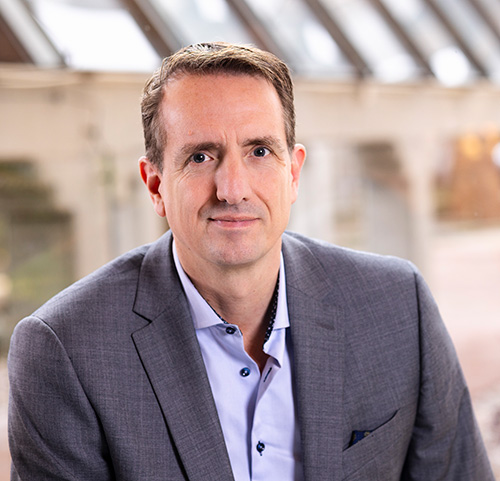
Thomas Karikari’s career has taken him across three continents: from Ghana to the UK and Sweden, and then to the US. Now an Associate Professor at the University of Pittsburgh and one of Nature Index’s “rising stars in ageing research”, he is helping move Alzheimer’s blood biomarkers beyond individual markers and towards a more complete picture of disease biology.
July 19, 2026


At the Alzheimer’s Association International Conference (AAIC) 2026 in London, it was difficult to catch Thomas Karikari alone. In the crowded corridors of ExCeL London, a steady stream of collaborators, former colleagues and younger researchers stopped him for a conversation. At times, it felt as though everyone wanted a few minutes with the University of Pittsburgh biomarker scientist.
AAIC is the world’s largest international conference devoted to Alzheimer’s and dementia research. Thousands of researchers and clinicians gathered in London for four days of scientific sessions, poster presentations and discussions spanning basic biology, diagnostics, clinical trials, treatment and care.
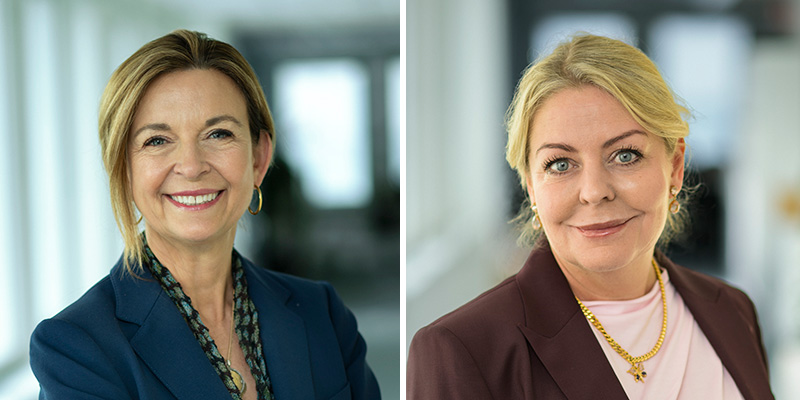
The golden age of scientific breakthroughs in Alzheimer’s disease diagnosis and treatment is now
Presentations at the Alzheimer’s Association International Conference (AAIC) show a field moving rapidly forward both with regard to treatments and diagnostics.
Thomas Karikari was in London with members of his laboratory, whose posters covered brain-derived tau assays, biomarker signatures associated with common Alzheimer’s comorbidities and the effects of long-term sample storage. His own programme was of course packed, and included a Product Theater presentation alongside Steve Williams, Chief Scientific Officer at Alamar Biosciences, titled “Beyond p-tau217: Expanding Alzheimer’s Insights with Multiplex Protein Profiling.”
The subject placed him at the centre of one of the most important discussions at this year’s meeting.
Karikari presented findings concerning microtubule-binding region tau, or eMTBR-tau, a developing class of biomarkers intended to provide information about tau pathology and neurofibrillary tangles.
“We have seen eMTBR-tau and other tau-based biomarkers really beginning to emerge,” he says, pointing to promising early data using the NULISA (NUcleic acid Linked Immuno-Sandwich Assay) platform.
The subject placed him at the centre of one of the most important discussions at this year’s meeting: how blood biomarkers can develop from tools that detect Alzheimer’s pathology into tools capable of describing the disease in greater biological and clinical detail.
Pushing blood biomarkers to the next level
“I’m really excited about the variety of talks and the different levels of investigation that people are pursuing,” Karikari says. “It is exciting to see the field moving at such a phenomenal pace.”
Much of the recent attention has focused on phosphorylated tau, particularly p-tau217. Blood measurements of p-tau217 have demonstrated strong performance for identifying Alzheimer’s-related amyloid pathology and are increasingly being evaluated for clinical use. But going “beyond p-tau217” does not mean that the biomarker has failed. Rather, it reflects the recognition that one highly accurate marker cannot describe the full complexity of Alzheimer’s disease.
“One of the key things that stands out to me is how we are now pushing blood biomarkers to the next level,” Karikari says. “We are moving more towards precision-medicine approaches, showing how these biomarkers can help identify disease subtypes, determine disease stage and even track disease trajectories over time.”
Multiplex protein profiling offers a way to examine several of these biological processes simultaneously rather than investigating one analyte at a time.
People with similar amyloid or p-tau profiles may still differ in their degree of neurodegeneration, inflammation, vascular injury, synaptic dysfunction and coexisting brain pathologies. Those differences could influence how symptoms develop, how quickly an individual’s condition progresses and how they respond to treatment. Multiplex protein profiling offers a way to examine several of these biological processes simultaneously rather than investigating one analyte at a time.
Drawn to the fundamentals
Thomas Karikari’s scientific path began in Ghana, where an interest in understanding how biological systems work first led him towards research. At university, he found himself particularly drawn to medical biochemistry.
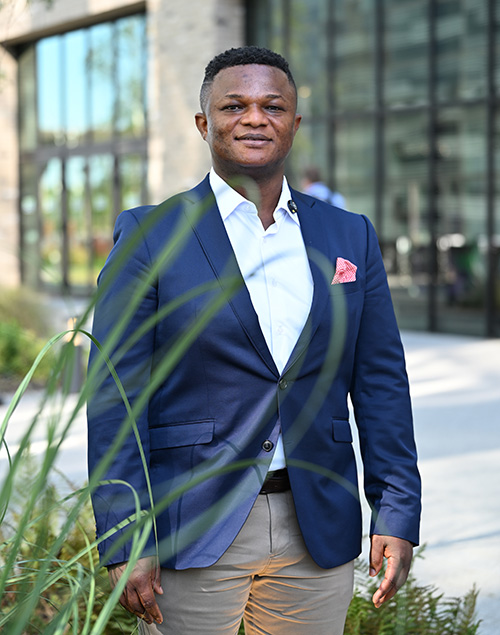
“I really fell in love with medical biochemistry,” he says. “It was about metabolism and the very detailed molecular mechanisms of how things work. That was what I was drawn to.”
He realized that he wanted to move beyond describing disease and instead investigate its underlying mechanisms. “I knew that I wanted to do research and really get to the basics of things,” he says. Scholarships later enabled him to continue his education in the UK, earning his PhD in neuroscience at the University of Warwick.
A defining chapter in Gothenburg
In 2018, Karikari moved to the University of Gothenburg for postdoctoral training in clinical neurochemistry. He subsequently became an assistant professor and remained connected to the university for many years.
In Gothenburg, Karikari joined an internationally recognized clinical neurochemistry community led by Kaj Blennow and Henrik Zetterberg. The group has played an instrumental role in developing and validating cerebrospinal fluid and blood biomarkers for Alzheimer’s disease, particularly assays targeting beta-amyloid and different forms of tau.
When I moved to Sweden, the work I did led, in a very unexpected way, to the development of the first blood test for Alzheimer’s based on phosphorylated tau 181.
Karikari contributed to this development through work on several tau biomarkers. He developed blood p-tau181 for detecting Alzheimer’s pathology and predicting cognitive decline. He also co-led work identifying forms of tau that become abnormal during very early stages of the disease, before cognitive symptoms are apparent.
“When I moved to Sweden, the work I did led, in a very unexpected way, to the development of the first blood test for Alzheimer’s based on phosphorylated tau 181,” he says. “That became a cornerstone for many of the discoveries that people have built on since.”

Western Sweden’s tight-knit life science cluster
Gothenburg, the beating heart of Sweden’s western life science cluster, is home to some 600 life science companies and 10,000 employees in the industry. The cluster prides itself on strong ties between academia, industry, and healthcare.
Freedom with accountability
Karikari says that Swedish working culture changed how he thinks about leadership and how a research laboratory should operate.
“One of the things I learned in Sweden was that it is about the work,” he says. “You come to work, you plan what you need to do and you deliver it. If you finish in good time, you are free to go home.”
Rather than controlling when and how people work, he wants researchers to understand their responsibilities, organize their own time and be judged by the quality of what they deliver.
When work came out of the Gothenburg laboratory, it was very well baked, if I can put it that way.
The size and breadth of the Gothenburg environment were equally important. Researchers with expertise in clinical chemistry, neuroscience, assay development, statistics and different forms of neurodegenerative disease worked alongside one another. This made it possible to move projects forward quickly while testing ideas from several scientific perspectives.
“You could build collaborations and bring different perspectives into the work so that it did not move in only one direction,” Karikari says. “When work came out of the Gothenburg laboratory, it was very well baked, if I can put it that way.”
Building a biomarker programme in Pittsburgh
Karikari subsequently moved to the University of Pittsburgh, where he is now Associate Professor of Psychiatry and Clinical and Translational Science. He directs the Biomarker and Neurogenetics Core of the university’s Alzheimer’s Disease Research Center, as well as its Biofluid Biomarker Laboratory, Single Molecule Analytics Program and Mass Spectrometry Program.
This combination allows his group to approach biomarker development through complementary technologies rather than relying on one analytical method. His laboratory studies amyloid-beta, phosphorylated tau, brain-derived tau, neurodegeneration and broader proteomic signatures.
Karikari’s international background also influences the questions his laboratory is now asking about the global use of blood biomarkers. Many of the cohorts used to discover and validate Alzheimer’s biomarkers have historically included participants of predominantly European ancestry. As blood tests move towards broader clinical use, researchers need to determine whether biomarker concentrations and diagnostic thresholds perform consistently across populations.
These observations demonstrate the importance of understanding the biological, genetic, environmental and methodological factors that may influence their levels.
Karikari’s group is collaborating with researchers working with cohorts from the Democratic Republic of the Congo, Nigeria, the Caribbean and the US. The results are beginning to reveal both similarities and differences between populations.
“When we compare biomarker levels in a Black African population from Congo with Black Americans in the US, we see similarities, but we also see differences,” he says. “There are even greater differences when we compare them with people of European ancestry.”
These observations demonstrate the importance of understanding the biological, genetic, environmental and methodological factors that may influence their levels.
“We can now start connecting the different cohorts and taking a more global health approach,” Karikari says. “Are these biomarkers that are now approved for everyone’s use going to work in the same way for everyone? And if not, why? Getting to that basic understanding is one of the key things we are working on.”
Published: July 19, 2026