Postdoc Interview: Working at the interface of clinical data and multi-omics analysis

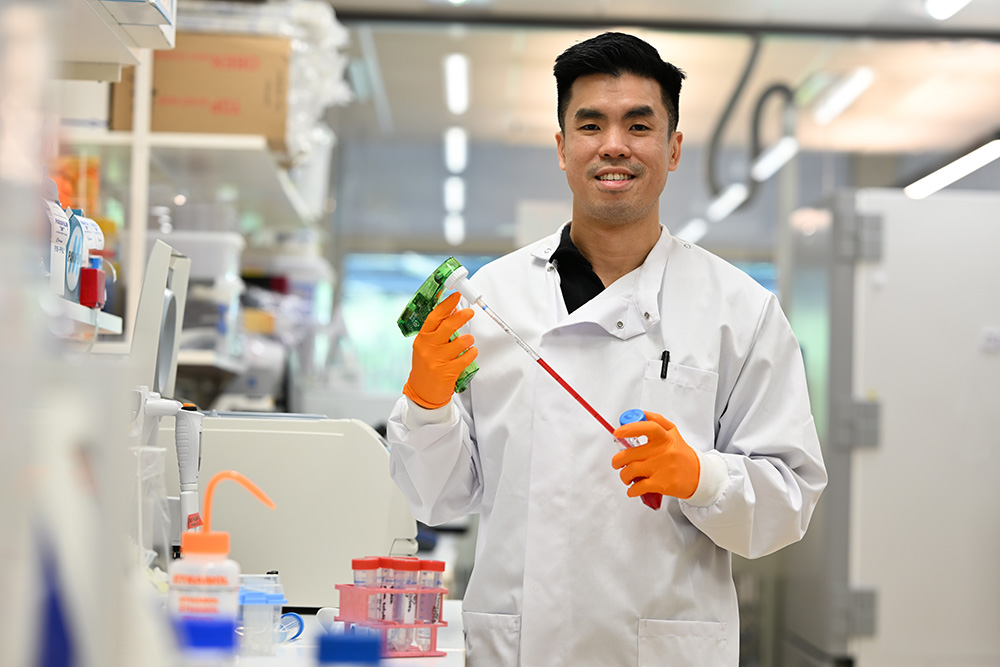
Hong Yang is a postdoctoral researcher at SciLifeLab and KTH Royal Institute of Technology under the mentorship of Professor Dr. Adil Mardinoglu.
March 15, 2026


Yang’s work focuses on chronic liver disease, particularly conditions driven by metabolic dysfunction, where effective treatments are still quite limited. The aim is that a clearer picture of the underlying biology could help identify where and how we might intervene more precisely.
What sparked your interest in science and in your specific field?
“I studied bioinformatics and systems biology (fields that now often use AI and machine learning to analyze large-scale biological data, such as genomics, transcriptomics and proteomics) as an undergraduate, and for a while it felt quite disconnected from research. There was a lot of coding and methodology, but not always a clear sense of why it mattered. That began to change during my master’s, when I worked on curating and mining large-scale biological and pharmacological data and I started to understand how bioinformatics feeds into drug discovery by identifying potential therapeutic targets.”
The biological complexity of liver disease made clear why integrative, data-driven approaches are needed. That is really where my interest in systems biology found its focus.
“That direction became more concrete when I spent time working with clinical data at a hospital early in my research career. The biological complexity of liver disease made clear why integrative, data-driven approaches are needed. That is really where my interest in systems biology found its focus.”
“I later moved to Sweden for my PhD work as part of the PoLiMeR consortium, a Marie Skłodowska-Curie training network. Working alongside groups with complementary expertise in biochemical, computational, and clinical research to study inherited metabolic (liver) diseases helped me understand how to ask questions that sit at the intersection of those disciplines, and how much that boundary work matters.”
Describe your current research project?
“One project I have been focused on recently is a review of combined metabolic activators, or CMA, a mixture of four compounds designed to address mitochondrial dysfunction observed in a range of conditions, including fatty liver disease and neurodegenerative disorders. What we are trying to understand is not just whether CMA works, but what is actually happening at the metabolic network level when it is applied. To approach that, we integrate multi-omics data collected from clinical trials, which allows us to examine how different metabolic pathways, inflammatory responses, and the gut microbiome respond to the intervention.”
One project I have been focused on recently is a review of combined metabolic activators, or CMA, a mixture of four compounds designed to address mitochondrial dysfunction observed in a range of conditions, including fatty liver disease and neurodegenerative disorders.
Describe your career path and your career choices so far?
“My career path grew from a combination of training in bioinformatics, early exposure to clinical research, and a gradual transition toward more independent work. What connected those stages was a consistent interest in how computational and systems-level approaches can help interpret complex clinical and molecular data.”
If I could tell my earlier self one thing, it would be that ambiguity is not necessarily a sign that something has gone wrong.
“One recurring challenge in computational biology is the gap between analytical output and biological interpretation. Building models or analytical pipelines is often the more structured component of the work. The more demanding part is evaluating whether an observed signal is likely to reflect underlying molecular mechanism, how robust the interpretation is across datasets, and how cautiously those conclusions should be communicated. Working at the interface of clinical data and multi-omics analysis has made these questions central to my work.”
“If I could tell my earlier self one thing, it would be that ambiguity is not necessarily a sign that something has gone wrong. Learning to work constructively with uncertainty is a part of doing research.”
Do you have any advice for someone exploring a career in science today: students, career switchers, or early-career researchers?
“One thing I’ve come to appreciate, coming from a bioinformatics background, is that technical skills alone do not automatically translate into biological understanding. It took working closely with clinicians and experimental scientists for me to appreciate the gap between what a model outputs and what is actually happening in a diseased tissue. Because of that, I think it’s important to actively communicate with people with different expertise in your field.”
I think it’s important to actively communicate with people with different expertise in your field.
“That also connects to a second point: the importance of the environment you train in. The way people around you discuss unexpected results, interpret ambiguous data, handle obstacles gradually influences how you approach scientific problems. Being in a supportive and intellectually open environment can make a big difference, especially early in a research career.”
How would you describe the job market within your field of expertise? What skills are most in demand, and what one practical tip would you give to help someone stand out?
“The market looks generally good for people with a computational biology background in life science, though where that demand sits depends on the type of role. Academia remains competitive, and the path from postdoc to principal investigator is long and uncertain. Areas such as precision medicine and AI-driven drug discovery, partly driven by the growth of multi-omics data, have created opportunities for people who can integrate large-scale biological data with strong computational and statistical skills.”
One practical tip: invest in being able to tell a coherent scientific story with data.
“The skills most in demand combine the technical and the communicative: proficiency in genomics or multi-omics analysis, familiarity with machine learning as applied to biological data, and the ability to frame analytical findings in terms meaningful to experimental or clinical collaborators. One practical tip: invest in being able to tell a coherent scientific story with data.”
Pick a lab tool, instrument, or piece of equipment that matches your personality or work style and explain why.
“I’d probably say a microscope. It doesn’t generate data from nothing, it resolves what’s already in the sample, structure that exists but isn’t immediately legible. That maps pretty well onto what I do. Whether it’s a genome, a network, or a model output, the information is usually there. The work is finding the right resolution to make it interpretable.”
I’d probably say a microscope. It doesn’t generate data from nothing, it resolves what’s already in the sample, structure that exists but isn’t immediately legible. That maps pretty well onto what I do.
“There’s also something about the iterative adjustment that feels honest. You don’t just look once. You refocus, change the magnification, try a different stain.”
Updated: March 18, 2026, 07:00 am
Published: March 15, 2026