New survey: Health gaps hold back US women

More than 40% of women in the US say their health has limited their career, and the share rises to 66% among women who cannot get the care they need, according to a new Gallup survey conducted in partnership with Pivotal.
September 21, 2026


Pivotal, the organization founded by Melinda French Gates to advance social progress for women and young people, partnered with Gallup on a survey of more than 5,200 women and men in the US about their health, their experiences of getting care, and how it affects their lives.
Three in ten women said they had to push to be taken seriously, and one in four said they were unable to get the care they needed at all.
Women reported significantly more barriers to care than men did. Half of women had at least one negative experience seeking care in the past five years, compared with 39% of men, including dismissed pain, misdiagnosis, and conflicting advice. Three in ten women said they had to push to be taken seriously, and one in four said they were unable to get the care they needed at all.
“Women shouldn’t have to fight to get the care they need,” Pivotal writes. The survey also found broad public support for action, with 61% saying state governments should make women’s health a high priority and 60% saying the same of the federal government.

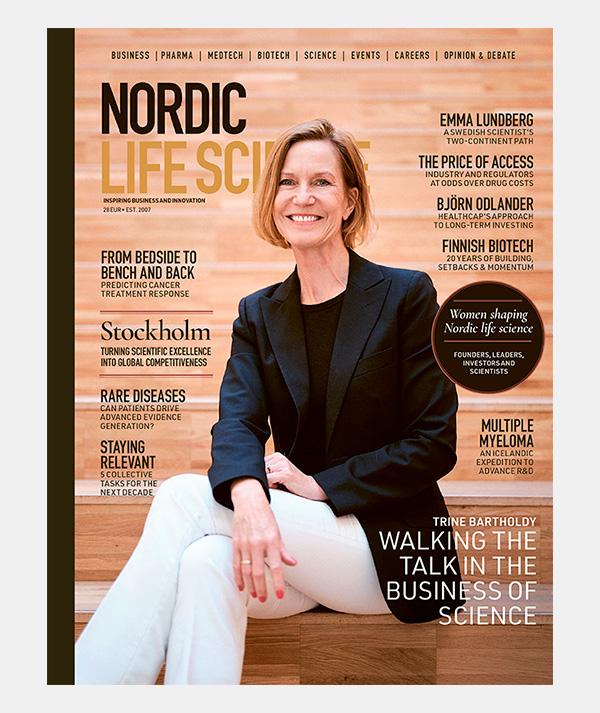
The power loop: How female leadership and women’s health reinforce each other
In a region celebrated for gender equality, the life science sector tells a different story: women dominate the workforce in many jobs yet remain sidelined in leadership, funding, and research – with consequences that ripple across public health and economic performance.
Cost and caregiving
Cost and caregiving are common obstacles. One in three women delayed care because of cost, compared with 25% of men, and 16% said caregiving duties kept them from seeking care, compared with 10% of men. The career impact falls heaviest on lower-income women: 35% of those earning less than USD 50,000 said their health had left them with fewer career options, compared with 13% of those earning USD 100,000 or more.
Menopause
Menopause stands out as a critical stage. One in four women seeking treatment had to push their doctors to take them seriously. More than a quarter of women who had experienced menopause or perimenopause said it kept them from performing at their full potential at work, and one in ten had taken extended leave or left their jobs.
A Nordic perspective
Nordic life science leaders have been making a similar case. Christina Östberg Lloyd, founder and chair of the Swedish organization VILDA, told Nordic Life Science earlier this year that women spend 25% more years of their lives in poor health than men, and that half of those years fall during the typical career years. “A woman needs to be well to do well,” she said, quoting Melinda French Gates. In her view, midlife is when many women step down from their careers, which is why women’s health and female leadership are closely connected.
The Nordic region also shows how data can drive change. A white paper published in Denmark in September 2025 found that women are diagnosed four years later than men in 770 diseases, and that only 4% of research funding goes to women’s health. In October 2025, the Danish government announced DKK 160 million (EUR 21.5 million) for a new national research center in women’s health. Lene Gerlach, chair of WiLD Denmark, said in the same article that credible data is what turns discussion into action.
Sources: Pivotal, “New Gallup Survey Reveals the Costs of Overlooking Women’s Health,” September 18, 2026 (pivotal.com); Gallup survey data as reported by Pivotal; Nordic Life Science, “The power loop: How female leadership and women’s health reinforce each other,” March 7, 2026
Published: September 21, 2026