The power loop: How female leadership and women’s health reinforce each other

In a region celebrated for gender equality, the life science sector tells a different story: women dominate the workforce in many jobs yet remain sidelined in leadership, funding, and research – with consequences that ripple across public health and economic performance.
March 7, 2026


Regardless of whether you take female representation in leadership positions, investments in female-led companies, the prioritization of women’s health, or basic medical research, the life science landscape is heavily biased in favor of men. “In every box you open, you find the same gender imbalance,” says Copenhagen-based Dr. Lene Gerlach.
When I was working as an investment manager at the Danish Sovereign State Fund, building management teams and boards in our life science company investments, I realized that the candidate pool for senior roles and boards was almost always male.
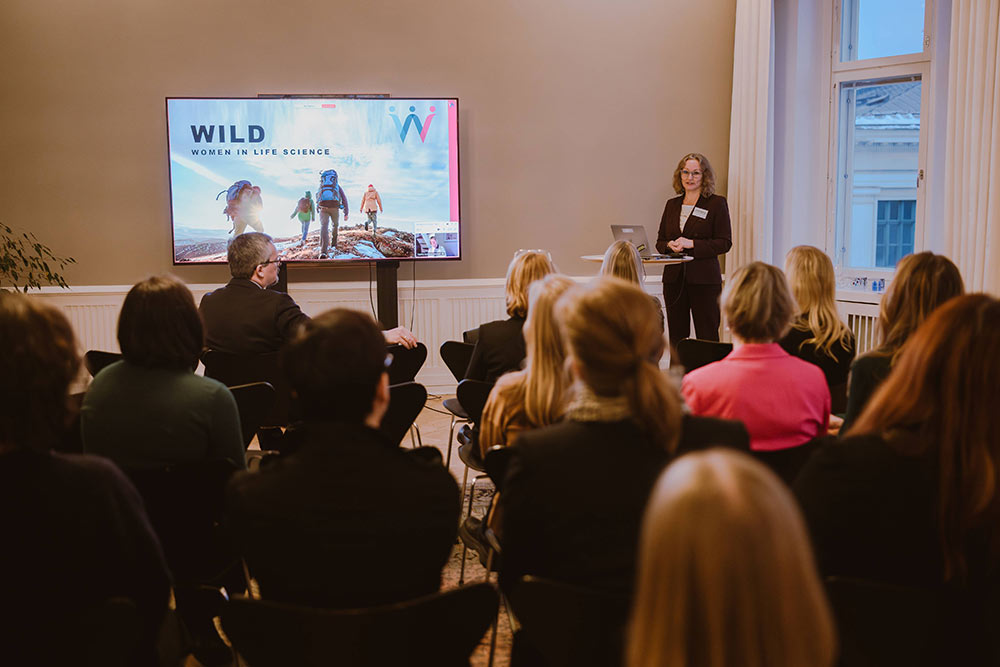
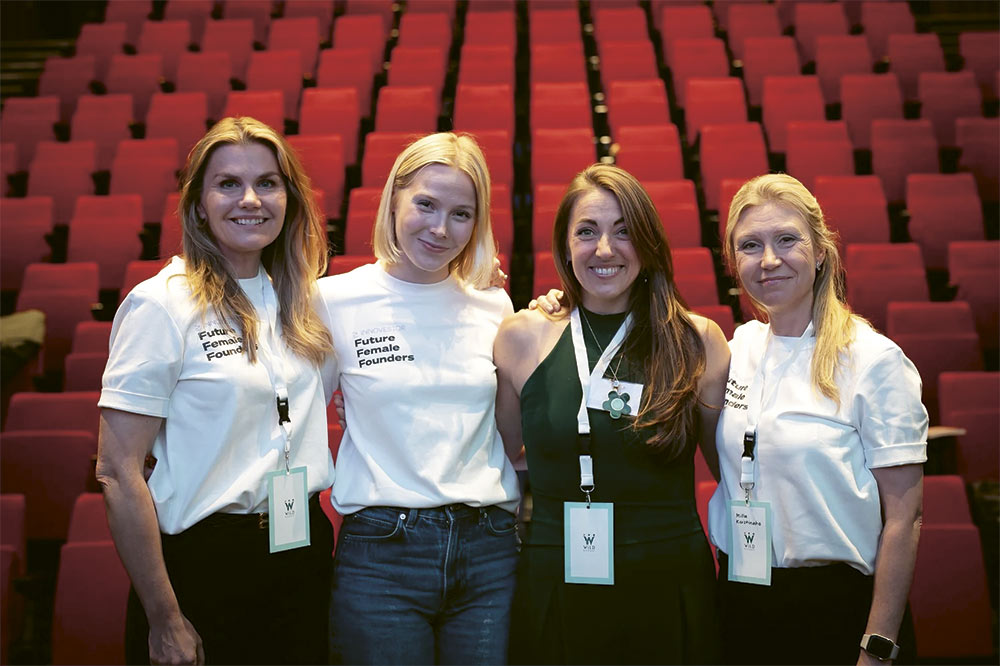
Gerlach is the co-founder and chairperson of WiLD in Denmark, the first established Women in Life Science organization that has sister organizations in Sweden, Norway and – since January this year – in Finland. With a PhD in neuroscience from Copenhagen University and decades of experience in life science and investment, Gerlach started WiLD in 2022.
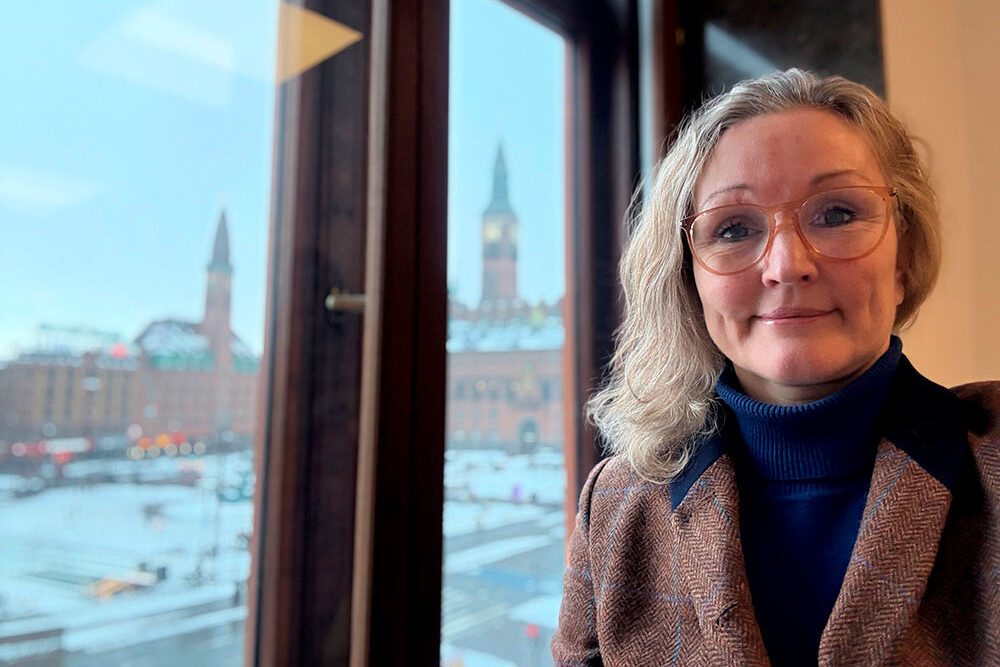
“When I was working as an investment manager at the Danish Sovereign State Fund, building management teams and boards in our life science company investments, I realized that the candidate pool for senior roles and boards was almost always male. That wasn’t because qualified women didn’t exist – it was because they weren’t visible in the networks that decision-makers like myself relied on. This motivated me to start WiLD,” Gerlach explains. “I thought I had a responsibility to do something about this – making female executives more visible and strengthening their networks.”
In Denmark, the life science sector is the only technology sector where women make up more than half of the workforce, at 52%. Yet, this is not reflected at the leadership and board level, where women still hold only around one fifth of positions, Gerlach describes. “This is also true in general – when it comes to capital and power structures, Denmark actually amplifies the gap. Less than 1% of Danish capital funds are led by women, and that directly influences who gets funded and who builds, scales, and leads companies.”
The 2023 publication “The funding report” by the early-stage VC Unconventional Ventures showed that all-women founding teams in the Nordics were only allocated a meagre 0.9% of all capital deployed during 2022. Mixed teams secured 4.4%, and all-men founding teams were allocated the remaining 94.7%.
The European Women in VC report “Achieving superior returns with gender diversity in European venture capital firms”, also from 2023, shows that female VCs are 2-3 times more likely to invest in female-led startups. It also highlighted that VC funds managed by women-majority teams outperformed men-only teams by 9.3%, and that a higher proportion of women in senior management teams at European VCs had a lower volatility of the returns of their fund portfolios. Despite this, female VCs also face gender gaps – the report showed that only 16% of partners at the surveyed VC firms were women, and that they only raised 9% of assets under management.
Leading while female
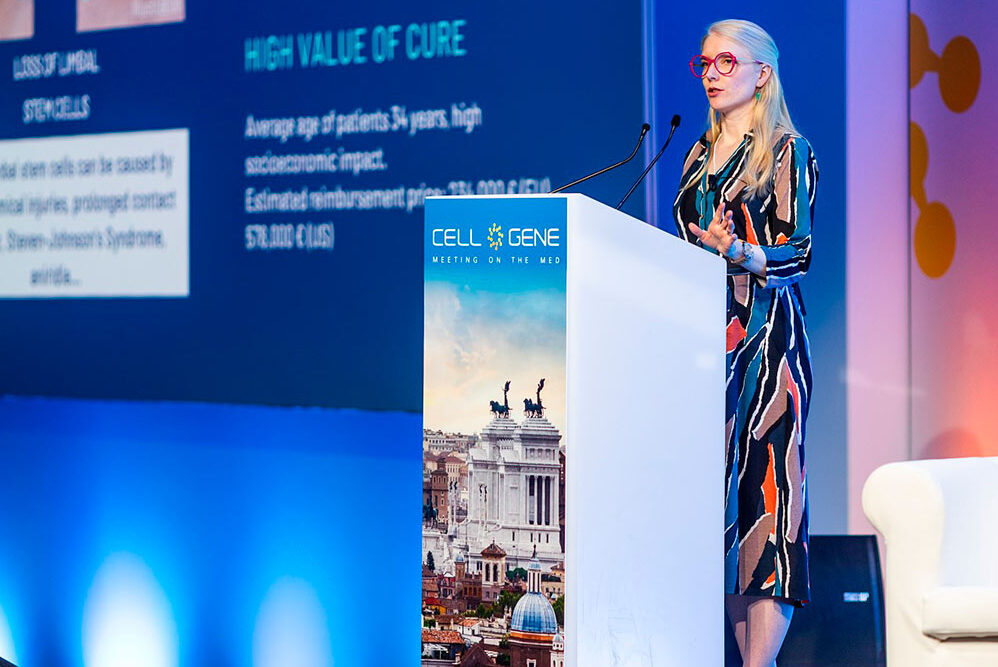
Dr. Laura Koivusalo is the CEO of the Finnish tech startup StemSight, which aims to cure blindness through off-the-shelf regenerative stem-cell therapies. Koivusalo holds a PhD in science and technology from Tampere University, specializing in stem cells and tissue engineering. She shares that when she and her three female co-founders spun out from her alma mater in 2021, they started looking around for a CEO to take the helm, subconsciously thinking it would be a man.
“Of course representation is a barrier in itself, because, as the old adage goes, you can’t be what you can’t see,” she muses. “In our minds we visualized an experienced CEO, or maybe someone with the confidence of a leader. And that generally translates into a male figure.”
What changed was an outside voice telling them that they were capable themselves: “Somebody said ‘you don’t need an external CEO, you can do this’. That’s what nudged us over the line. Somebody had to say it out loud for us to realize that we could actually do it ourselves, that I could do it myself,” Koivusalo says.
As a co-founder and CEO, Koivusalo says she has faced many of the obstacles that other women in leadership come across: the pressure of juggling being a CEO and a mother, a biased investor climate, and struggling to get a foot in the right doors. The mother-of-two, who currently shares parental leave 50/50 with her husband, requested to set up this interview with NLS during her five-month-old baby’s nap time.
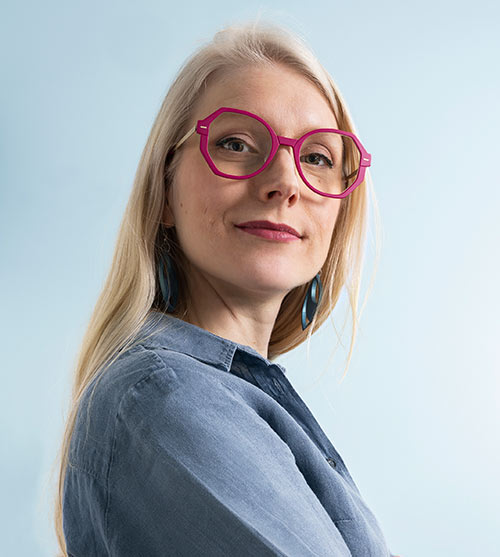
“There is this sort of societal pressure that especially affects women,” she reflects, and continues:
“I’m constantly being told that I should stay at home and enjoy the baby life. But at the same time, I am expected to run the company and go everywhere out into the world and be pitching all the time. Sometimes it feels like there’s no way to win if you’re spending more time on one rather than the other.”
StemSight is preparing to open a Series A funding round later in the year, aiming to raise enough capital to bring their first product all the way to first-in-human clinical trials. When asked if she has experienced that investors treat her differently than her male counterparts, she uses pitch events as an example.
“I always get asked these kind of frowny-faced questions about risks and how difficult it is to get to market and the market size being too small, and all that kind of stuff. Versus the companies that are pitched by a man – they get asked such aspirational questions about ‘where do you see the company going’ and ‘how big can it become’? The difference is really night and day. It’s so difficult to bounce back from that when the questions already put you at a lower level, to try to turn the pitch around.”
But practice makes perfect, and Koivusalo has learned to direct the conversation when asked about risks, opting to speak about how StemSight differentiates itself from other companies, and how risk is not a major concern due to the many great things the team has done to get ahead.
People are so willing to mentor you and really bestow their wisdom upon you. But nobody’s actually willing to open the door and say, ‘Hey go through this door, I’m opening my network to you’.
Reflecting on what female founders who are starting out actually need, Koivusalo is clear: mentorship alone is not enough. She argues that the emphasis on mentoring often implies women must improve themselves, when in reality they need access. Coming from academia, she initially had no network and had to build every investor relationship herself.
“Sometimes it’s really hard to get into some rooms. When you don’t have a network to begin with, you start to build it from scratch,” she says. “People are so willing to mentor you and really bestow their wisdom upon you. But nobody’s actually willing to open the door and say, ‘Hey go through this door, I’m opening my network to you’.”
“We don’t need mentorship, we don’t need to make ourselves better. We are already good at what we do,” she says, and concludes: “But we need the sponsorship to really get us ahead, to open the doors.”
Female leaders = Improved women’s health
The ramifications of underfunded female biotech founders and an underrepresentation of women in leadership positions go far beyond the principle of fairness or equality for equality’s sake. The lack of balanced female influence impacts public health, society, and fiscal bottom lines.
Unlike other industries – those not primarily concerned with health, medicine and biotech innovation – female leadership in the life science sector becomes a question of who invests in whom – female investors are more likely to invest in female-led companies. And this spills over to the health issues those companies more often focus on – statistics show that female founders are more likely to address women’s health issues.
Oslo-based Chelsea Ranger, who founded WiLD Norway in 2024 and who has a master’s in health sciences and more than 20 years of experience from roles spanning business development, strategy, and investor relations in life science, makes a direct parallel between women’s health and public health, and GDP.
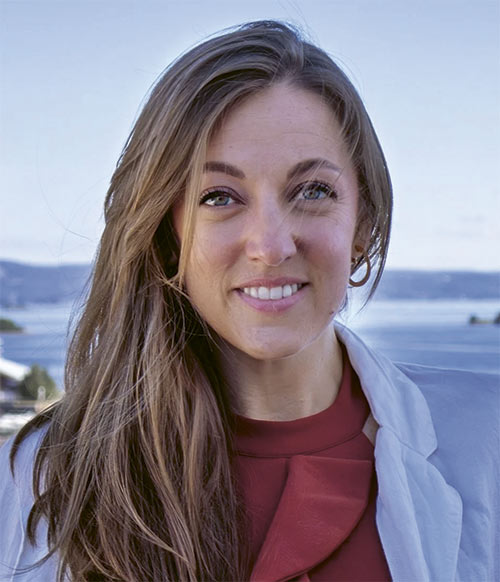
“In science, when we get more specific for women, we get more specific for men. When women are better taken care of, you have a better GDP. When women lead companies, they are more successful companies in terms of revenue efficiency,” she says.
“There are a lot of benefits to focusing on women, whether you want to track finances, and if you want to look from the perspective of global health and public health.”
Ranger argues that female leadership must be the precursor to improved women’s health. She uses a phrase that captures the structural nature of the problem: the holistic system of neglect. Across the biomedical pipeline, women are underrepresented or overlooked.
If we’re ever going to change what we do for women, it has to start with money and priorities. Whoever is leading, whoever has the money, that is who’s setting the priorities.
“ If you’re a woman, medicine is not designed for you,” she says, and elaborates: “We neglect women in how we research them, how we test them, how we fund them, what we invest in, and in terms of leaders. We don’t train in medicine for female physiology because we don’t have the information to train on, which means we incorrectly diagnose and incorrectly treat women, and we don’t build policies that are shaped around women.”
“If we’re ever going to change what we do for women, it has to start with money and priorities. Whoever is leading, whoever has the money, that is who’s setting the priorities. If you do not have balanced leadership, you’ll never build a system that implements measures for us,” she says.
Women’s health = Stronger female leadership
Given the ripple effect of female investment on female entrepreneurship, there is a direct connection between women in power and improved health outcomes for women. The opposite is also true, according to Dr. Christina Östberg Lloyd, founder and chair of the Swedish organization VILDA – Leading Women in Life Sciences, who argues that improved women’s health also results in stronger female leadership participation.
I didn’t perceive that I was disadvantaged because I’m a woman, but suddenly I encountered completely different expectations – that I should act more like a man.
Lloyd specialized as a gynaecologist and obstetrician during her MD studies, and has held executive roles at companies like Ferring Pharmaceuticals and Novo Nordisk, and in startups. Her leadership has always been based on what she calls her “female leadership values”, focused on inclusion and support to make others grow in their professions. These guiding principles worked well for her up until the point in her mid-fifties, when she stepped into the most senior role of her career.
“I didn’t perceive that I was disadvantaged because I’m a woman, but suddenly I encountered completely different expectations – that I should act more like a man. I was told that I should speak more like a man, include fewer emotional aspects in my reasoning, that maybe I should exclude some people and include others,” she recalls.
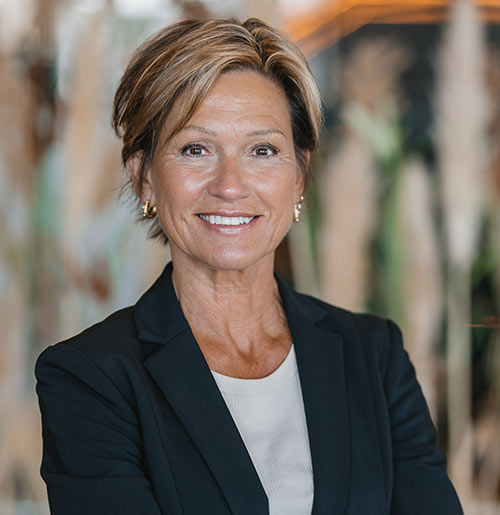
Lloyd talks a lot about the need to allow women to be women, and acknowledging how the sexes are different, with different strengths and challenges. This goes hand-in-hand with her strong belief that the industry needs to get better at supporting women all the way into top leadership positions. In her view, women’s health and leadership are not separate issues: “A woman needs to be well to do well,” Lloyd says, quoting Melinda French Gates.
She points out that women spend 25% more years of their life in poor health than men do, and half of these years are during the typical career years. That impacts performance, career development, and the ability to shoulder the most demanding senior roles in a company.
It’s not uncommon for women who have spent decades building an impressive career and reached executive level positions to find themselves fighting many battles at once, with demanding jobs, a disproportionate burden of care for adolescent children, aging and ailing parents, and even spouses – and a shifting biology.
“The mid-life is the point when many women step down from their careers, and that’s why women’s health and female leadership are strongly connected,” Lloyd says. “It’s a negative spiral, and one that we need to turn around – and we can turn it around, if we shed light on all the different aspects that impact women and female leadership,” she says.
“The women who are approaching the highest rungs struggle to find good support and good tools – and even though they are so knowledgeable already they have very high expectations of themselves. On top of that, the years when many women are in the middle of building their careers often coincide with perimenopause, and fluctuations in hormone levels can affect women in many different ways including mood, energy, and confidence.”
The hormonal shifts that come with perimenopause – which can start as early as 35 and lasts for about a decade – menopause and post-menopause often mean increased physical and mental health burdens for the individual. Common symptoms of these hormonal shifts that are less well-known include brain fog, shifting moods or anxiety, and sleep disruptions, among a slew of other issues that impact the quality of life for women. Yet medical care and general practitioners’ basic knowledge of the biological processes that take place in women in midlife is often lacking among the women themselves and among general practitioners – leaving women under-served and misdiagnosed even in cases where medical intervention is an option.
Menopause is still stigmatized, but this phase also carries a unique strength and experience – so we should back each other openly.
Lloyd shares that she recently conducted training about menopause for the leadership at one of the largest pharmaceutical companies in the Nordics. The participants realized that the majority of their workforce is female, and half of them are in the ages of perimenopause and menopause, but still the company knew very little about it.
“All of a sudden, some top-level directors at the company dared to come out and speak openly about how they sometimes wake up in the middle of the night – which never happened to them before – and how they are starting to feel insecure and questioning things they have said or done,” Lloyd remembers. “Menopause is still stigmatized, but this phase also carries a unique strength and experience – so we should back each other openly. That’s how more women stay and thrive in leadership. It’s not ambition that’s lacking.”
Change begins with hard facts
Back in Oslo, Chelsea Ranger is adamant that meaningful change begins with data. Until recently, Norway had no national data on female representation in the health sector – even though women make up between 60-90% of the workforce. When the national WiLD organization helped gather the first-ever numbers, the results were stark: women’s leadership representation in health was no better than in traditionally male-oriented industries like oil, gas, or shipping. This mismatch of having a female-majority workforce and a male-majority leadership creates blind spots in policy and funding. Policymakers assume health is “female-dominated” and therefore “fine,” according to Ranger, because no one has shown them otherwise.
Ranger argues that the sector needs mandatory data requirements that track leadership demographics, research committee composition, funding allocations, sex‑disaggregated research and clinical data, and whether clinical trial representation aligns with disease prevalence. “We need these hard facts that are trackable and traceable – that will give us the evidence on how to build systems,” she says .
In Copenhagen, Lene Gerlach laments that Denmark is an outlier in the Nordics regarding female leadership – in a negative sense. According to a report on gender equality released by the Organisation for Economic Co-operation and Development (OECD) in 2024, Denmark is the only Nordic country listed that performs below the average in female leadership participation, while Sweden and Norway are above average.
“That makes this less a question of Nordic culture or talent, and more a question of how leadership and power structures function in Denmark,” she says.
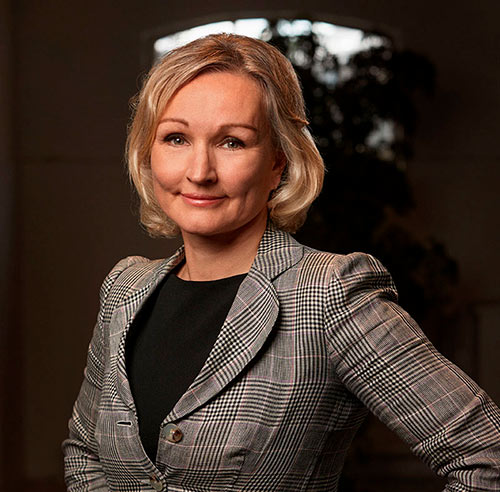
Only 9% of CEOs in Denmark’s 1,000 largest companies are women, Gerlach adds. The life science sector performs slightly better, with about a 20% of leadership and director level positions and 21% of board seats held by women.
By comparison, a report released by the industry organization SwedenBIO in January showed that 31% of Swedish biotech companies surveyed in the report have a female CEO.
“Norway introduced binding gender quotas for boards years ago, and Sweden and Finland have clearer targets, reporting practices, and accountability mechanisms. Denmark has largely relied on voluntary initiatives, which have produced much slower progress,” Gerlach says. “Most people in Danish society believe that we already have equality. But when you look at the data, it becomes clear that opportunities for men and women are still very uneven, not only in the top-layers of the industry, but also in the healthcare system.”
When we put credible data on the table and talk openly about it, we see action – from policymakers, from funders, and from institutions. That’s how change actually begins.
She references a white paper on women’s health that was published in Denmark in September 2025, showing that in 770 diseases women are diagnosed four years later than men, and only 4% of research funding is allocated to women’s health issues. The white paper was distributed to all parties in parliament. The data was so compelling that the Danish government announced in October 2025 that it will allocate DKK 160 million (EUR 21.5 million) to a new national research center in women’s health.
“When we put credible data on the table and talk openly about it, we see action – from policymakers, from funders, and from institutions. That’s how change actually begins,” Gerlach concludes.
Updated: April 17, 2026, 10:43 am
Published: March 7, 2026