“A scientific career does not need to follow a perfectly straight line”
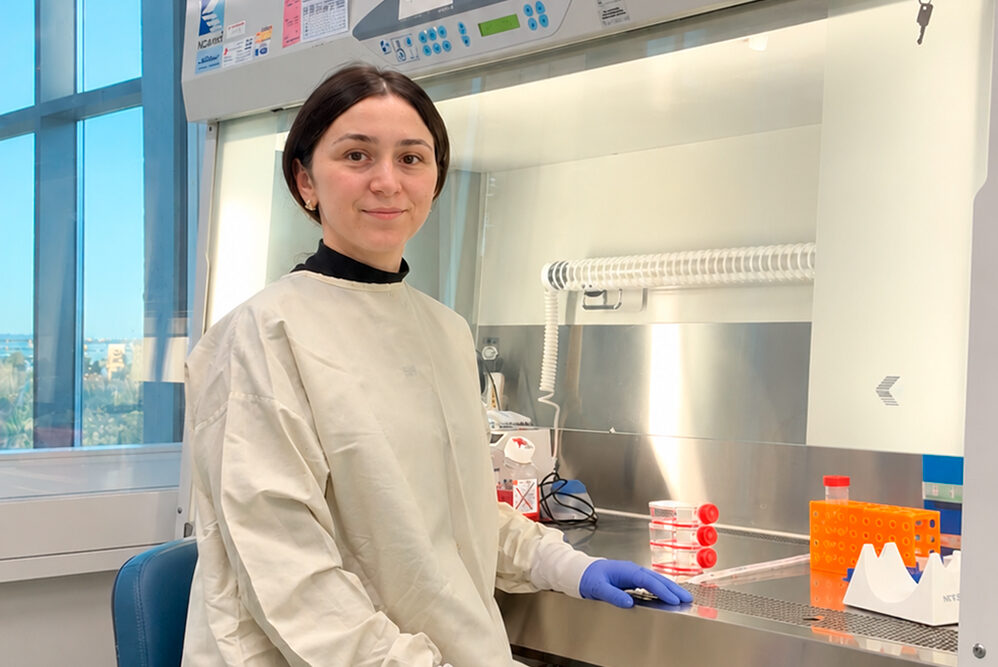
From chemistry to drug discovery: Postdoc Gulshan Amrahova on molecular glues, letting your interests evolve, and building a career beyond academia.
November 15, 2026


Gulshan Amrahova is a postdoctoral researcher at the SciLifeLab Drug Discovery and Development (DDD) platform, with Uppsala University as her host university.
What sparked your interest in science and in your specific field?
“Science has been part of my life since childhood. My grandmother was a chemistry teacher, and my father is an engineer, so I grew up surrounded by people who were always curious to understand how things work around us. I think that environment inspired my own interest in science.”
“I initially chose to study chemistry because I was fascinated by molecules and the way they interact. However, as I progressed, I found myself increasingly interested in what happens inside our bodies: how biological processes work, how they can be regulated, and how something going wrong can lead to disease.”
Can you describe your current research project?
“Molecular glues (MGs) are at the heart of my current project. MGs are molecules that can promote interactions between proteins that might not otherwise happen. From a drug discovery perspective, this proximity-inducing mechanism offers a versatile therapeutic strategy, as these molecules can modulate cellular pathways either by directing specific target proteins for degradation or by stabilizing functional protein complexes. However, identifying these molecules and understanding how they work in a cellular environment is challenging.”
I find this project especially exciting because of its interdisciplinary approach, bringing together complementary fields to address a major bottleneck in modern drug discovery.
“The goal of my project is to develop and integrate techniques that identify these molecules directly in cells, bringing the discovery process into the biological context in which they must function. I find this project especially exciting because of its interdisciplinary approach, bringing together complementary fields to address a major bottleneck in modern drug discovery.”
Can you describe your career path and your career choices so far?
“My career path began with chemistry. Although I enjoyed the subject, I gradually realized that answering the scientific questions I was most curious about required working at the interface of chemistry and biology. This realization guided me to my current role.”
One of the most important decisions I made was to allow my interests to evolve rather than feel I had to follow my original path.
“Looking back, one of the most important decisions I made was to allow my interests to evolve rather than feel I had to follow my original path. I have learned that a scientific career does not need to follow a perfectly straight line. Recognizing what genuinely interests you and remaining open to new directions can be just as important as the choices you make along the way.”
Do you have any advice for someone exploring a career in science today – whether students, career switchers, or early-career researchers?
“My advice would be to stay curious and give yourself permission to explore. You do not need to know exactly what you want to specialize in at the beginning of your studies. Sometimes, discovering what interests you most takes time, and your direction may change as you encounter new questions and opportunities.”
Modern life science increasingly brings together different disciplines, technologies, and ways of thinking.
“I would also encourage people to develop skills beyond their immediate area of expertise. Modern life science increasingly brings together different disciplines, technologies, and ways of thinking. Being open to learning new methods can create opportunities that you might not have anticipated.”
“Finally, be realistic about the challenges of a scientific career, but do not assume that academia is the only way to stay connected to science. There are many ways to contribute to research and innovation. Find the questions that excite you, build your skills, and remain open to where they might take you.”
How would you describe the job market within your field of expertise?
“The job market in life science can be challenging, particularly in academia, where opportunities are often influenced by funding availability, competition, and the short-term nature of some research positions. Building a stable career can take time, and it is important to be aware of that reality. I believe that combining strong scientific knowledge with transferable skills is increasingly in demand.”
Published: November 15, 2026