White paper: Systemic barriers preventing women from reaching leadership roles

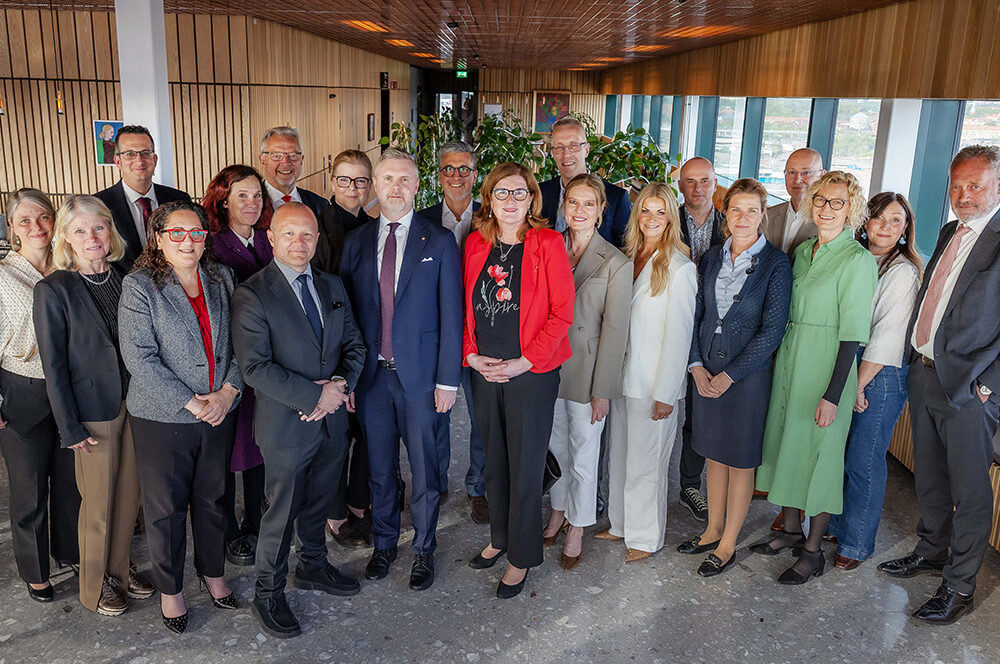
The Nordic life science sector is losing highly qualified female talent in top leadership positions, according to a new white paper published by Women in Life Science Denmark (WiLD), WiLD Norway, and VILDA Sweden.
April 20, 2026


Despite women representing the majority of the highly educated workforce in the life science sector, they remain underrepresented in executive teams, boardrooms, capital allocation forums, and other key decision-making roles positions where organizational and financial power is concentrated, the authors state.
Three out of four female leaders have encountered barriers
The report, based on insights from 212 senior professionals across the Nordic region, shows that three out of four female leaders have encountered barriers during their careers particularly at the point where expertise is expected to translate into formal authority.
“The Nordic life science sector does not have a talent problem. It has a conversion problem. The system is not consistently turning qualified women into decision-makers,” says Lene Gerlach, Chair of WiLD Denmark.

The power loop: How female leadership and women’s health reinforce each other
In a region celebrated for gender equality, the life science sector tells a different story: women dominate the workforce in many jobs yet remain sidelined in leadership, funding, and research – with consequences that ripple across public health and economic performance.
Barriers emerge where power concentrates
The report identifies a consistent structural pattern across the Nordic countries: Mid-career is the critical bottleneck where careers either convert into senior leadership, or stall, access to networks, sponsorship, and visibility becomes more decisive than performance alone, and closest leaders and top management both enable careers and control access to opportunity.
One in five respondents report having experienced harassment or exclusionary behaviour, highlighting that barriers are reinforced not only structurally, but also through how power is exercised in practice.
The findings also show that men are more frequently identified as contributors to barriers, reflecting how leadership and decision-making power are currently distributed, while both men and women are almost equally represented as sources of support. At the same time, support structures weaken as responsibility increases, creating a structural bottleneck just below the highest levels of leadership.
A systemic issue
The white paper challenges a widely held assumption: that increasing the number of qualified women will naturally lead to more balanced leadership. Instead, it concludes that the issue lies in how leadership systems operate including access to visibility, sponsorship, and decision-making arenas. Progression is not determined by competence alone, but by proximity to decision-making power.
If the Nordic model cannot translate talent into leadership in life science, across industry, academia, and health care, we need to question how well the system is working.
“This is not only about leadership, but about who controls the money and makes the decisions, be it boards, public committees, and private capital forums. These are where decisions about research and innovation are made, which ultimately funnel what our care systems deliver. If the Nordic model cannot translate talent into leadership in life science, across industry, academia, and health care, we need to question how well the system is working,” remarked Chelsea Ranger, Chair of WiLD Norway.
“If the Nordic life science sector does not fully utilize its leadership talent, it risks limiting both innovation and long-term competitiveness. This is not only about representation, it is about ensuring that the best ideas, expertise, and perspectives are brought into decision-making at the highest levels,” adds Christina Östberg Lloyd, Chair of VILDA Sweden.
17 concrete recommendations
The report calls for a shift from isolated diversity initiatives to system-level changes in how leadership pipelines, sponsorship, and access to power are structured.
To support this shift, the white paper outlines 17 concrete recommendations targeting companies, boards, investors, and policymakers focused on increasing transparency in leadership pathways, strengthening sponsorship, and expanding access to decision-making and capital allocation arenas.
Key priorities include: Make leadership pathways transparent, formalise sponsorship at senior levels, open access to decision-making arenas, increase transparency in board and recruitment processes, and track and act on leadership data.
Published: April 20, 2026