Scientists Fighting Back
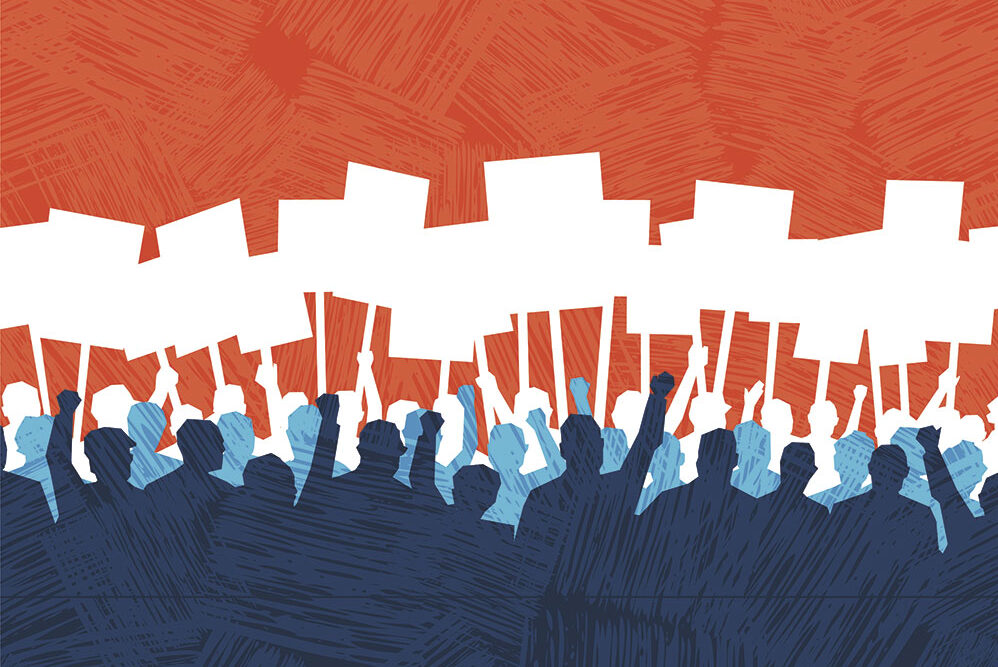
Many observers and most of the scientific community agree; the outlook for scientific research in the US has never been more uncertain.
March 30, 2026


The New York Times called 2025 the “worst year for the American scientific enterprise in modern history.” About 5,844 grants from the National Institutes of Health (NIH) and 1,996 grants from the National Science Foundation (NSF) were cut or put on hold, at a cost of about USD 29.86 billion, according to Nature. Thousands of researchers and staff in scientific agencies were laid off, including thousands from the National Oceanic and Atmospheric Administration and NASA. Grant applications are now subject to federal scrutiny and money is allocated to projects of which the administration approves.
Still, the events of 2025 put the scientific community on alert and prompted groups to mobilize and find ways to defend science and spread the word about the impact of the cuts.
The new year has brought some hope. In February, the US Congress rejected a proposal from President Donald J. Trump to cut NIH funding by another 40 percent and the agency even managed to get a budget increase of USD 415 million. Still, the events of 2025 put the scientific community on alert and prompted groups to mobilize and find ways to defend science and spread the word about the impact of the cuts.

US life sciences under Trump
While reports of federal cutbacks across the US health, life sciences, and research landscapes continue to fuel anxiety among scientists, the situation may not be as dire as people fear, according to one investor.
Defending science
One such group, Stand Up for Science, was founded in February 2025 by scientists and others and a month later was able to hold 30 Stand Up for Science rallies across the US. Its three founding goals are to safeguard and grow scientific funding, end any political censorship of science, and provide opportunities for all people to pursue science. More rallies are scheduled throughout this year, and members continue to lobby Congress to prevent further funding cuts to scientific research. Another National Day of Action was scheduled for March 7, with rallies in support of science across the US and abroad.
We all work together and are aligned to make more of a push to get scientists communicating what science is doing and how it is making the world a better place.
Science for Good is another group formed to respond to the Trump administration’s efforts to diminish and defund science. The group is led by early career scientists and graduate students, and one of its primary goals is to connect scientists with communities to show the importance of science to the public good.
“We all work together and are aligned to make more of a push to get scientists communicating what science is doing and how it is making the world a better place,” says Emma Courtney, Science for Good’s co-founder and president.

Emma Courtney, a PhD candidate at Cold Spring Harbor Laboratory in New York and a National Science Foundation (NSF) graduate research fellow studying breast cancer, grew up hearing discussions around science and was troubled by statements during Trump’s first term about climate change not being real. She became aware of public mistrust of science that grew over several years, and which she feels came to a head in 2025.
Courtney is also a science policy intern at the New York State Attorney General’s Office.
“They are breaking down the US science enterprise, restricting what can be studied and poking holes in the walls of science,” she says. “I always believed the US was leading in scientific enterprise, and to see efforts being made to break that down and hinder its effectiveness is hard.”
It’s about how scientists bring science into conversations and counter misinformation.
One approach her lab, the Cold Spring Harbor Lab, is taking to promote science is called SCOPE, which trains graduate and post-graduate students in how to communicate science to politicians and the public. “It’s about how scientists bring science into conversations and counter misinformation,” Courtney describes.
Another effort involves collaborating with breweries to introduce patrons to science through information on beer bottle labels. Called Brewing Science, it has launched in Portland, Oregon, and North Carolina, and pilot programs are planned in 12 other cities.
Turning away from science
While a variety of factors no doubt contribute to Americans turning away from science, pressures in peoples’ everyday lives could be one cause, believes Courtney.
Being able to pursue science means basic needs have been met, and with immigration issues, high food prices, and insurance cuts, people are stressed every day.
“One thing is true, being able to conduct science is a privilege,” she says. “Being able to pursue science means basic needs have been met, and with immigration issues, high food prices, and insurance cuts, people are stressed every day. In these circumstances, it’s easy for science to become a casualty. Fewer discoveries are made when basic needs are not met.”
Funding cuts and mistrust in science are hurting not just current research in the US, but also future endeavors, as well as discouraging international scholars from studying in the US. More American researchers also are choosing to work and study abroad if their funding is, or might be, cut.
“If you’ve dedicated your life to studying something, you are not going to change topics,” Courtney says. “More people are looking at jobs overseas.”
Depriving the country of valuable talent
Courtney’s own research involves investigating how genetic and environmental factors shape cell plasticity in treatment-resistant metastasis, specifically how infections can affect breast cancer treatments.
“It was really important to get into graduate school – it gave me peace of mind,” Courtney says. Fewer research projects like hers are being funded and more federal grants are going to fields such as computer technology, she adds.
The types of projects getting priority also limit the pool of people seeking to study in the US, further depriving the country of valuable talent.
“We are minimizing who we are inviting in to be a scientist,” Courtney continues. “We have completely reversed our efforts to expand. We are limiting what people can study and who can study.”
We’re not attracting the top minds.
The result is that America could be missing out on a generation of people doing critical scientific research.
“Fewer people are willing to work in the US,” notes Courtney. “We attracted the best scientists in the world, now fewer people are coming here and attending conferences. They won’t be doing work here. We’re not attracting the top minds.”
Updated: April 15, 2026, 09:25 am
Published: March 30, 2026