What the previous government did well and what to expect now
After three decades in the industry, I can conclude that decision-makers have a growing understanding of the strategic importance of Swedish life science. After all, this is where highly skilled jobs are created and the image of Sweden as an innovative nation is fostered, not to mention the economic surplus generated by life science exports.
November 22, 2026


So, what did the previous government achieve that benefits the growth of our industry? Several things come to mind. To begin with, SweTrial went from theory to practical implementation during the previous government’s tenure. The SweTrial partnership is run by the Swedish Medical Products Agency through a secretariat, with a council of all partners that sets priorities and follows up on progress. Its purpose is to make Sweden more attractive to companies running clinical trials, which has the added benefit of speeding up patients’ access to new treatments.
Among the new budget allocations was the Program for Advanced Life Science, which many of us in the industry had been lobbying for.
The previous government also allocated what it described as a record budget to life science in the research bill it presented in December 2024. Among the new budget allocations was the Program for Advanced Life Science, which many of us in the industry had been lobbying for. The program, now in its second year, is meant to strengthen the development of next-generation technological solutions through research, innovation, and collaboration in strategic areas.
Giving with one hand and taking with the other does not strengthen the system as a whole.
Earlier this year, a public inquiry proposed a new tax incentive for research and development, expected to enter into force on January 1, 2027. The proposal, amounting to SEK 8 billion annually, has been high on the Swedish life science sector’s wish list. It will put Sweden firmly among the most attractive places to do research, matching or exceeding similar tax incentives already in place or planned in other EU countries. At the same time, it is worrying that the proposal would finance this initiative with funds from the budget of Vinnova, Sweden’s innovation agency. Giving with one hand and taking with the other does not strengthen the system as a whole. This is especially true since Vinnova’s initiatives are matched one-to-one by industry funding. If Vinnova is forced to reduce its investments in research and innovation, industry’s investments will fall by the same amount. The system loses out twice. It is important that the incoming government moves this proposal forward, but without cutting Vinnova’s funding.
In addition to the concrete actions mentioned so far, my impression is that life science has climbed higher on the political agenda, and several ministers in the previous government acknowledged the industry’s importance to Sweden.
An important initiative came in March 2026, when the government commissioned an inquiry to review the Swedish pricing and reimbursement system. The inquiry will analyze how the government’s responsibility for medicines and vaccines can be expanded and reorganized, and present proposals. The aim is to fix today’s fragmented setup, where financing and processes are split between the state and the 21 regions, and key processes lack national coordination. This will be crucial for creating better incentives to launch medicines in Sweden and, in the long run, for fostering innovation and development. Also noteworthy is the government’s firm stance in the negotiations on the EU pharmaceutical legislation package. It argued for maintaining data protection for new drugs, recognizing its importance to companies’ willingness to develop and launch drugs in the EU. A rare example of Swedish firmness in the EU.
Many policies and systems still need to be improved to strengthen Swedish life science in the face of increasingly fierce global competition.
All in all, one must give credit where it is due. The previous government delivered for Swedish life science on some important issues. That said, many policies and systems still need to be improved to strengthen Swedish life science in the face of increasingly fierce global competition. In fact, SwedenBIO’s policy platform (Kraftsamling för life science) contains 34 concrete proposals for strengthening the industry. While a few have been addressed, we remain committed to seeing many more become reality in the years ahead.
Managing the consequences requires coordinated action within the Government Offices across industrial, healthcare, research, and trade policy, as well as EU affairs.
If I were to pick one proposed measure for the new government to implement, it would be to give the government’s life science office a substantial budget and mandate. The challenges our industry is facing are multifaceted and span a wide range of policy areas. Managing the consequences requires coordinated action within the Government Offices across industrial, healthcare, research, and trade policy, as well as EU affairs. That is precisely the role a life science office is meant to fill. With sufficient muscle, the office could provide much-needed national leadership, with an overview of and responsibility for the complex ecosystem that makes up our industry.
about the author

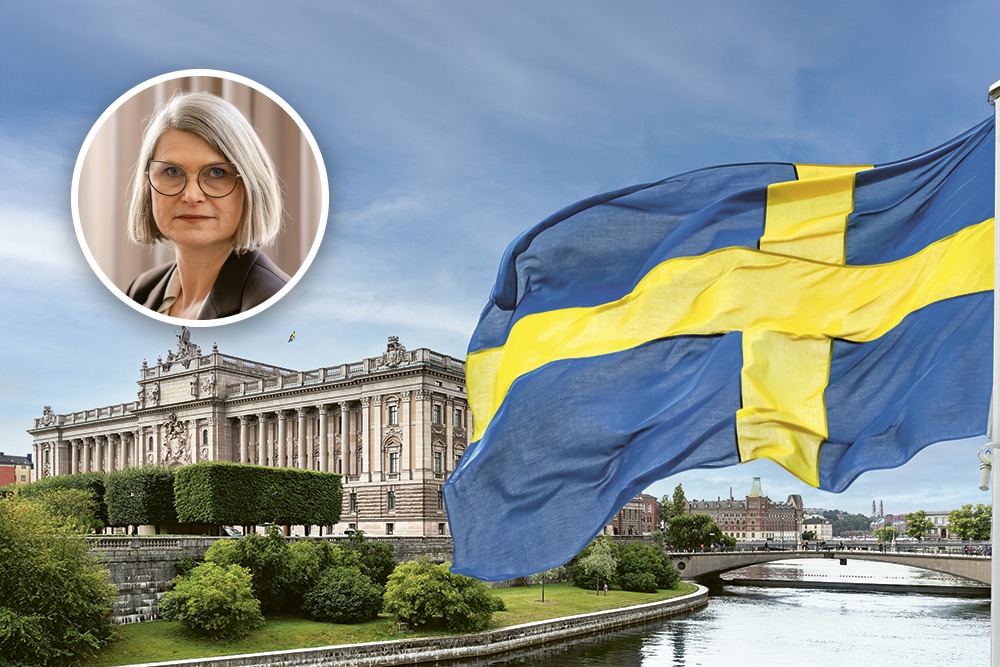
Jessica Martinsson is the CEO and Director General of SwedenBIO, the national trade organization for life sciences in Sweden. SwedenBIO is a recurring columnist in NLS magazine. This column was originally published in NLS No 04 2026, out November 2026. Photo: Eva Garmendia
Published: November 22, 2026