Chemistry Nobel solves a mirror-image puzzle
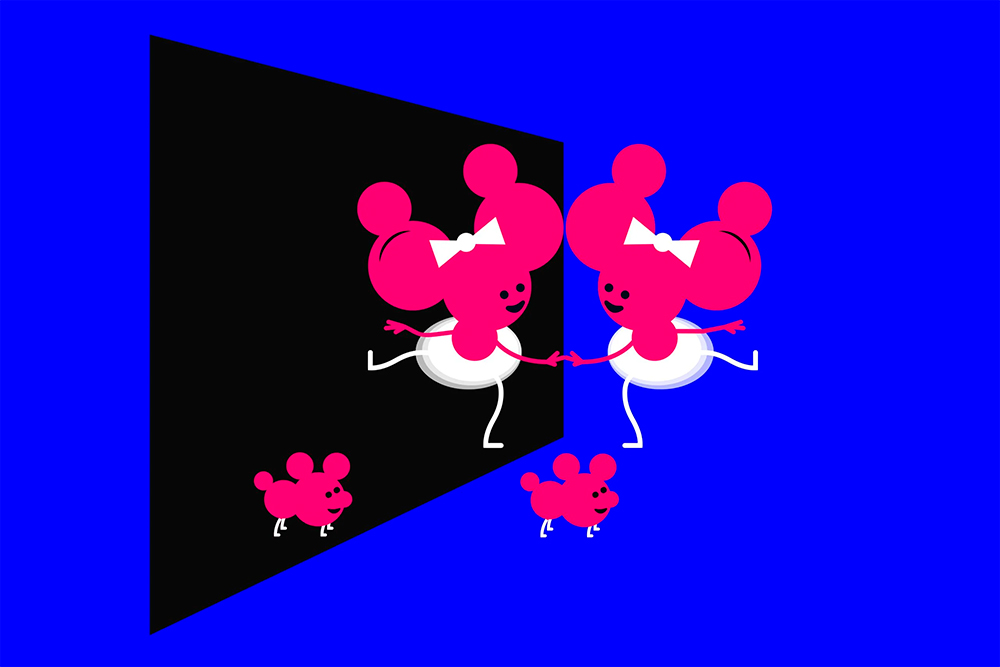
Henri B. Kagan and Kenso Soai are awarded the Nobel Prize in Chemistry 2026 for discovering how chemical reactions can produce only one of two mirror-image molecules. Their work shows how this kind of asymmetry can arise, and has been decisive for chemists designing reactions to make pharmaceuticals.
October 7, 2026


The prize was awarded “for the discovery of non-linear effects and autocatalysis in asymmetric organic synthesis.”
Many of the molecules of life, including amino acids, exist in two forms that are mirror images of each other, much like a left and a right hand. Living organisms, however, use only one of them. The proteins in our cells are built entirely from one form of amino acid, while the other form is rarely found in nature. Chemists call this property homochirality, from the Greek words for “same” and “hand.”
How homochirality could emerge has long puzzled chemists. When they ran reactions that could form two mirror-image molecules, they always ended up with equal amounts of each. That was a practical problem as well as a theoretical one, because when a molecule is designed to interact with the body, as a drug is, usually only one of the two mirror images has the desired effect.
“Henri Kagan and Kenso Soai have provided a solution to a chemical mystery that is over a century old: how homochirality can emerge spontaneously. The chemical reactions they have developed are spectacular,” says Heiner Linke, Chair of the Nobel Committee for Chemistry.
From mystery to method
Kagan took the first decisive step in 1986, when he discovered a new way of steering chemical reactions. This let him produce a larger excess of one mirror image than had previously been thought possible.
Soai took the work further. In a key 1995 publication, he described the first chemical reaction designed with the potential to be homochiral. In 2003, he succeeded, presenting a reaction that formed only one of the two possible mirror images. Before that, only life itself had achieved this.
Right molecule, right effect
For drug developers, this matters in practice: producing the right mirror image can determine whether a medicine works as intended, which is why their discoveries have shaped how chemists design reactions for pharmaceutical manufacturing.
The prize builds on a field that has been recognized with Nobel Prizes before: asymmetric catalysis in 2001, and asymmetric organocatalysis in 2021.

A third type of catalysis
The Nobel Prize in Chemistry 2021 shed light on a simple, sustainable and smart molecular building tool that has had a great impact on pharmaceutical production.
The laureates
Henri B. Kagan, born 1930 in Boulogne-Billancourt, France. PhD 1960 from Collège de France, France. Professor Emeritus at the then Université Paris-Sud, France.
Kenso Soai, born 1950 in Hiroshima, Japan. PhD 1979 from University of Tokyo, Japan. Professor Emeritus at Tokyo University of Science, Japan.
Published: October 7, 2026