Pedaling through Iceland to advance multiple myeloma research
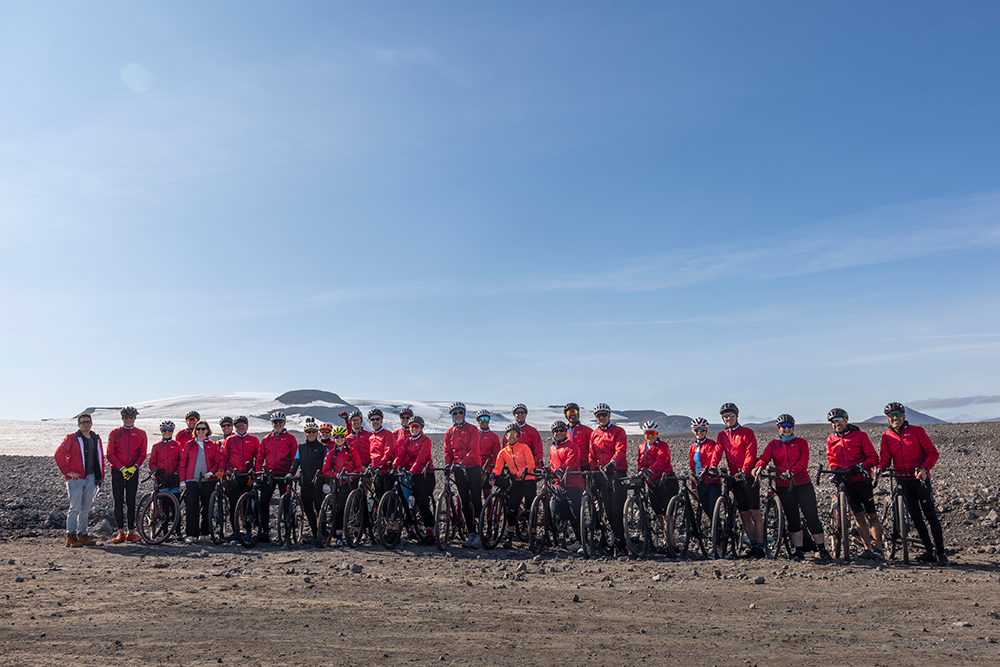
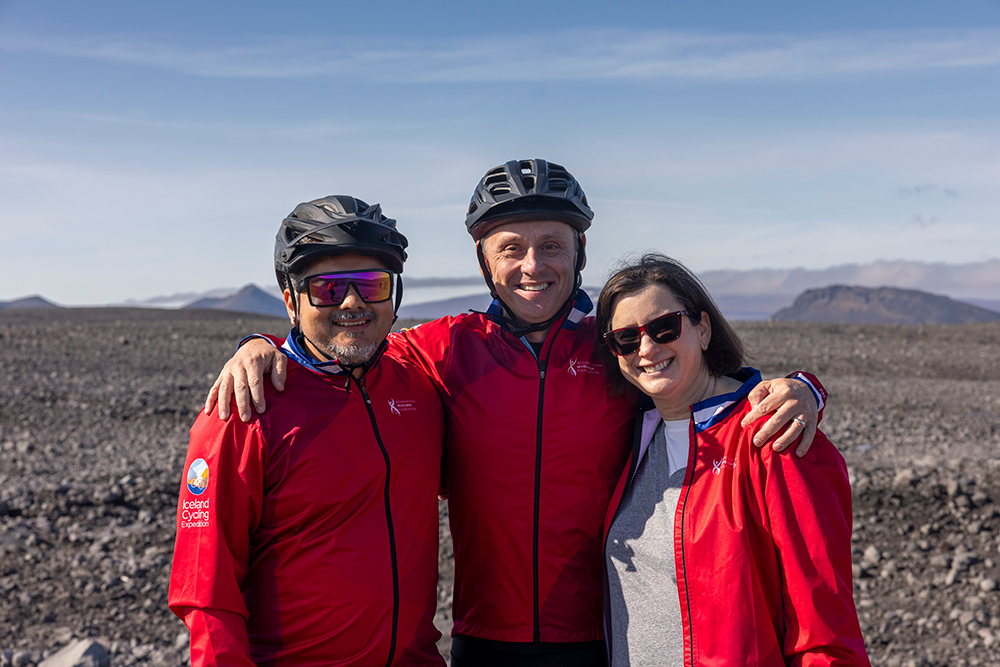
From August 18 to 24, 2026, patients, physicians, caregivers, and supporters from around the world embarked on a six-day cycling expedition across Iceland with the purpose of accelerating research into multiple myeloma.
August 31, 2026


Nordic Life Science asked Heather Cooper Ortner, President and CEO of the International Myeloma Foundation (IMF), about its third annual Iceland Cycling Expedition, multiple myeloma research, and her hopes for future treatments for this incurable blood cancer.
What are the benefits of bringing together the myeloma community through the Iceland Cycling Expedition?
“Cycling across Iceland is not for the faint of heart. The terrain is challenging, the weather can change quickly, and every rider has to keep moving forward even when the road ahead is uncertain. In many ways, that reflects the experience of living with myeloma.”
Patients and families see that they are not facing myeloma alone, while clinicians and researchers are reminded in a very personal way of the people at the center of the work we all do.
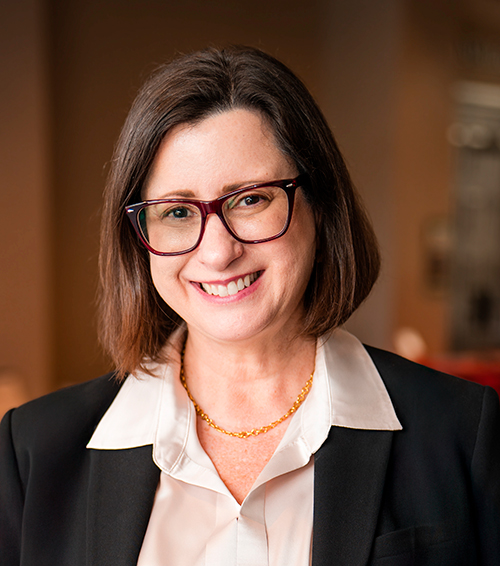
“What makes this expedition so meaningful is that it brings together patients, care partners, healthcare professionals, researchers, and advocates as one community. There is tremendous power in that shared experience. Patients and families see that they are not facing myeloma alone, while clinicians and researchers are reminded in a very personal way of the people at the center of the work we all do. That connection – between science, care, community, and the lived experience of myeloma – is incredibly important.”
What are your hopes and expectations for this year’s expedition?
“I hope this year’s expedition raises awareness of myeloma in Iceland, the US, and around the world, particularly among people who may know very little about this disease. But I also hope it sends another message: a cancer diagnosis does not define the limits of someone’s life. The riders on this expedition are a wonderful example of that. They are taking on an extraordinary physical and emotional challenge, and in doing so they are showing what it means to continue living fully – with purpose, connection, and hope – after a myeloma diagnosis.”
What impact have the Icelandic iStopMM study (the world’s largest cancer screening study of its kind) and research conducted in Iceland had on screening for myeloma?
“iStopMM has given us an extraordinary opportunity to understand what happens when we look for myeloma and its precursor conditions at a population level rather than waiting for people to develop symptoms. Through the IMF’s Black Swan Research Initiative, researchers in Iceland screened more than 75,000 people, creating an unprecedented body of knowledge about MGUS, smoldering multiple myeloma, and the evolution of the disease.”
“Among the important findings, iStopMM has shown that MGUS is more common than many people may realize, that large-scale screening is feasible, and that screening can identify precursor disease and myeloma earlier. People whose myeloma was identified through screening had fewer complications at diagnosis, including less kidney disease and fewer bone lesions and fractures. The research has also helped refine diagnostic criteria so that we can reduce unnecessary diagnoses and better understand which people with precursor conditions are at greater risk of progressing to active myeloma. Importantly, the study has also helped answer concerns about the potential psychological impact of telling someone they have MGUS; so far, learning about an MGUS diagnosis has not been associated with worse psychological well-being.”
iStopMM has already fundamentally changed what we know about the earliest stages of myeloma and is helping us move toward a future in which we can identify who is at risk, intervene at the right time, and ultimately prevent myeloma from developing at all.
“What we do not yet know is whether population-wide screening will ultimately improve survival or prove cost-effective. Those are important questions that require longer follow-up. But iStopMM has already fundamentally changed what we know about the earliest stages of myeloma and is helping us move toward a future in which we can identify who is at risk, intervene at the right time, and ultimately prevent myeloma from developing at all.”

Icelandic study changes the definition of multiple myeloma precursor condition
Findings from the major study iStopMM has been used to redefine monoclonal gammopathy of undetermined significance (MGUS), a precursor to multiple myeloma. We spoke with Þórir Einarsson Long, one of the authors of Defining new reference intervals for serum free light chains in individuals with chronic kidney disease: Results of the iStopMM study, published in […]
Which recent R&D and treatment developments in multiple myeloma are you most excited about?
“The recent FDA accelerated approval of iberdomide is one of the developments I am most excited about because it represents much more than the approval of an important new treatment for patients. It is also the first approval of a new myeloma drug based directly on minimal residual disease, or MRD, as an early endpoint – and the result of nearly a decade of work by the IMF and our i2TEAMM initiative.”
“Traditionally, myeloma clinical trials take many years for endpoints such as progression-free survival to mature before a new therapy can be approved. i2TEAMM brought together leading myeloma researchers, statisticians, clinicians, patients, industry, and regulators from around the world to build the evidence demonstrating that MRD can tell us much earlier whether a treatment is working and predict longer-term outcomes. That work contributed to the FDA’s Oncologic Drugs Advisory Committee (ODAC) voting unanimously in 2024 to support MRD as an early endpoint for accelerated approval, followed by FDA draft guidance earlier this year.”
For me, the iberdomide approval is a powerful example of what can happen when the IMF brings the right community together around a problem and stays with it until the science translates into meaningful change for patients.
“Now we are seeing what that work can mean for patients. Iberdomide was approved while its phase 3 trial continues to follow patients for progression-free survival. That is exactly the opportunity we saw in MRD: maintaining rigorous scientific standards while potentially taking years out of the process of getting effective new therapies to patients who need them.”
“I’m also excited about what this represents for the future of myeloma research. We continue to see remarkable advances in immunotherapies, new drug classes, and increasingly personalized approaches to treatment, while also learning how to identify and intervene earlier in the course of disease. But we have to innovate not only in the treatments we develop, but in how we study and approve them. For me, the iberdomide approval is a powerful example of what can happen when the IMF brings the right community together around a problem and stays with it until the science translates into meaningful change for patients.”
What are the biggest challenges involved in developing effective treatments for multiple myeloma?
“One of the greatest challenges – and one of the reasons continued research is so important – is that myeloma is not one disease that behaves the same way in every person. It is extraordinarily heterogeneous. Two patients can have the same diagnosis and yet experience very different disease courses and respond differently to treatment. We need to become increasingly precise about who needs treatment, when they need it, and which treatment is most likely to benefit them.”
“We can’t talk about developing effective treatments without talking about access. Myeloma is twice as common in people of African descent, yet African American and Latino/Hispanic patients can face delays in diagnosis and barriers to accessing specialists, novel therapies, and clinical trials. A breakthrough only fulfills its promise if the patients who need it can actually benefit from it. That means designing clinical trials differently: using broader and clinically justified eligibility criteria, discussing trials earlier, opening more studies in community settings, providing multilingual and culturally competent education and patient navigation, addressing travel and financial barriers, and bringing as much of the trial as possible closer to where patients live.”
The more we can responsibly use validated earlier endpoints and build more efficient clinical trial infrastructure, the faster we can answer important scientific questions and get effective treatments to the patients who need them.
“We also have to address the time it takes to generate evidence and bring advances to patients. Large phase 3 studies can take many years to complete, particularly when we must wait for traditional endpoints such as disease progression. The more we can responsibly use validated earlier endpoints and build more efficient clinical trial infrastructure, the faster we can answer important scientific questions and get effective treatments to the patients who need them.”
About Multiple Myeloma
Multiple myeloma starts in the plasma cells of the bone marrow. It weakens the immune system and can affect many parts of the body by causing the bone marrow to create dysfunctional antibodies and plasma cells.
Source: myeloma.org
Updated: October 14, 2026, 02:21 pm
Published: August 31, 2026