Björn Odlander on HealthCap’s long-term bet
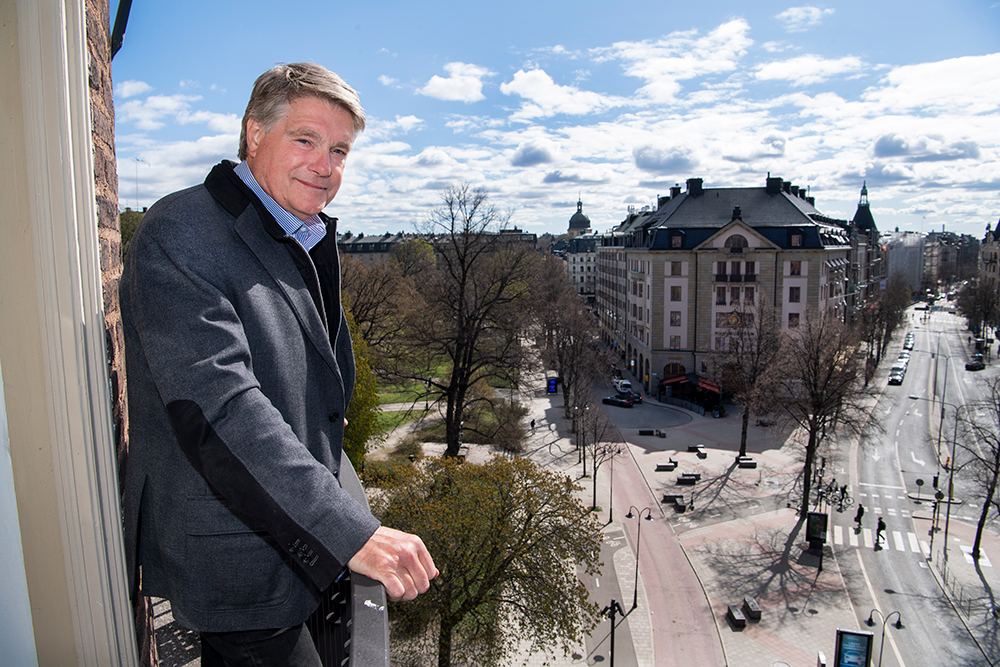
As HealthCap marks 30 years of life science investing, co-founder Björn Odlander reflects on the firm’s long-term approach, the journey from lab to patient, and Europe’s widening capital gap.
September 24, 2026


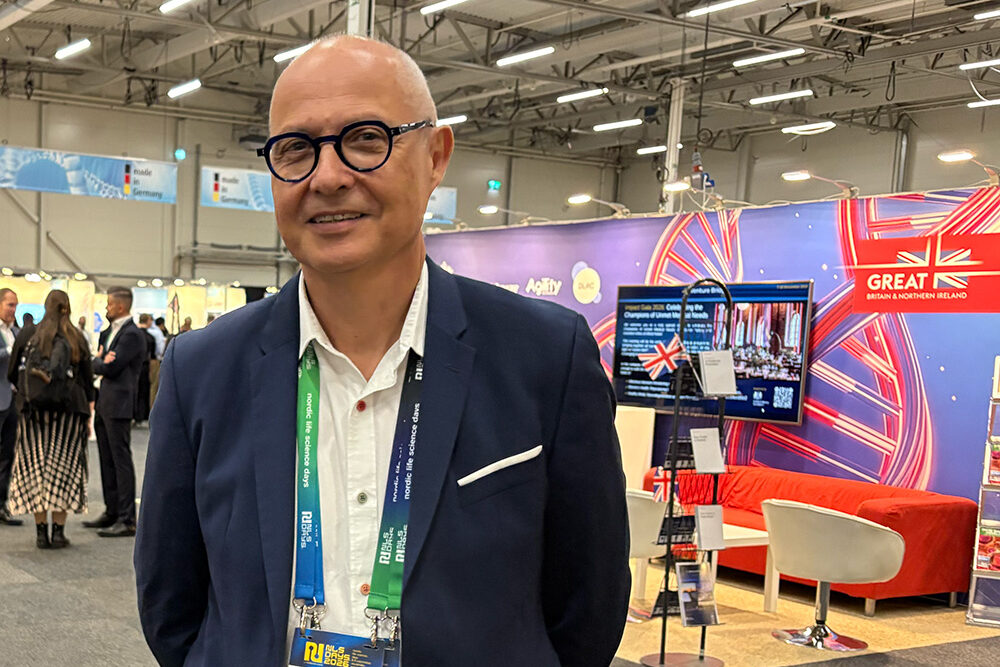
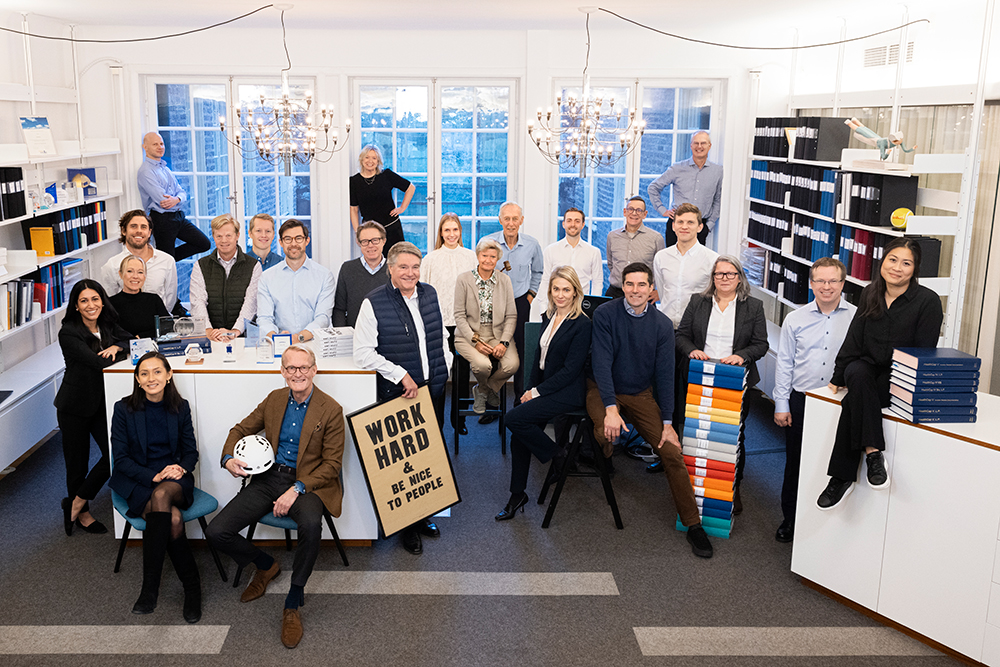
A visit to venture capital (VC) firm HealthCap’s office in Stockholm quickly reveals something about the firm itself. The atmosphere is warm and personal, filled with furniture, art, and objects handpicked over the years by co-founder Björn Odlander.
The space has taken shape through objects selected for their character and authenticity, then kept because they continue to matter. “More or less, every item has a story. It’s been something that has evolved with us,” Odlander says when I meet him.
The firm has financed 136 portfolio companies and supported 48 companies through IPOs on 14 different markets.
The same combination of careful selection and conviction runs through HealthCap’s portfolio. “Our business is very much to be there for the long run. If you want to be serious in life science VC, you need to have a multi-year perspective. Sometimes maybe a bit too long for financial investors. But, on the other hand, the returns are good when they arrive, and your reward is not only financial, it’s also in impact,” says Odlander.
As HealthCap enters its fourth decade, that philosophy is reflected in the scale of its track record. The firm has financed 136 portfolio companies and supported 48 companies through IPOs on 14 different markets.
From medical research to venture capital
Björn Odlander’s route into VC began in medicine. During his studies at Karolinska Institutet, he was recruited into the laboratory of Bengt Samuelsson, shortly before Samuelsson was awarded the 1982 Nobel Prize in Physiology or Medicine for his discoveries concerning prostaglandins and related biologically active substances.
That experience gave him a close view of the scientific rigor, methodology, and international environment surrounding world-leading research. After completing his medical degree and a PhD in medical chemistry, he moved into investment banking before establishing HealthCap in 1996 with Peder Fredrikson.
“I would say my identity as a person is still being a medical researcher,” he says.
The medical background continues to shape where HealthCap begins when assessing an investment. “We are not trying to figure out what a consumer might fancy in the future. We address hardcore medical needs. That’s fundamental for our investing,” he explains.
Besides identifying a serious unmet medical need, HealthCap also looks for a profound understanding of the underlying disease biology and a credible explanation of how the proposed treatment will work. And they see no contradiction between medical impact and commercial returns. Understanding what patients, physicians and payors genuinely need can reduce risk and provide the foundation for a growing business.
“Our companies have so far brought 35 approved pharmaceutical products to the market, which is around 4-5% of all FDA-approved products during these 30 years that we have been active,” he says, and also points to approximately 100 approved medtech products developed by companies in their portfolio.
Thirty years later, the result is personal as well as professional. “It is really meaningful. What we are doing changes the lives of millions of people. That’s a very strong driver,” he says.
Two paths from science to patients
Two very different companies illustrate different stages of that journey: Bonesupport, which has grown from a research-based company in Lund into an international commercial business, and Oncorena, whose experimental kidney-cancer treatment emerged from an unexpected scientific observation. Bonesupport’s Cerament product is a synthetic bone substitute with bone-regenerative properties that can also deliver antibiotics directly at the site of an infection.
The transition from a promising technology to an international commercial company did not happen in a single step, explains Odlander. “That called for us to be engaged in not only product development but also the rollout of the product to the medical system, and launching the product not only in Europe, but importantly also in the US,” he says.
Eventually, HealthCap’s own role changed. “The whole idea of VC is that you hand over the baton to others to take it forward,” says Odlander, and he sees the company’s subsequent institutional ownership as an important part of its ability to continue as an independent business.
Oncorena represents a much earlier and more experimental side of life science investing.
Oncorena represents a much earlier and more experimental side of life science investing. Its story began when doctors treating people who had mistakenly eaten a poisonous mushroom observed that the toxin appeared to cause highly specific damage to the kidneys. Researchers isolated the active compound, orellanine, and investigated whether that specificity could potentially be directed against kidney cancer cells. The potential treatment presents a difficult medical trade-off because it may also eliminate a patient’s remaining kidney function.
Odlander nevertheless points to the profound unmet need among severely ill kidney cancer patients, particularly those who have already lost most or all of their kidney function. “Most cancer treatments are palliative, meaning that you just push forward the inevitable outcome. But what we hope for here is actually to cure the disease. It’s too early to tell if it works, but I’m hopeful,” he says.
Success has many parents
When the conversation turns to credit, Odlander is careful about the word “we”. First, you must remember that syndication is an important part of VC methodology, he says, and continues, “Which means that in all these successes, we share them with others.”
If we and others hadn’t put in the first money, or the second money, or the third money in the initial phases of the company, there would have been no companies that could do this.
A successful company will often have several VC firms supporting it at different stages, alongside founders, academic researchers, management teams, clinicians and eventual commercial partners.
What Odlander does emphasize is timing: “If we and others hadn’t put in the first money, or the second money, or the third money in the initial phases of the company, there would have been no companies that could do this. Without it, larger pharma and medtech companies would have far fewer mature projects to acquire, license or commercialize.”
He notes that much of the pharmaceutical industry’s innovation pipeline now originates in smaller research-based companies. Understanding how products reach patients therefore requires an understanding of the full ecosystem.
Europe’s capital gap
That ecosystem perspective underpins HealthCap’s decision to become a founding member of the European Life Sciences Coalition (ELSC), established in association with Invest Europe. Its members collectively manage more than EUR 24 billion in life science-specific assets and have invested in, or helped found, more than 1,400 life science and biotech companies. The coalition is calling on European leaders to treat life sciences as a strategic priority by mobilizing long-term public and private capital, developing deeper European capital markets, removing barriers to cross-border investment, and simplifying the path from research to patients. Its figures illustrate the challenge. Europe accounts for approximately 7% of global life science VC, compared with 63% for the US and 14% for China. Of 67 European biotech companies that went public during the six-year period examined by the coalition, 66 listed outside the EU.
The funding data point in the same direction, but measure different parts of the market. Early stage life science venture fundraising fell by more than 80% between 2021 and 2022. Despite some recovery, the 2024 level remained 46% below 2021. Separately, investment in early stage startups was 66% below its 2021 peak, while government agency commitments remained 31% lower than in 2021.
For Odlander, the numbers expose a deeper disconnect, and he says: “One must conclude that we finance growth in other economies, not in Europe. Europe does not lack science and it does not lack savings. What it lacks is a sufficiently strong connection between the two. We need structures that allow long-term European capital to support European innovation from discovery through commercial scale.”
That question leads him to one of Europe’s largest pools of capital, the European pension funds. “These funds invest only a very small fraction of their assets into VC. Which means that the big resource, namely capital, isn’t strategically used for growth in Europe,” he says. “Instead, those funds invest in US funds or in US enterprises that actually benefit from our work by acquiring our companies.”
The paradox is that European savings are already financing innovation – but too often they are financing it in Boston, San Francisco, or other markets. The question is whether we are prepared to let more of that capital build companies, employment and industrial capacity here.
The imbalance is particularly notable because Europe does not lack long-term savings. ELSC representatives have pointed to roughly EUR 10 trillion in European pension assets. They also estimate that the US raises roughly USD 60–80 billion annually for life sciences through VC and public markets, compared with approximately USD 5–6 billion in Europe.
“The paradox is that European savings are already financing innovation – but too often they are financing it in Boston, San Francisco, or other markets. The question is whether we are prepared to let more of that capital build companies, employment and industrial capacity here,” says Odlander.
He does not believe VC firms themselves should be transformed into large institutional organizations. “Running a VC firm is not something that you can institutionalize. It is really dependent on highly incentivized people who work not only to make money, but also for a cause,” he says.
It is a symbiosis where pension funds, university endowments, and charitable foundations all interact with venture capital to create an ecosystem that eventually leads to new products that drive economic growth and social benefits in many ways.
The two sides of the capital system are nevertheless interdependent, he adds. “We in turn go and ask institutional investors for their support and trust to sponsor us by investing in our funds. And so it is a symbiosis where pension funds, university endowments, and charitable foundations all interact with VC to create an ecosystem that eventually leads to new products that drive economic growth and social benefits in many ways.”
Returns beyond the fund
Odlander widens the lens from the performance of an individual fund to its effects on the wider economy. “When we are evaluated, it’s strictly on financial numbers, which is good. But, for instance, if you are a government, you benefit much more from other aspects of our business than the actual financial return.”
Pensions are not paid by financial returns on financial markets. They are paid by growth in the economy.
There is also a longer horizon to that value. HealthCap will exit a company or hand it over to larger institutional owners, but the medicines and medical technologies it helped bring forward can continue benefiting patients every day, often for many years. Once a healthcare product becomes established in clinical practice, a change of ownership does not end its impact. In that sense, the value created is much larger than the valuation of a company at the point of exit. It continues through patients treated, health outcomes improved and, in some cases, costs avoided elsewhere in the healthcare system. New companies also create employment and tax revenues and, over time, can contribute to economic growth and the formation of profitable, internationally competitive businesses. According to Invest Europe, biotech and healthcare companies backed by private equity and VC in Europe employed almost 1.4 million people at the end of 2023 and added 48,913 net new jobs during the year.
Odlander extends the same reasoning to the long-term sustainability of pension systems. “Pensions are not paid by financial returns on financial markets. They are paid by growth in the economy. Without growth in the economy, eventually there wouldn’t be any financial assets to pay out pensions from,” he says.
Governing for the long term
The question ultimately comes down to the incentives built into large financial institutions, according to Odlander.
It’s actually up to the politicians, then to the governing boards of the Swedish institutions, to adopt a policy that actually looks to a more long-term investment return.
“It’s all about how you govern the management of those institutions. Many financial institutions are strictly governed by short-term financial returns,” he says. “If you’re a financial manager at these institutions, of course you want to stay as close to your benchmark as possible. And introducing other asset classes that are not related to that index is a risk to those managers.”
That shifts the question from portfolio construction to institutional mandate.
“It’s actually up to the politicians, then to the governing boards of the Swedish institutions, to adopt a policy that actually looks to a more long-term investment return,” he says, and points to existing precedents.
“There are some institutions that have this. Actually, it’s very possible to do it, and so that’s a very actionable point.”
That raises a final question about where governments should intervene.
“Public capital should not replace private capital. Its most valuable role is to reduce risk at the earliest stages and attract specialist private investors who know how to build these companies. The objective should be a functioning ecosystem, not permanent dependence on public support,” says Odlander.
Thirty years on, there is a clear thread from the scientific rigor Odlander encountered as a young researcher in Bengt Samuelsson’s laboratory to the way HealthCap approaches investing. For Odlander, taking the long view ultimately means being one committed part of an ecosystem whose impact extends far beyond any single investment or exit.
Published: September 24, 2026