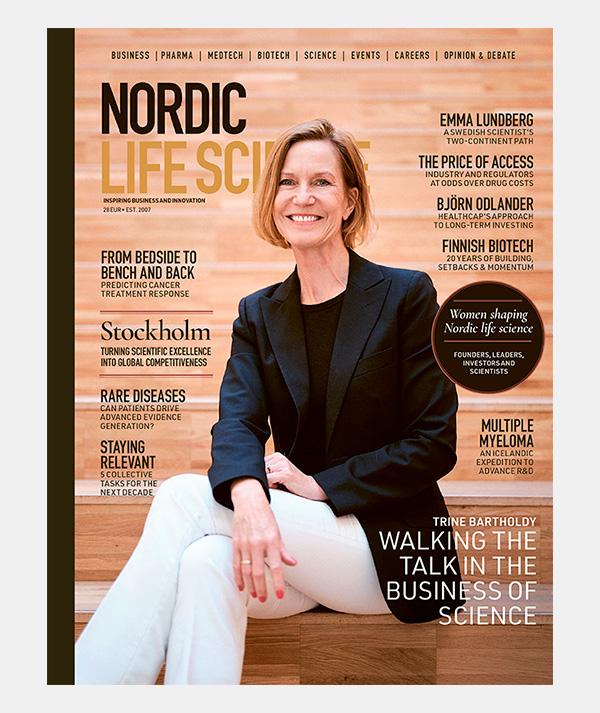
Ecosystem Architect: Trine Bartholdy
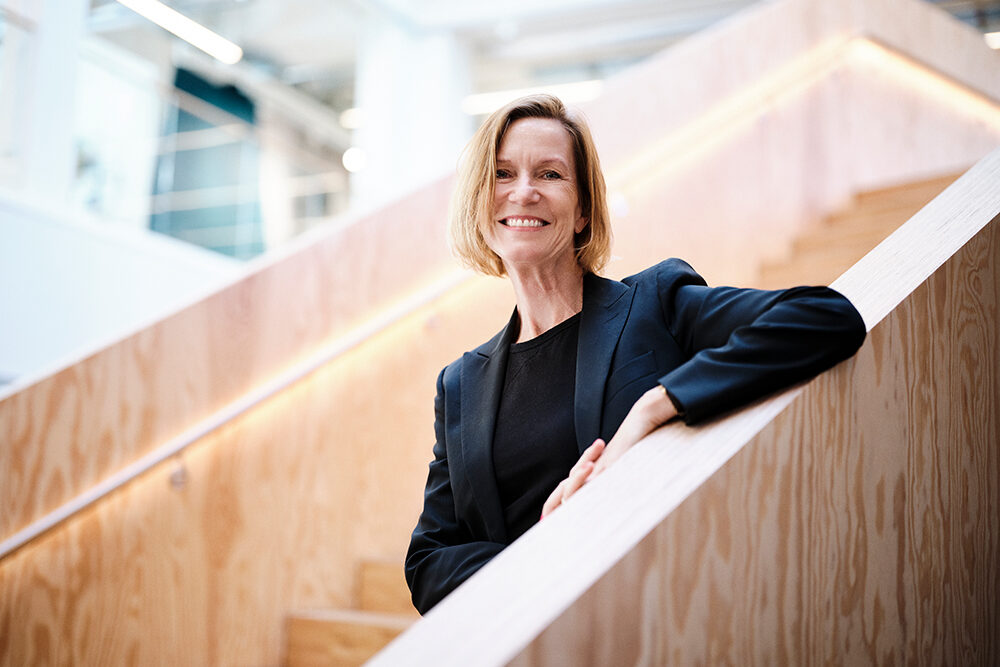
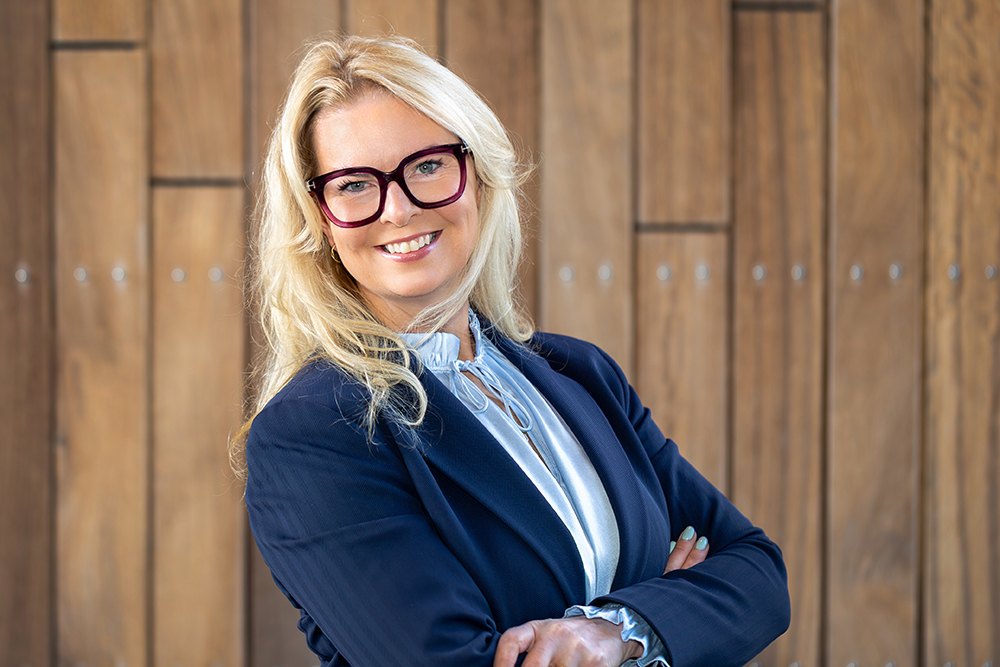
Trine Bartholdy has spent her career at the intersection of science and finance, helping early discoveries grow into companies capable of shaping the future of health. Now, as AI and global competition are reshaping the conditions for European life sciences, she and her colleagues at the BioInnovation Institute (BII) leverage decades of expertise to usher young Nordic companies toward entrepreneurial success.
September 30, 2026


As Chief Business Officer at BII, the Copenhagen-based incubator and accelerator, Trine Bartholdy works at the center of the Nordic ecosystem. Here, she guides founders, investors, and scientific teams through the fragile early stages of building life science ventures.
A peek at Bartholdy’s professional and academic background immediately shows a red thread that weaves through an MSc degree in finance, roles in private equity and life science venture capital (VC), a postgraduate degree in the development of pharmaceutical medicine, CEO positions in smaller medical organizations, and a handful of years at Novo Nordisk – to mention a few. Her resume ties together a picture of a professional right at the beating heart of life science business.
This – almost oddly specific – career path was exactly what she set out to pursue from the beginning, Bartholdy says.
“Back in the days where I had to pick what to study, I actually wanted to be a cell biologist, but the opportunities in those days were not as interesting as they are today. I decided to become a finance maker instead so I could work cross-functionally. I always knew I wanted to work in a scientific sector, but applying the economics part to it,” she says.
After more than 20 years at this crossroads of science and capital, Bartholdy still thrives in enabling strong ideas to mature into solid businesses, and points out that she’s more drawn to roles where her work has a real impact, rather than to titles.
The team is the foundation
She’s been at BII for the past six years – and since the organization itself has been operating for eight years, it means she’s been part of much of its journey thus far. One of her responsibilities is to lead the venture creation team, which covers the intake of startups and supports their due diligence across a broad range of scientific areas, such as therapeutics, health tech, quantum, and planetary health.
The complexity and the amazing people you get to work with, who are so gifted in the areas, that’s what motivates me.
“It’s actually the complexity that’s my driver here,” Bartholdy says, and continues: “In order for you to be successful in driving and progressing new life science products, you need to gather a lot of different disciplines. You need to gather bright people who know what they’re talking about, whether it’s market access, basic research, clinical research, whether it’s regulatory input, or IP, or investment matters. The complexity and the amazing people you get to work with, who are so gifted in the areas, that’s what motivates me.”
BII’s mission is focused on three areas: ecosystem strengthening, startup creation, and the creation of strong, competent entrepreneurs, according to Bartholdy, who sees these three layers as mutually reinforcing.
More than 60% of BII’s founders are first-time founders, and she views their development as essential to the long-term health of Nordic innovation. Helping them understand milestones, investor expectations, and the realities of execution is part of building a culture where entrepreneurship is a viable academic pathway.
“Strengthening the knowledge of entrepreneurship in our ecosystem also creates ripples for the next generation. Hopefully, we are creating some strong role models and helping foster a culture at academic institutions where one can build a career in innovation and entrepreneurship,” she says.
When discussing what the most critical enablers are for turning early-stage science into competitive companies, Bartholdy’s answer begins, unequivocally, with people.
“The foundation of anything is a strong team. The science is super important as well, but if you don’t have a strong team to go through the ups and downs that come with creating a strong startup then it will be really difficult. A strong team with the right attitude that can work together when things get tough, which they do from time to time, that’s really important,” Bartholdy says.
The impact of AI
AI and global competition are accelerating the pace of innovation. In Bartholdy’s view, speed is no longer a luxury – it’s a survival strategy. “The world around us is changing so rapidly these days both on the geopolitical side and with the introduction of AI,” she says.
“With AI, we see that knowledge becomes more and more a commodity. This means that where startups could once rely on having deep knowledge in an area, today what they rely on is quick and strong execution, because the world is catching up around them,” she adds.
At BII, they’re discussing more and more how to adapt their acceleration models to allow the startups to execute more strongly and faster, as that will be the determining competitive factor when innovation cycles become shorter.
Early access to capital
Early access to capital is another critical gap she sees in the Nordics and a problem to solve in order to push early-stage innovation forward. Bartholdy’s assessment of the funding landscape is blunt: early-stage funding has deteriorated dramatically. The number of Nordic VC firms providing pre-seed and seed capital has declined significantly in the past decade, according to Bartholdy.
It would be really good if institutional investors such as the pension funds could see an incentive to invest as LPs into VC funds. This is somewhere where especially the Nordics are way behind.
Without institutional capital, she warns, the pipeline will continue to thin. She reasons that pension funds must be incentivized to invest in VC funds, not only for innovation’s sake but for societal resilience, economic growth, and future health outcomes.
“It would be really good if institutional investors such as the pension funds could see an incentive to invest as LPs into VC funds. This is somewhere where especially the Nordics are way behind. I find it very difficult to see how we can solve the issue if we don’t get the institutional money going. I fully understand the pension funds’ concerns about high risk – when you invest in a VC company, you know that the first several years, they won’t have revenue at all,” Bartholdy says.
“We have an obligation as a society to see how we, as a combined society, can ensure that we still have health, healthcare, and life science innovation taking place in our own countries, for the benefit of the societies and the people here,” she argues.
Overcoming regional and European barriers
Bartholdy’s ambitions extend beyond the Nordics. She is deeply engaged in strengthening Europe’s life science agenda and wants to see continued progress following the two European Biotech Acts – of which the first one came out in 2025 and the second is slated for this autumn.
She sees that the fragmentation that comes with Europe’s 27 different regulatory systems, capital markets, and reimbursement structures creates friction that slows innovation. At the same time, Bartholdy believes the Nordic countries are not fully leveraging their collective potential.
“I’d like to see the Nordic countries get closer together on a fixed agenda in terms of which life science areas we are strong in, where we can continue investing, and where we can create further success,” she says.
There’s a solid foundation of knowledge in the Nordics that opens up the opportunity to embrace the convergence of life science with deep tech, AI, and quantum. With the right political agenda, data access, and investment appetite, she believes the region could carve out a distinctive competitive edge.
If we have the capability and possibility to actually make a change, to reach out, start to work together, we should just do it – and continue pushing the politicians in the meantime.
Her philosophy is simple: lead by example. Collaboration should not wait for political alignment; it should begin with those willing to act. And above all, she hopes the sector will shift from worrying to doing, recognizing the opportunities and moving decisively toward them.
“We shouldn’t just sit and wait for the politicians. If we have the capability and possibility to actually make a change, to reach out, start to work together, we should just do it – and continue pushing the politicians in the meantime,” she says. “That might be one thing where BII has been quite successful – by leading by example. Just by doing and creating the results, it makes it easier to start to push for specific agendas because you have already demonstrated that it’s possible.”
Bartholdy sums it up crisply: “We have to start to walk, instead of just talking.”
Published: September 30, 2026