Biotech Builder: Heidi Haikala
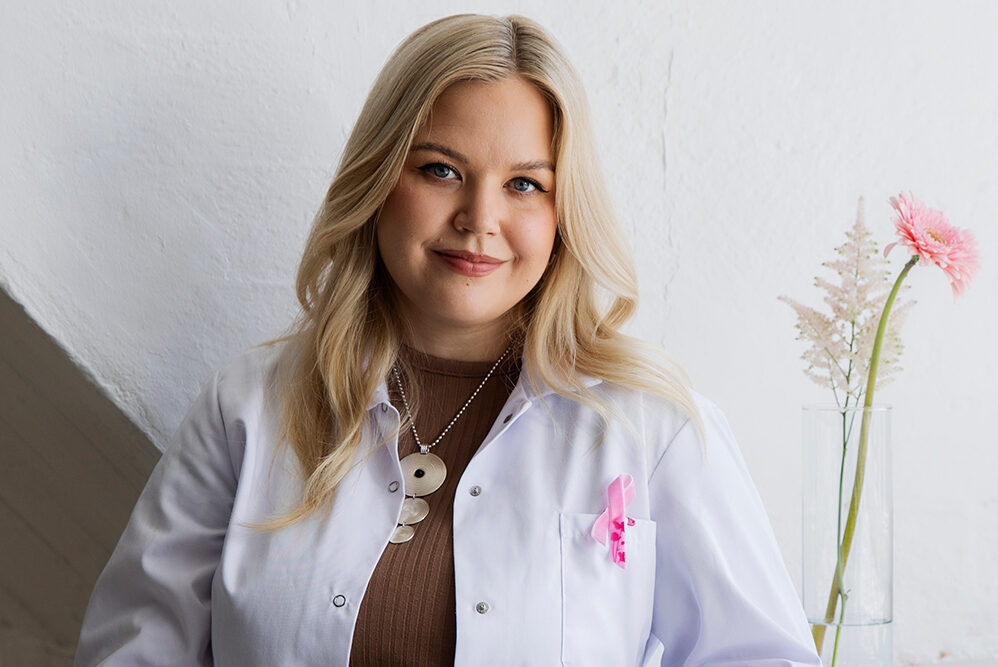
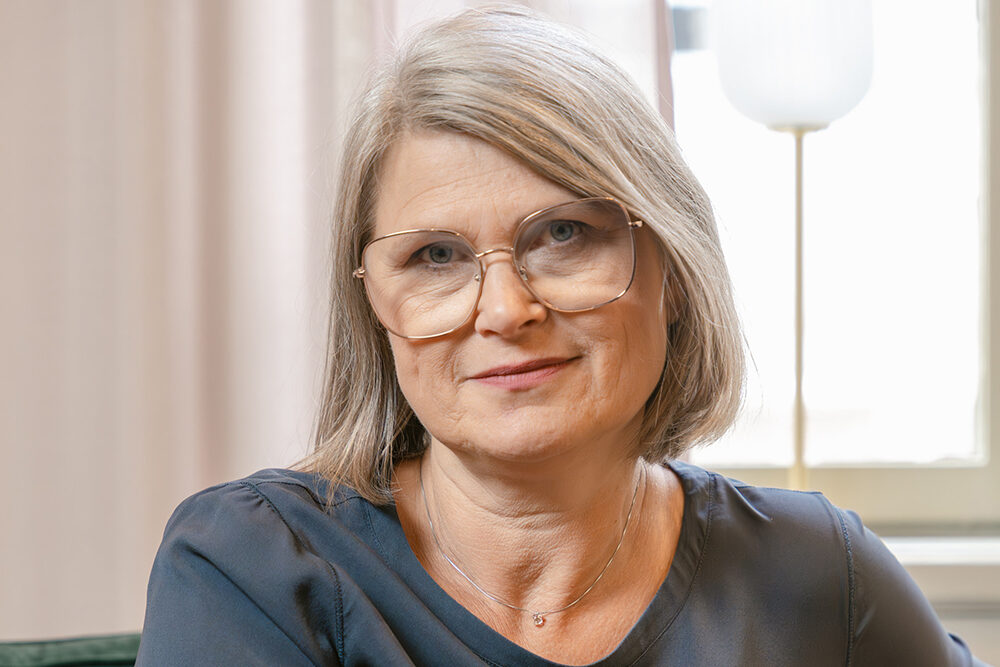
Finnish Heidi Haikala has a foot in two life science worlds. As a cancer researcher she has established her own research group at the University of Helsinki and Tampere University, and she is also a co-founder of the startup company Solid IO.
October 12, 2026


Assistant Professor and Principal Investigator (PI) Heidi Haikala’s scientific work focuses on translational oncology, immunotherapy, and functional drug testing. Inspired by both personal experience and scientific curiosity, she is committed to turning research into better treatments and believes the future of personalized medicine has never been more promising.
“Cancer is an incredibly fascinating disease because it combines evolution, genetics, and complex cellular processes. The more you learn, the more questions emerge. It’s a challenging field, but that’s exactly what makes it so rewarding and keeps me motivated every day. Also, looking back, I realize that losing a close relative to cancer at a young age had a profound impact on me. It made me feel that this disease was deeply unfair and inspired me to contribute, in whatever way I could, to improving patients’ lives through research,” she says.
An exciting era in cancer research
There has been great progress in cancer treatment during the past 10 to 15 years, and immunotherapies have really changed the field, emphasizes Haikala. “There are treatments capable of activating the immune system to fight cancer, and for some patients they’ve produced long-lasting responses that were almost unimaginable before. I think this is an extraordinary time to be a cancer researcher,” she says.
Haikala’s lab is investigating resistance mechanisms for drugs against targets that were previously impossible to target. An example is KRAS, a human gene that encodes a protein essential for cellular signaling, regulating cell growth, division, and death. “Now, there are inhibitors with very promising results in diseases like pancreatic cancer,” she says.
I hope that the next breakthrough will be technologies that let us watch tumors evolve, almost like turning a photograph into a video. I think that’s one of the most exciting directions for the field.
Research is experiencing a technological revolution, continues Haikala. Scientists can now study tumors at single-cell resolution, and, with spatial biology, map exactly where every cell is located within the tumor. “It’s like having GPS coordinates for every cell,” she says.
“I remember the first time I saw spatial biology data; it genuinely felt like I had gained a new sense. Suddenly, we could not only identify the different cell types but also see how they interact within the tumor. That has completely changed how we study cancer, and I think we’re only beginning to realize what these technologies will allow us to discover,” she says. “I hope that the next breakthrough will be technologies that let us watch tumors evolve, almost like turning a photograph into a video. I think that’s one of the most exciting directions for the field.”
Haikala believes that in research it is necessary to take bold action, to look beyond the next experiment and keep the bigger picture in mind. While basic research provides the foundation for every breakthrough, she believes scientists should always consider how their discoveries could ultimately benefit patients. By combining scientific curiosity with a strong focus on translation, she advocates for turning laboratory discoveries into real-world treatments that improve people’s lives.
From research to patients
Heidi Haikala received the Anders Jahre Prize for Young Scientists 2026 and the Biotech Founder of the Year (Life Sciences) Award at the Made by Cells Biotech Forum on April 29, 2026, at Hanaholmen, Espoo. The latter recognized her exceptional commitment to building Solid IO, a Finnish medtech and biotech startup where she serves as Chief Scientific Officer. The company is developing a precision oncology platform that helps clinicians predict how an individual patient’s cancer will respond to immunotherapy before treatment begins.
One of the biggest lessons I’ve learned is that ideas alone aren’t enough.
Bridging the gap between a scientific discovery and a treatment that reaches patients is a huge challenge. It is a long and complex journey involving researchers, clinicians, regulators, industry, and investors. It starts with researchers thinking about translation from the beginning and requires expertise in commercialization and product development. Haikala highlights, however, that the biggest hurdle is funding. Developing new treatments, especially through clinical trials, takes many years and requires substantial investment.
“Success depends on bringing together the right expertise, long-term funding, and a shared commitment to turning great science into real benefits for patients,” she says. “One of the biggest lessons I’ve learned is that ideas alone aren’t enough. Many people can have great ideas, but what really matters is execution: having the right team, the right funding, and the perseverance to turn a scientific discovery into something that can help patients.”
The strengths of the Nordics
Heidi Haikala thinks that one of the biggest strengths of the Nordic life science ecosystem is the quality of the science. There’s a strong commitment to doing rigorous, reliable research and maintaining high scientific standards.
“Our culture really encourages collaboration. There’s a high level of trust between researchers and institutions, and people genuinely want to work together rather than compete. That trust is built on the expectation that people do what they say they will,” she says, and emphasizes the importance of Nordic values such as equality and openness, together with strong public institutions that foster an environment where innovation and collaboration can truly thrive.
“Together, these factors make the Nordic life sciences ecosystem particularly strong,” she says.
A female scientist and founder
As a woman, Haikala’s journey as a scientist and founder has not always been easy, she says.
“Early in my career, I often felt that, as a young woman, I had to prove myself more. There are still unconscious biases and stereotypes. For example, I’ve been mistaken for a student at conferences, and I know many other female researchers have had similar experiences. They’re often small things, but they reflect how people sometimes perceive young women in science,” she says.
“I also think that many women struggle more with self-doubt, even when they’re just as capable as their male colleagues. One of the biggest lessons I’ve learned has been to let go of these doubts, trust my abilities, and put myself forward with confidence.”
I also think that many women struggle more with self-doubt, even when they’re just as capable as their male colleagues.
But rather than focusing on barriers, Haikala believes it is important to recognize the strengths women bring to leadership. She says inspiring female role models showed her that it is possible to lead with empathy, collaboration, and strength, while motherhood further strengthened her confidence and resilience. Although she acknowledges that biases still exist, she remains optimistic that greater visibility of women leaders will inspire the next generation.
about the author

Paula Pérez González-Anguiano, M.Sc. in Scientific, Medical and Environmental Communication, is a Biotechnologist, Science Journalist and Illustrator based in Barcelona, Spain.
Published: October 12, 2026