A region that grows when we grow together
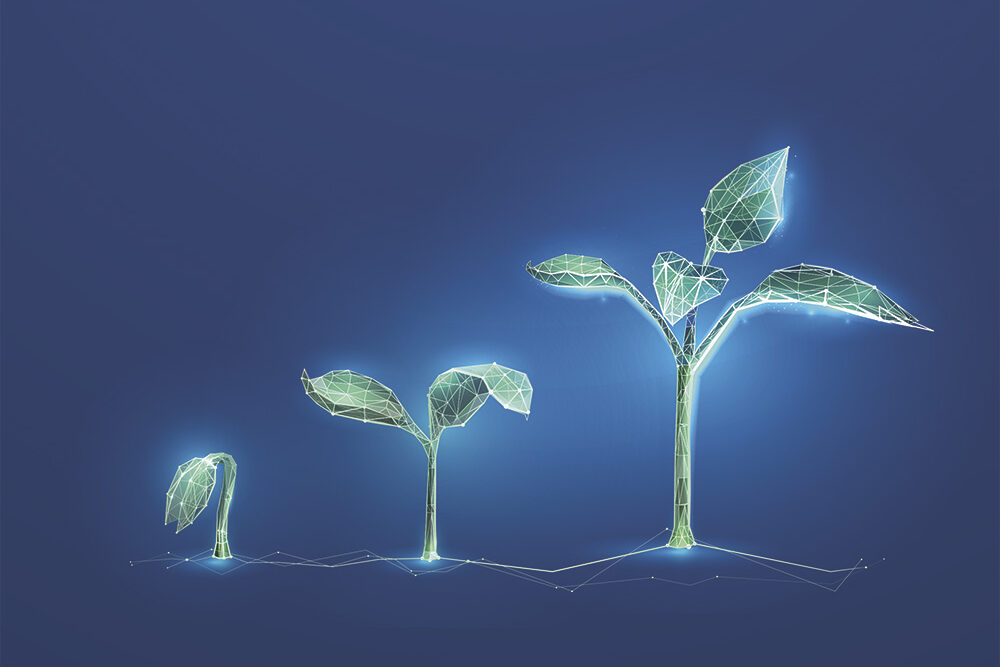
Every successful region has a place where collaboration is allowed to take root and grow. A place that protects early ideas, carries learning forward, and helps people work together across borders even when the systems around them are not built for it. In Medicon Valley, many now share a simple vision: to create a kind of greenhouse for Nordic life science cooperation.
May 26, 2026


A greenhouse is not the entity that decides what grows. It is the environment that makes growth possible. But here is the caveat. Cooperation flourishes easily when funding is new, enthusiasm is high, new innovation and thinking are stimulated, and timelines are generous. Without a structure that nurtures innovation and relationships over time, momentum can fade as quickly as it begins. So what happens when such a nurturing space exists, even briefly? What grows when people with different areas of expertise finally meet under the right conditions?
Without a structure that nurtures innovation and relationships over time, momentum can fade as quickly as it begins.
The Hanseatic Life Science Research Infrastructure Consortium (HALRIC) provides one answer. HALRIC’s mission is simple but ambitious. It aims to make advanced research infrastructures accessible, giving clinicians, companies, and researchers the tools they need to turn scientific potential into better diagnostics, stronger innovation, and improved patient care.
Building on two previous initiatives, this three-year Interreg Öresund-Kattegat-Skagerrak project continues a journey that began in 2015. What started as an effort to connect researchers around two emerging research infrastructures (MAX IV and European Spallation Source [ESS]) has grown into a cross-border ecosystem for life science innovation.
What started as an effort to connect researchers around two emerging research infrastructures has grown into a cross-border ecosystem for life science innovation.
HALRIC gives Northern Europe the kind of critical mass that only emerges when organizations function as a shared ecosystem instead of operating in parallel. Twenty‑one organizations, including four of Europe’s most advanced research infrastructures – MAX IV, ESS, DESY, and European XFEL – work together as one cross‑border partnership. Together, they form a scientific landscape in Denmark, Germany, Sweden and Norway with extraordinary potential.
The results reflect this ambition. Across more than 80 pilot projects, HALRIC has shown that many breakthroughs begin with curiosity. What if we tried this together? Some ideas grew into clinical applications. Others opened up unexpected scientific paths. That is the nature of a greenhouse ecosystem. Not every seed is predictable, but many are transformative.
A decade in motion
What started in 2015 as an initiative to maximize the societal and regional impact of the research infrastructures, MAX IV and ESS developed by engaging new research communities. The first three‑year project, ESS&MAXIV:Cross-Border Science and Society, gathered ten partners in Sweden, Denmark, and Norway. Hanseatic League of Science (HALOS) widened the circle to 16 partners and connected Hamburg’s infrastructures. HALRIC now brings 21 partners together in four countries through 80+ cross‑border pilot projects.
Consider a concrete example from a HALRIC liver cancer pilot project. After surgery, clinicians usually examine a tumor using 2D histology, which offers only a limited view of structures that can determine a patient’s future. But for patients, precision matters. Detecting microvascular invasion can shape treatment decisions and influence whether the cancer returns. Through HALRIC’s framework, Rigshospitalet and Technical University of Denmark worked with Lund University to explore how 3D X‑ray imaging at MAX IV could translate into clinical insight.
By helping partners navigate the practical and administrative steps that normally slow cross‑border collaboration, the project enabled clinicians and imaging specialists to analyze tumors in unprecedented detail. The results can inform surgical planning, guide follow‑up care and, over time, save lives. The science was ready. The infrastructure was ready. What was missing was the connective tissue across borders that turns possibility into practice.
The science was ready. The infrastructure was ready. What was missing was the connective tissue across borders that turns possibility into practice.
Together, the pilot projects, the cross-border partnerships and the coordinated use of world-class infrastructures reveal something deeper. Interreg projects generate momentum, but they are temporary by design. When they end, relationships can fade and progress slows. Not because partners lose interest, but because continuity requires coordination. If we want our region to grow while others strengthen their roots, we cannot build our collaboration on short cycles alone.
Infrastructure alone is not enough. What matters is how we organize ourselves around it.
As Europe debates how to strengthen its life science competitiveness, the message is clear. Infrastructure alone is not enough. What matters is how we organize ourselves around it. HALRIC shows what coordinated, cross-border collaboration makes possible. The next step is to make this way of working permanent, so the region can continue to grow, adapt, and innovate in ways that benefit patients, industry, and society.
About the author

Niels Abel Bonde is Chairman of Medicon Valley Alliance. This column was originally published in NLS magazine No 02 2026, out May, 2026. Photo: Ida Wang
Updated: May 27, 2026, 07:25 am
Published: May 26, 2026