Progress in smell and taste research
Imagine walking into a bakery with ovens full of fragrant bread and smelling… nothing. Or taking a bite out of a spicy sausage, which to you has as much flavor as cardboard.
July 5, 2026


Loss of these basic senses is not just unpleasant, it disrupts individuals’ and families’ lives and takes a toll on overall well-being, often leading to weight loss and depression.
While people have always experienced loss of taste and/or smell due to illness or injury, the COVID-19 pandemic exploded the numbers of sufferers. Losing these senses is one of the earliest symptoms of COVID and usually people recover them within a few days or weeks. But for some people, it takes months to smell or taste again, for others it can take years, and some people never do.
Long COVID
Prolonged loss of taste and smell is one of the indicators of Long COVID, a condition with a myriad of symptoms that researchers have been trying to isolate and treat. About 400 million people worldwide are struggling with symptoms of Long COVID, which besides loss of taste and smell, include “brain fog,” fatigue, heart and lung damage, insomnia, and depression. A huge part of the puzzle, which has delayed treatments for many of the conditions, is figuring out why some people quickly recover quickly while others never do.
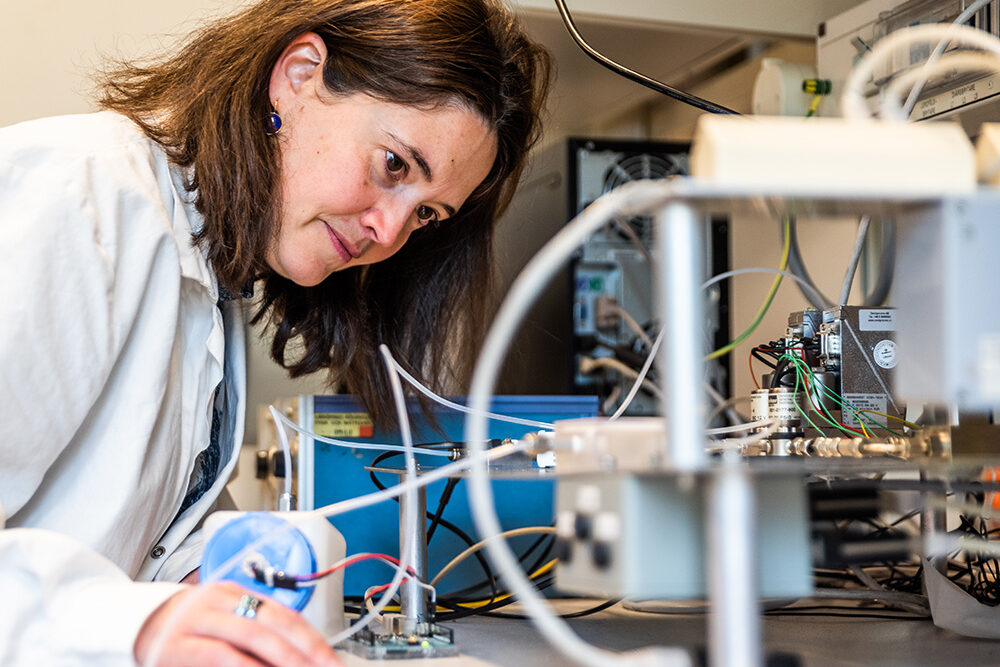
Referred to as the ROSE (Restoring Odorant detection and recognition in Smell dEficits) Project, the work involves using an implant to reconnect nerves involved with smell to the brain, in a similar way to how cochlear implants restore hearing for some people.
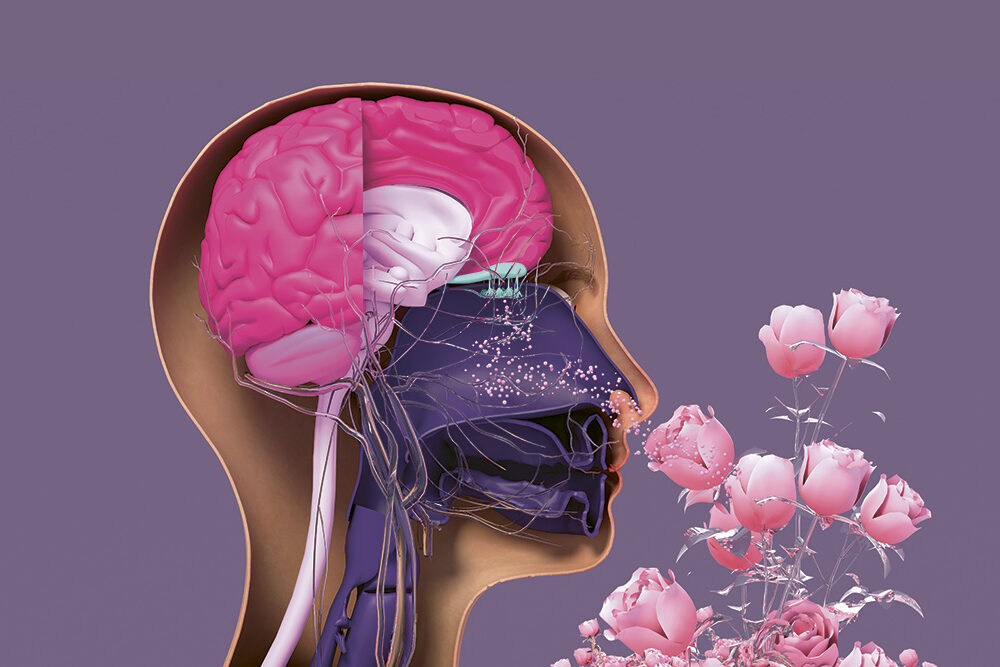
But there are new insights into what causes the internal communication involving taste and smell to break down, which could lead to treatments and efforts to restore function using innovative technology. The European Union funded a multidisciplinary team of scientists to develop an olfactory prosthesis, and several prototypes have been tested. Referred to as the ROSE (Restoring Odorant detection and recognition in Smell dEficits) Project, the work involves using an implant to reconnect nerves involved with smell to the brain, in a similar way to how cochlear implants restore hearing for some people. A sensor placed in the nasal cavity would connect to the olfactory bulb with a series of wires, causing a pattern of activation. The signal is transferred to the brain, which translates the signal as an odor.
Smell training
Thomas Hummel, M.D. a researcher at the Smell and Taste Clinic at the Technical University of Dresden in Germany, has had some success with smell training. While about 95 percent of patients eventually recover their sense of smell after COVID, Hummel’s clinic is busy; he sees approximately 800-1,000 patients per year. He has developed a treatment whereby patients smell four strong odors, such as essential oils, twice a day for about 30 seconds at a time for at least four months. A study showed that between 30 and 50 percent of participants reported improved smell sensitivity after the regimen.
COVID affects our sense of smell when the virus enters the nasal cavity and destroys supporting cells of the mucosa.
COVID affects our sense of smell when the virus enters the nasal cavity and destroys supporting cells of the mucosa, Hummel explained. These support cells provide nutrients for olfactory sensory neurons, so without them, disruptions occur.
Smell and taste are connected
Loss of smell and taste are connected, and more is understood about the loss of smell. This is according to Dr. Thomas Finger, a professor of cell and developmental biology at the University of Colorado Anschutz in the U.S., who was involved with a recent study into taste.
In smell, the virus infects the supporting cells of the sense organ, and this provokes an anti-viral response in those cells as well as in the olfactory receptor neurons.
“In smell, the virus infects the supporting cells of the sense organ, and this provokes an anti-viral response in those cells as well as in the olfactory receptor neurons,” Finger says. “This anti-viral response turns off the mRNA that encodes the proteins underlying the receptor responses to odors; hence the sense of smell is lost. After a few days the virus is cleared, and the sensory cells turn back on the odor-response proteins leading to recovery.”
In taste, the virus seems to infect the sensory cells themselves – at least the cells for sweet, bitter and umami – and likely disrupts taste that way.

But it is still unclear why taste cells do not resume operation. “In taste, the virus seems to infect the sensory cells themselves – at least the cells for sweet, bitter and umami – and likely disrupts taste that way,” Finger says. “But that does not explain the prolonged loss of taste since the infected cells would be replaced in a matter of weeks. So maybe there is lingering inflammation that keeps the anti-viral response turned on, thereby reducing the cell’s ability to make taste receptors and related proteins, such as PLC.”
Some encouraging findings
The recent study with which Finger was involved had some encouraging findings. Work with researchers from the Swedish University of Agricultural Sciences (SLU) and Uppsala University showed that some people with compromised taste had lower levels in their taste cells of messenger RNA (mRNA) that generate the protein PLCβ2. This protein boosts signals to receptor cells that identify sweet, bitter, and umami (savory) tastes. Taste cells for salty and sour flavors are not reliant on the protein so are usually not as affected.
Taste buds usually are replaced every two to four weeks, but the researchers found that in some people the cellular signals may be interrupted for a greater period. Unfortunately, since researchers still have not determined why PLC levels are low in some people, creating a treatment approach is difficult, according to Finger.
While people reported not tasting anything, what they really were indicating is they did not perceive flavors, which are a combination of smell and taste.
The investigation collected data from 28 people in Sweden who had COVID, did not require hospitalization but still reported diminished taste and smell 12 months after contracting the virus. Eight out of the 28 people showed abnormal scores on a test measuring taste and 11 participants specifically cited losing tastes of sweet, bitter, and umami. While people reported not tasting anything, what they really were indicating is they did not perceive flavors, which are a combination of smell and taste, says Finger.
The next step for the research is the further characterization of cell types and neurotransmitters in human taste buds to see which conditions in mice correspond with human taste sensations, describes Finger. For example, scientists have noted that in mice sour and sweet cells communicate with nerves, but this process is not replicated in humans.
“Things have to be wired up properly, and there’s a difference between human and mouse taste buds, and those differences may be significant,” he says. “There seem to be some biochemical differences in the different cell types. To restore normal function in any disease state, you need to know what normal is.”
Published: July 5, 2026