Will gene therapy, implants and stem cells bring back sight?
For a long time, restoring vision has been like a search for the holy grail for scientists. And for many patients, being diagnosed with a severe retinal disease has meant progressive, irreversible vision loss. However, the past decade has seen some of the clearest evidence so far that vision loss can be partially restored, not just preserved.
April 26, 2026


A number of clinical studies now span retinal and brain implants, optogenetic gene therapy, and stem cell–based repair.
Prostheses
One of the most striking recent advances comes from the PRIMA retinal prosthesis, developed by Science Corporation from work led by Daniel Palanker at Stanford University, US. PRIMA is a tiny wireless chip implanted under the retina, paired with camera‑equipped glasses. In a multicenter trial of 38 patients with geographic atrophy due to advanced age‑related macular degeneration (AMD), around 80 percent achieved clinically meaningful gains in visual activity. Many patients regained the ability to read letters and words, and some could read pages of text again. Science Corporation has applied for the CE mark in Europe and is advancing regulatory discussions with the FDA.
Many patients regained the ability to read letters and words, and some could read pages of text again.
In parallel, several research groups are pushing vision restoration beyond the eye. A Spanish‑led team reported that a new visual neuroprosthesis interfacing directly with the visual cortex can produce meaningful artificial visual percepts in blind volunteers (Fernández et al., Science Advances, 2021). The EU‑funded SIGHTED program is also developing an implant that targets the lateral geniculate nucleus, while ReVision Implant’s high‑density cortical array is entering first‑in‑human testing in Europe.
Optogenetics
Optogenetic gene therapy uses viral vectors to deliver light‑sensitive microbial opsins into surviving retinal neurons, effectively turning them into replacement photoreceptors. Several companies are now running human trials, often combined with light‑amplifying goggles.
Several companies are now running human trials, often combined with light‑amplifying goggles.
Early reports indicate that profoundly blind patients can learn to detect objects, localize light, and in some cases perceive simple form (Sahel et al., Nature Medicine, 2021; Fighting Blindness, Research Update, 2025). However, current optogenetic systems typically require very bright light and still provide limited spatial resolution compared to native photoreceptors.
Stem cells and regeneration
Stem cell-based approaches add a regenerative dimension. At the University of Wisconsin–Madison, an induced pluripotent stem-cell‑derived photoreceptor product was transplanted into patients with retinitis pigmentosa, with the explicit aim of rebuilding functional photoreceptors. At USC’s Roski Eye Institute researchers are running a phase 2b trial of a stem-cell-derived retinal pigment epithelium patch for advanced dry AMD, after earlier work showed that the ultra‑thin implant improved vision in about a quarter of treated patients over three years.
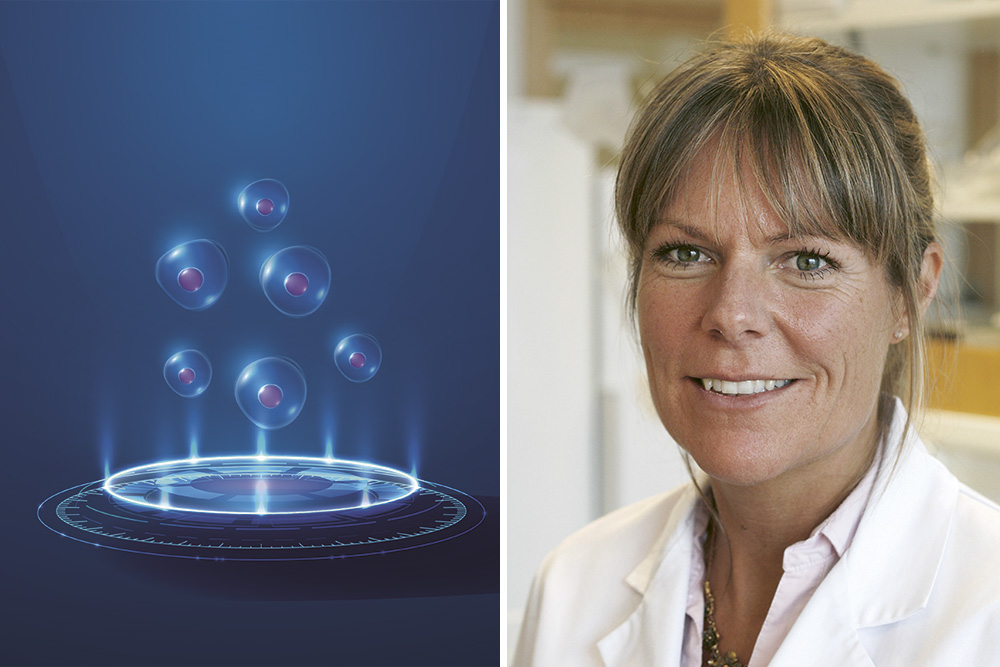
In Stockholm, Karolinska Institutet (KI) and St. Eriks Eye Hospital are preparing a first‑in‑human trial in which human embryonic stem cell‑derived retinal pigment epithelial cells, developed by professor Fredrik Lanner in collaboration with senior physician and professor Anders Kvanta, will be transplanted into patients with severe AMD – marking a Nordic entry into the front line of cell‑based vision restoration.
The hope is that patients will experience some improvement in visual acuity (such as reading ability), but more realistically the treatment will slow the disease, which we know otherwise leads to gradual deterioration of vision.
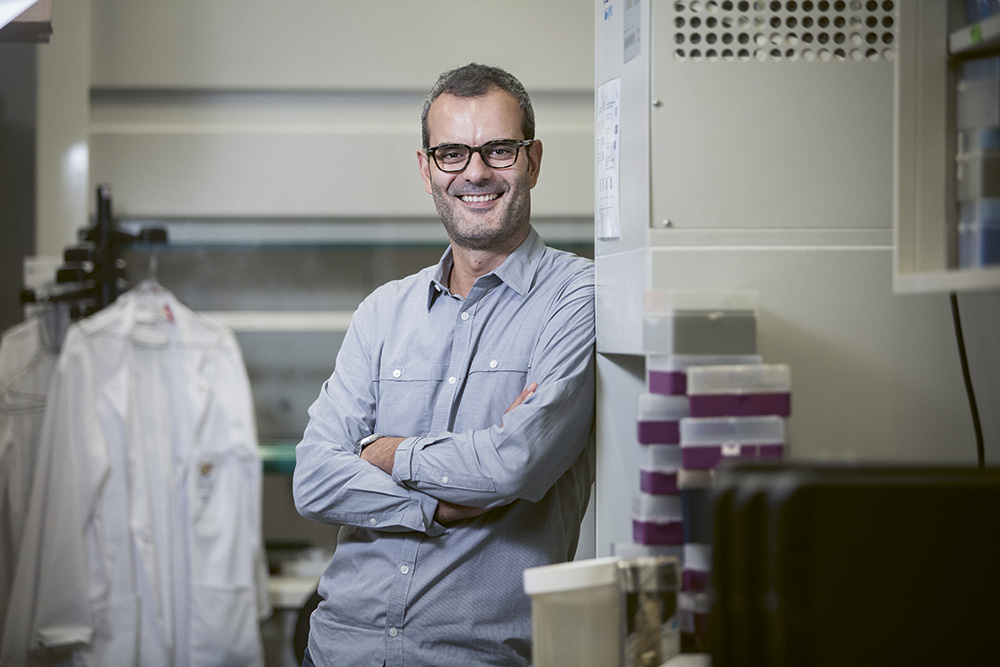
“Our hope is that the trial can begin during this year. It received preliminary approval from the Swedish Medical Products Agency to start during 2026,” says Anders Kvanta.
“Of course, the hope is that patients will experience some improvement in visual acuity (such as reading ability), but more realistically the treatment will slow the disease, which we know otherwise leads to gradual deterioration of vision. Any potential improvement would be expected within approximately six months,” he adds.
As an extension of the AMD trial, Kvanta together with Lanner and others is also working on producing photoreceptor cells (rods and cones) in order to be able to treat other serious retinal diseases in the future.
“We aim to generate and replace the photoreceptors that have been lost in two very common causes of blindness: inherited retinal degeneration (retinitis pigmentosa) and AMD (same population trial as the above mentioned). These cells are technically more difficult to produce, but if successful, one could theoretically restore lost vision,” he says.
The Tampere-based company, which raised EUR 2.3 million in early 2025, is developing an off-the-shelf therapy for limbal stem cell deficiency.
While Swedish and US teams focus on retinal cells, Finnish biotech company StemSight is tackling corneal blindness using induced iPSC-derived limbal stem cells combined with functional biomaterials. The Tampere-based company, which raised EUR 2.3 million in early 2025, is developing an off-the-shelf therapy for limbal stem cell deficiency (LSCD), providing a scalable alternative to traditional corneal transplants that are limited by donor shortages.
Gene therapy
Gene replacement strategies are also changing the outlook for inherited blindness. The first approved retinal gene therapy, voretigene neparvovec, has shown that targeted gene replacement can move from concept to clinic (Russel et al, Lancet 2017).
11 of 12 patients responded to the treatment with meaningful improvement in visual function in many of them.
In a 2024 study published in Nature Communications, Anders Kvanta and colleagues reported up to 3-year results from a phase 1/2 gene therapy trial in 12 patients with retinal dystrophy caused by mutations in the retinaldehyde-binding protein 1 (RLBP1) gene. The treatment was well tolerated, with dose-dependent intraocular inflammation responding to corticosteroids as the main side effect. 11 of 12 patients responded to the treatment with meaningful improvement in visual function in many of them.
The therapy was well tolerated, underscoring that targeted gene replacement can not only halt progression but partially restore sight in individuals blind since early childhood.
Last year, Opus Genetics reported phase I/II data for a gene therapy for Leber congenital amaurosis type 5 (a severe dystrophy of the retina with onset in infancy or the first years of life) showing improvements in visual acuity, retinal sensitivity, and navigation tasks in all treated children, with adults maintaining previously observed gains for at least 18 months. The therapy was well tolerated, underscoring that targeted gene replacement can not only halt progression but partially restore sight in individuals blind since early childhood.
Beyond gene replacement for specific mutations, gene-agnostic approaches are gaining traction. Companies like Nanoscope Therapeutics and Ocugen have advanced optogenetic therapies (MCO-010 and modifier gene therapy, respectively) into Phase 2 and Phase 3 trials for retinitis pigmentosa and other inherited retinal diseases. Nanoscope’s MCO-010 showed significant vision improvements in Phase 2 trials for Stargardt disease, with a Phase 3 trial planned for 2025. Meanwhile, a large NIH-supported Phase 3 trial testing oral N-acetylcysteine (NAC) as a neuroprotective treatment for retinitis pigmentosa has completed enrollment of 485 participants across 31 sites in seven countries.
Eleven participants experienced measurable vision improvements, representing the first successful demonstration that CRISPR can edit genes directly inside the human eye to restore partial sight.
Beyond traditional gene replacement, CRISPR-based gene editing represents an approach that directly corrects disease-causing mutations in the DNA itself. A 2024 study for example demonstrated that CRISPR gene editing can safely improve vision in people with inherited blindness (New England Journal of Medicine). A CRISPR therapy (EDIT-101) was tested in 14 participants with Leber congenital amaurosis type 10, a severe form of childhood blindness. Eleven participants experienced measurable vision improvements, representing the first successful demonstration that CRISPR can edit genes directly inside the human eye to restore partial sight.

What’s ahead?
I also asked Anders Kvanta to look 10-20 years ahead when it comes to treating, perhaps curing, retinal diseases and blindness, and how these new different approaches can be used. First of all, he says that this is a dynamic research field at the center of the development of advanced therapy medicinal products (ATMPs).
The results of research into microchips are already impressive, and it is reasonable to expect that the technology will continue to evolve toward chips with higher resolution, color vision, and easier handling.
“We have already come a long way in terms of correcting genetic defects in inherited retinal degeneration (see for example our own study), and I expect continued progress here. For example, it will be important to develop platform‑based gene correction technologies to reduce development costs. The results of research into microchips are already impressive, and it is reasonable to expect that the technology will continue to evolve toward chips with higher resolution, color vision, and easier handling. Optogenetics has the advantage of being independent of the underlying genetic defect (“gene‑agnostic”) but the disadvantage is that it does not provide the same resolution as our own photoreceptors. Further development is needed in this area.”
Cell therapy is probably the greatest challenge, but theoretically also has the greatest potential.
“Cell therapy is probably the greatest challenge, but theoretically also has the greatest potential. For instance, it will be crucial to prevent rejection, minimize surgical trauma, improve integration of transplanted cells and, ultimately, replace several different cell types at the same time. Methods to genetically render the cells “hypoimmune” is one example of this evolution,” he says.
wearable technologies
AI-powered wearable technology has also advanced significantly. Smart glasses now use computer vision algorithms to read text aloud, recognize faces and objects, and provide navigation assistance through audio or haptic feedback. A 2025 study published in Nature Machine Intelligence demonstrated a multimodal wearable system combining camera-based AI, voice commands via bone conduction headphones, and haptic wrist feedback that significantly improved navigation and obstacle avoidance in blind and partially sighted users. Though these devices don’t restore vision biologically, they translate visual information into accessible formats, offering practical independence for daily life while medical therapies continue to develop.
Updated: April 29, 2026, 07:43 am
Published: April 26, 2026